
A three-zone hanging plan, a thin-velvet reset, and one ugly basket that clears the floor fast.
Build a Three-Zone Hanging Plan (and stop donating space to dead air)
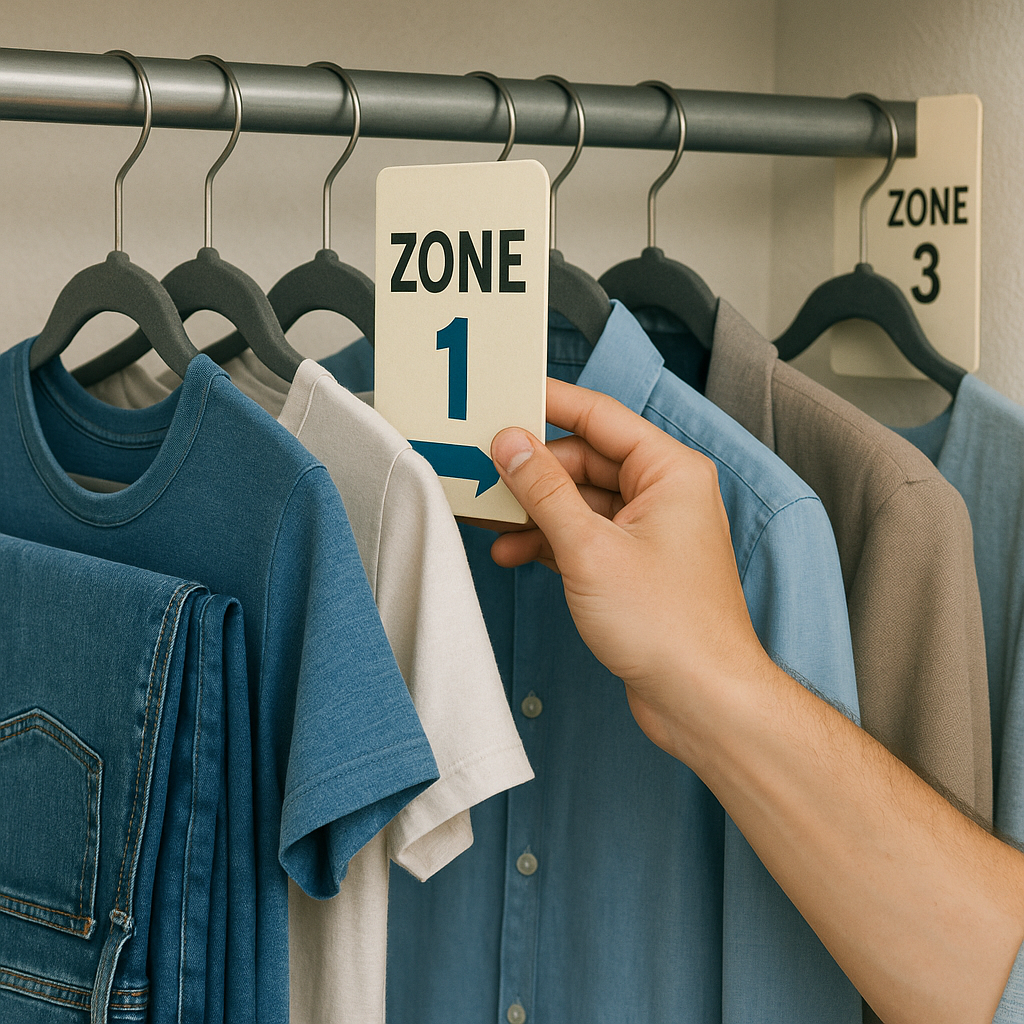
The fastest way I gain closet space is not buying anything. It's giving the rod a map. Most closets end up as one long, polite line of hangers with random gaps, like the clothes are waiting their turn. The trick is to split the rod into three zones and treat them differently.
Zone 1: Prime real estate (about 60% of the rod). This is for what you reach for on a normal week: your workhorse jeans, the tees you keep re-washing, your go-to button-downs. Keep this section strictly single-hanger items. No doubling. No two sweaters on one hanger. This is the zone that stays friction-free, because the whole point is that you can slide hangers without snagging a sleeve.
Zone 2: The narrow hang zone (about 25%). This is where I park the stuff that needs hanging but doesn't need prime access: blazers you wear twice a month, dress shirts, special-occasion pieces. The only rule is that everything faces the same way and the hangers match. When hangers don't match, the hooks take up different widths, and that eats rod space in a way you can feel with your hands. If you want a single upgrade that matters, thin velvet hangers are the one. You can usually get a box online for around $20 to $30, and you see the difference immediately when the shoulders sit closer together.
Zone 3: The staging lane (about 15%). This is a small chunk on the end where I rotate in what I'm testing for the season. The staging lane is how you avoid the closet becoming a museum. If something lives in Zone 3 for two weeks and never gets worn, it loses hanging rights and goes to folded storage or out of the house.
Once you set the zones, the efficiency part happens on its own. You're not trying to cram more items into the same chaos. You're cutting the empty air between pieces, keeping the high-traffic section smooth, and forcing the closet to tell the truth about what deserves the rod.
One Hanger Type, One Direction, One inch at a time
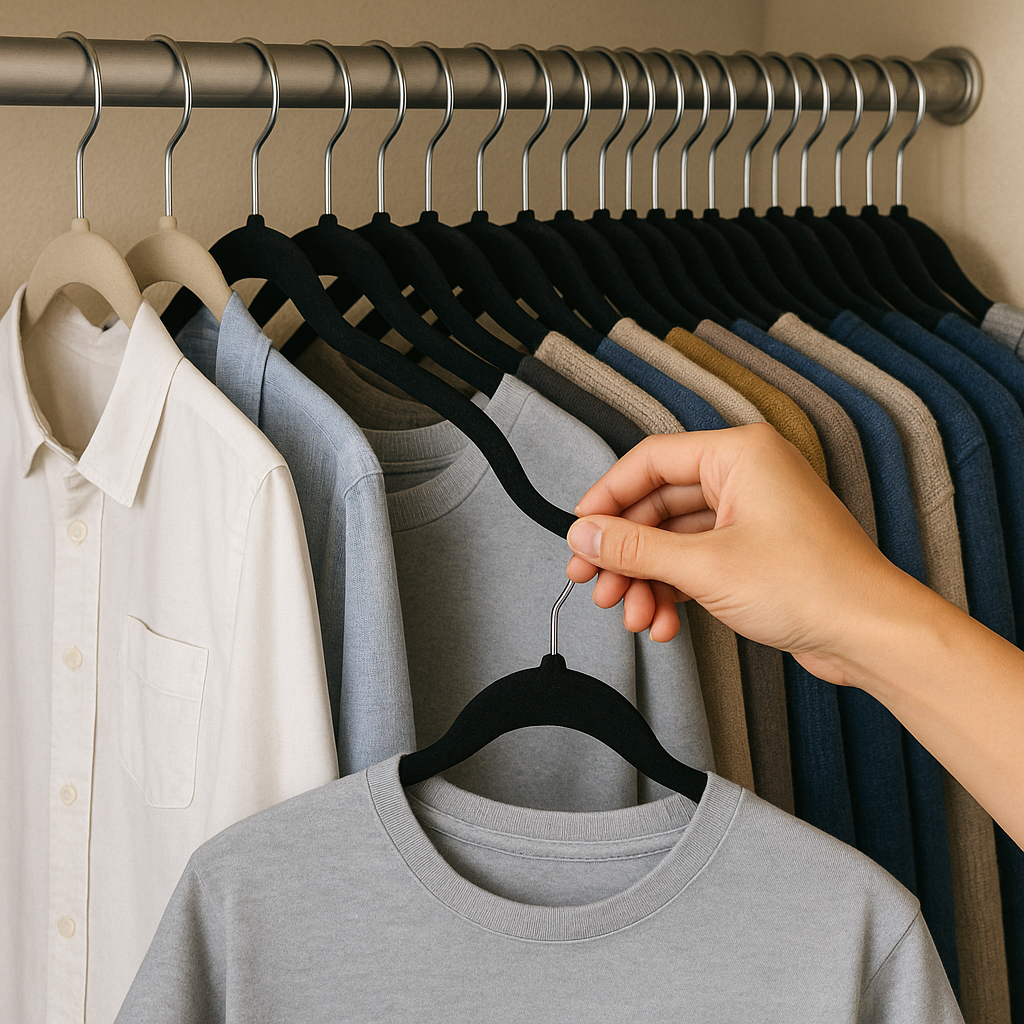
I used to think the matching-hangers thing was pure aesthetics. Then I switched half my closet to slim velvet hangers and left the rest as plastic and wire, and the rod started feeling like a parking lot with different-size cars. The fat plastic hangers flare out at the hook and shoulder, wire hangers twist and snag, and suddenly you have phantom gaps you can't use.
If you're trying to maximize space efficiency, do this in a single pass, not as a months-long project:
- Pick one hanger style for tops. Slim velvet for shirts and sweaters, or thin plastic if you hate velvet. Just pick one. Keep your heavier wood hangers only for coats or structured blazers that truly need them.
- Turn every hook the same direction. It sounds fussy, but it changes how tightly things nest. When half the hooks face left and half face right, the hangers bump and create little wedge gaps. When they're uniform, they sit closer and slide easier.
- Standardize the spacing for bulky pieces. Chunky knits and hoodies are closet bullies. I don't hang them in the prime zone at all unless it's a cold week. If they must hang, they go in that narrow hang zone so they can take up their width without choking access to your everyday stuff.
Two more small, physical details that matter if you've done this in real life: first, velvet hangers can catch on certain sweater knits, especially loose acrylic. If you notice that drag, reserve a few smooth hangers for those pieces so you don't dread putting them away. Second, if you're using cascading hanger hooks (the little S-shaped connectors), keep them out of Zone 1. They save vertical space, but they make the rod section feel like a tangle. I only use them in Zone 2 for the occasional suit set, because that area isn't getting disturbed every morning.
This isn't decluttering. It's geometry. When everything is the same thickness and faces the same direction, you gain rod capacity without shoving, and the closet stops fighting you every time you try to put one shirt back.
Contain the floor: the one-basket rule for overflow
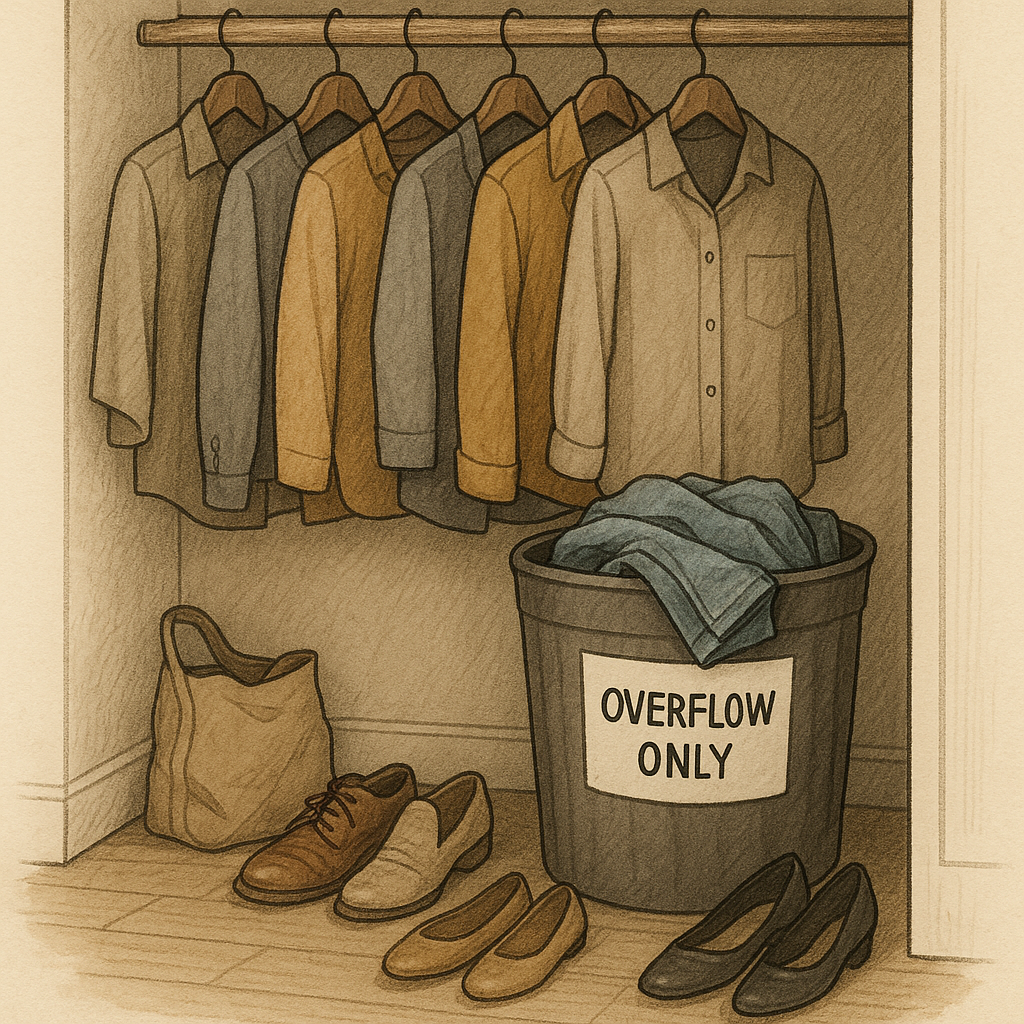
If your closet feels small, check the floor. Not because the floor should be empty, but because it usually becomes a junk drawer you have to step over. Shoes drift. A tote bag slumps into the corner. A pile of jeans forms that weird denim hill. And now the hanging space above it might as well not exist, because you're irritated before you even get to the rod.
The most space-efficient move I've found is embarrassingly simple: one basket, one purpose, hard boundary. I use a single tall, ugly open bin (think laundry hamper shape, not a cute woven tray) and I label it in my head as Overflow Only. That means anything that's not ready to be put away goes in the basket, not on the floor, and not back on a shelf where it will flatten into a permanent stack.
Here's how it works in practice:
- Basket lives on the closet floor, front and center. Not tucked behind hanging clothes. If I have to move a shoe rack to access it, I won't use it.
- Only three categories can go inside: returns, items that need mending (missing button, split seam), and pieces you're unsure about for the season. No accessories. No random paper bags. No hangers. Keep it boring.
- Empty it on a timer you already have. I do it when I'm swapping a load of laundry, because I'm already standing there waiting. Ten minutes. That's it. If something in the basket requires more than ten minutes, it gets scheduled (or it gets donated), because the basket is a traffic control device, not a new storage system.
The payback is immediate: the closet floor becomes intentional. Your shoes can line up toe-out so you can see pairs. A slim shoe shelf can sit flush without being blocked. And because the overflow has one container, you can tell at a glance when your closet is running out of capacity. When that basket is constantly full, it means the closet is asking for a change in how much hangs, how much folds, or how many duplicates you keep. It won't whisper. It'll sit there in the open and bother you until you fix it.