
Before you buy into a new shade, run these three closet-based checks to see if the palette is already creeping in.
The laundry-basket color count
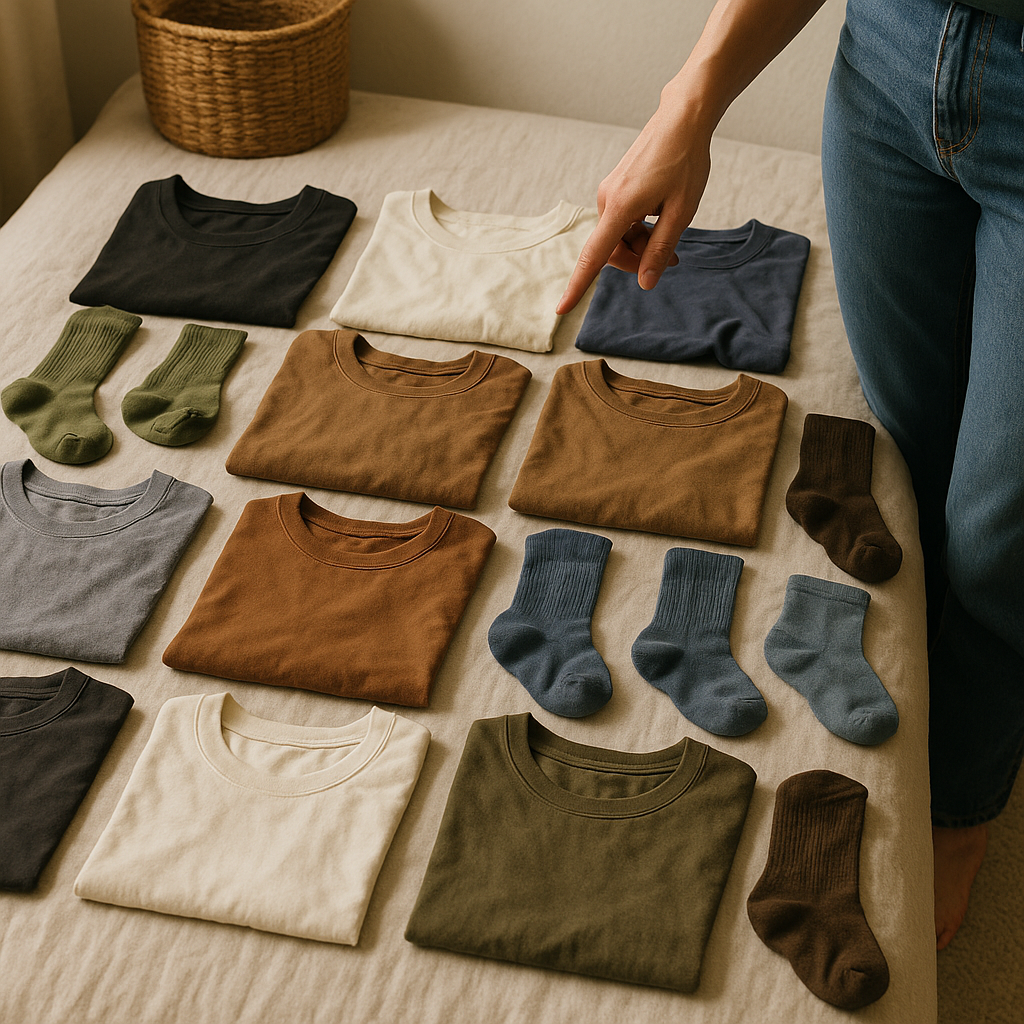
Don't start with Pinterest. Start with the pile of stuff you wore twice this week because it was clean again and you reached for it on autopilot. I do this on a Sunday when the laundry basket is full and the light is decent. Grab 15 pieces from the top layer (tees, socks, a sweatshirt, whatever's actually in rotation) and lay them on the bed in a rough grid. No folding, no staging. Now step back and count colors like you're a bored cashier: how many blacks, creams, navies, olives, browns, faded grays, and then the oddballs.
The useful part isn't that black wins (it usually does). It's which color shows up as the quiet runner-up. If it's suddenly chocolate and camel, that's not an accident. It means your brain has already started building outfits around warm neutrals, even if you keep telling yourself you're a "cool tones" person. Same with that dusty blue that keeps appearing in socks, workout tops, and the one cardigan you always grab when the AC is blasting.
Then I do one more pass with a closet-specific trick: I separate "base layers" from "top layers." Base layers are the stuff that touches skin (tanks, tees, socks). Top layers are the pieces that show in Zoom calls or at dinner (overshirts, sweaters, jackets). When the new palette is only in base layers, it usually means I'm experimenting without committing. When it jumps to top layers, that's the trend taking the wheel. If you're trying to spot a palette shift early, the base layer creep is the signal. It's the part of the closet you refresh without thinking, and it makes the rest of your clothes feel suddenly off if you ignore it.
The hanger-gap test for color, not clutter
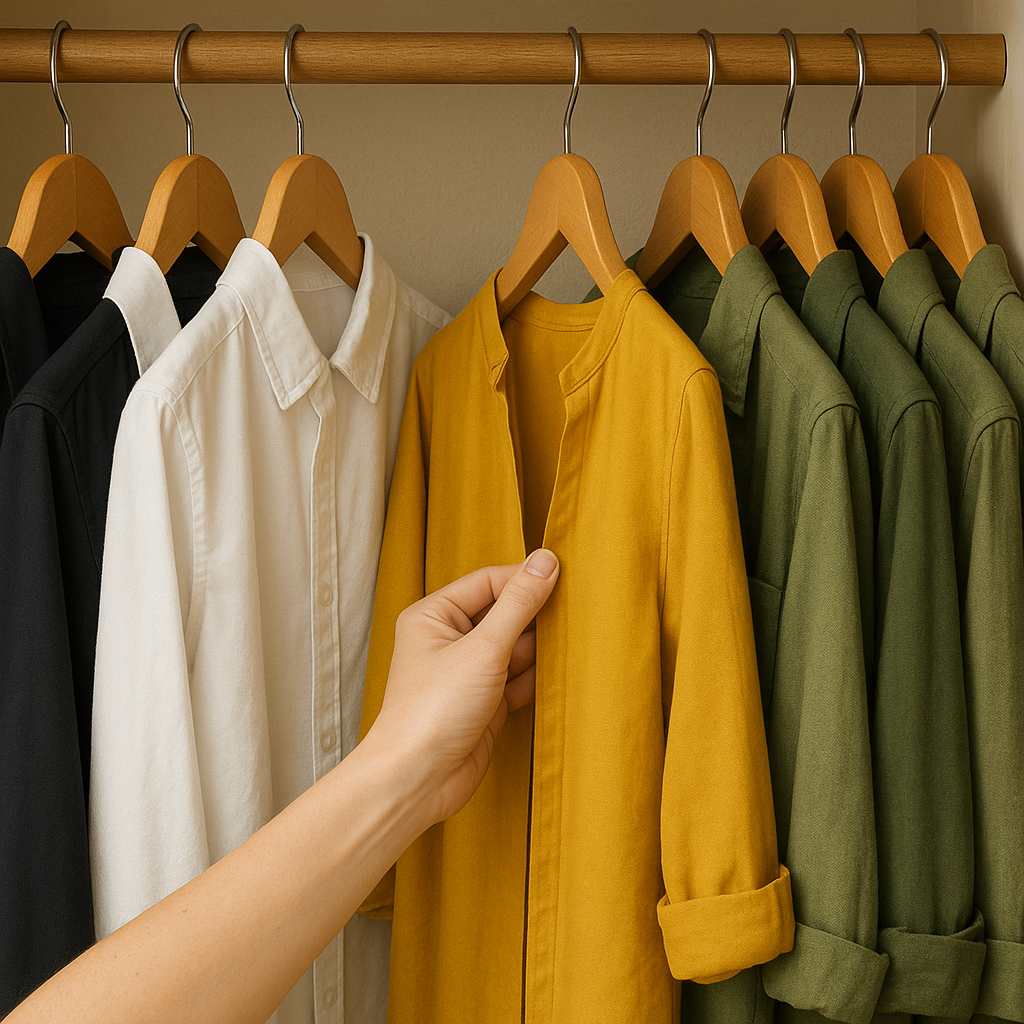
Open your closet and look for the spots that make you hesitate. Not the stuff you hate, and not the stuff you love. The middle zone. For me, it's the section where the hangers slide too easily because I haven't pulled those pieces forward in a while. That's the area where a new palette usually shows up as a problem first: you keep wearing the same couple of colors because the in-between colors suddenly feel wrong with your current shoes, bag, or denim wash.
Here's how I check it without turning it into a declutter marathon. Pick one garment type that hangs (button-downs, blazers, skirts, whatever you own enough of to see a pattern). Push them together tightly, then fan them out so you can see a little strip of each color. You're looking for one of two things:
- A color "gap": you have lots of black and white, maybe some navy, and then nothing until a random bright. That gap is where trend palettes move in, because your outfits start feeling repetitive and you think you need a new statement color.
- A color "clump": five pieces in the same family (sage, eucalyptus, olive, army) sitting together like they found each other. If those pieces were purchased across different seasons, that's a slow palette shift, not a one-off.
Now the part I only learned after wasting money on the wrong shade: check the undertone against your most-worn neutral, not against your skin in the mirror. Hold that olive shirt next to the black pants you live in, or the cream jeans you keep laundering. If the combination makes the item look dingy or strangely loud, that undertone probably won't survive in your closet. When it works, you get that feeling that you could build three outfits without thinking. I keep one wooden hanger free so I can hang a "maybe" color right next to my go-to neutral for a week. If I keep skipping it, the palette isn't ready. If I start grabbing it because it makes everything else easier, I know what's coming.
One drawer tells you the future (socks, tees, and tanks)
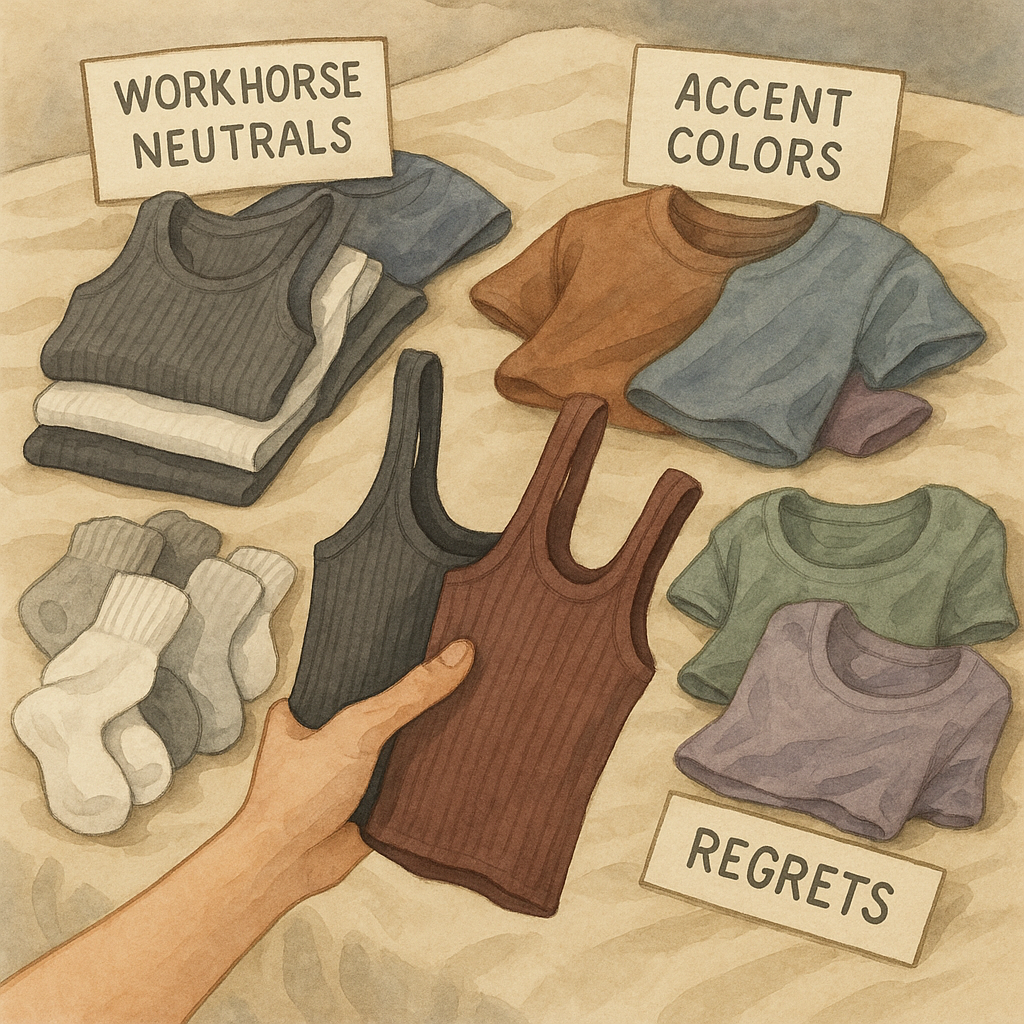
If you want to spot color trends before they peak in your own closet, skip the coat rack and go straight to the drawer you refill most often. Mine is the socks-tees-tanks drawer, the one I open half-awake. It's also where I can see what colors I'm willing to buy in duplicates, which is the closest thing I have to an honest forecasting tool.
Dump the drawer on the bed (yes, the whole thing) and sort into three piles: workhorse neutrals, accent colors, and regrets. Regrets are the pieces you keep because they're technically fine, but you never reach for them unless everything else is in the wash. They matter here because regret colors tend to be the ones you think you should like, not the ones you build outfits around.
Now look at your duplicates. If you own the same ribbed tank in black, white, and then suddenly in espresso or burgundy, you've already started living in that palette. It's not theoretical. You're putting it on your body before coffee. Same with socks: when the pack shifts from bright white to cream, or from heather gray to brown marl, your shoes and denim washes will follow. The drawer leads and the hanging clothes eventually negotiate with it.
Two small, practical checks keep this from turning into a fantasy palette. First, hold your most-worn tee up to your face in daylight and then hold your newest color up right next to it. You're not looking for a glow-up. You're looking for whether the new color makes the old one look tired. If it does, that new shade is about to take over. Second, check how the color behaves across fabrics: rib knit, jersey, socks, and a sweatshirt. Some colors (especially pale gray-greens and muted lavenders) look great in one fabric and weirdly cheap in another. If it only works in one texture, it's probably a fling. If it works across the boring basics, it's a phase that's going to cost you money unless you plan for it.