Three closet-level tells (hardware, fiber, and hems) that your vintage pieces will get worn, not just admired.
Button backs, zipper stamps, and why I keep a flashlight
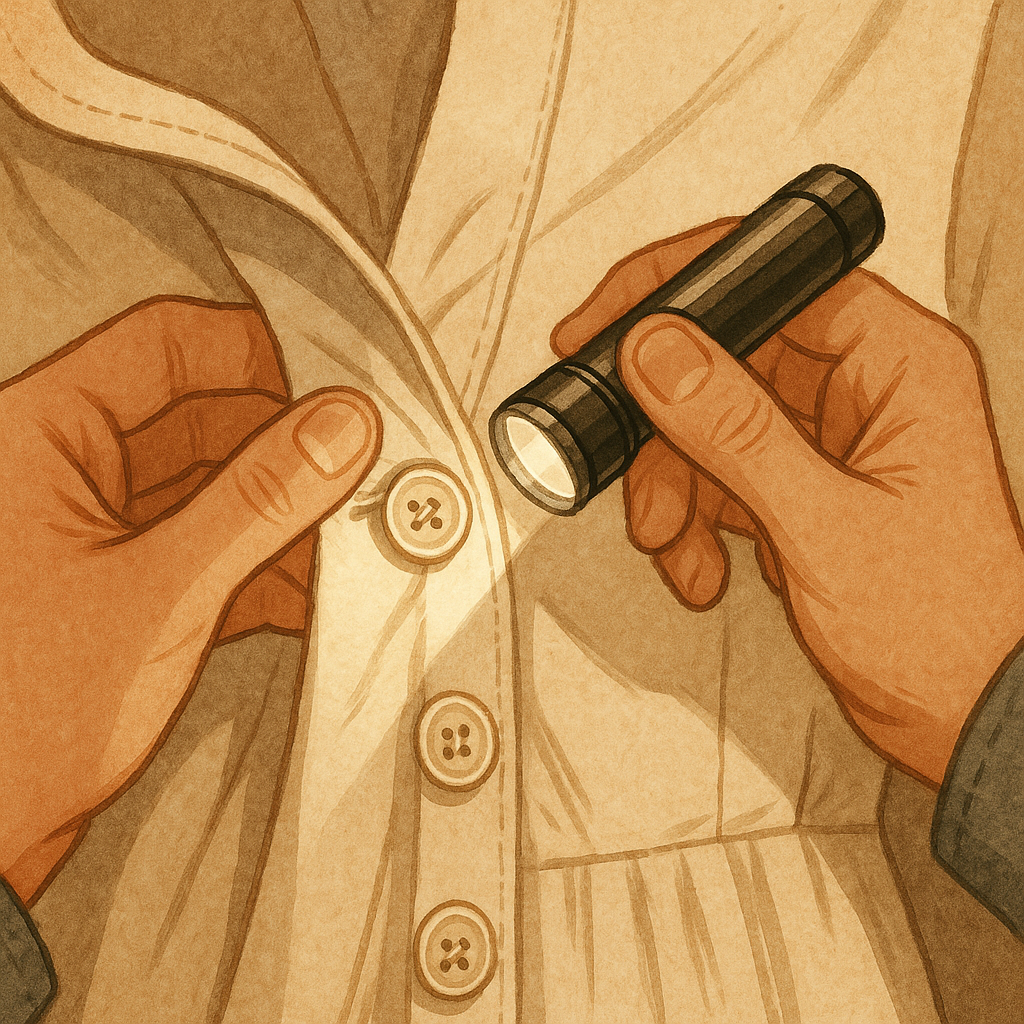
I don't care how romantic the hangtag story is, I start with the boring bits: closures and fasteners. When I'm doing a pass through my closet to see what part of this vintage resurgence is going to stick for me, I grab a small flashlight (my phone works, but I like having both hands free) and I check three places that tend to get ignored until the first wear.
First: buttons. Flip the placket and look at the back side. On older pieces, you'll often see a proper shank, thicker thread, and sometimes a little backing button or fabric disk that spreads the stress. If the button is hanging by two sad threads, it's not a dealbreaker, but it is a sign the garment's been through it. I keep a tiny tin of spare buttons in my closet and I match by size and thickness, not by exact color. If the button is wrong but the shirt fits, I'll replace the whole set so it reads intentional.
Second: zipper stamps. If the zipper pull says YKK, Talon, Scovill, or Opti, I take that as a good sign for longevity, but I still run it up and down slowly. The failure mode I see most is a zipper that works fine until it hits the waistband seam and then catches because the tape is starting to ripple. Shine the flashlight across it. If you see a wave, it will snag on a busy morning.
Third: snaps and hooks. Vintage skirts and trousers love a hook-and-bar at the top. I check if the bar is bent open or if the stitches are cutting into the fabric. If the fabric around it looks fuzzy or thinned, I move the closure a hair inward rather than yanking it tighter. That tiny adjustment is the difference between wearing it weekly and leaving it on the hanger as a museum piece.
The lint roller test for fabric you will (and won't) reach for
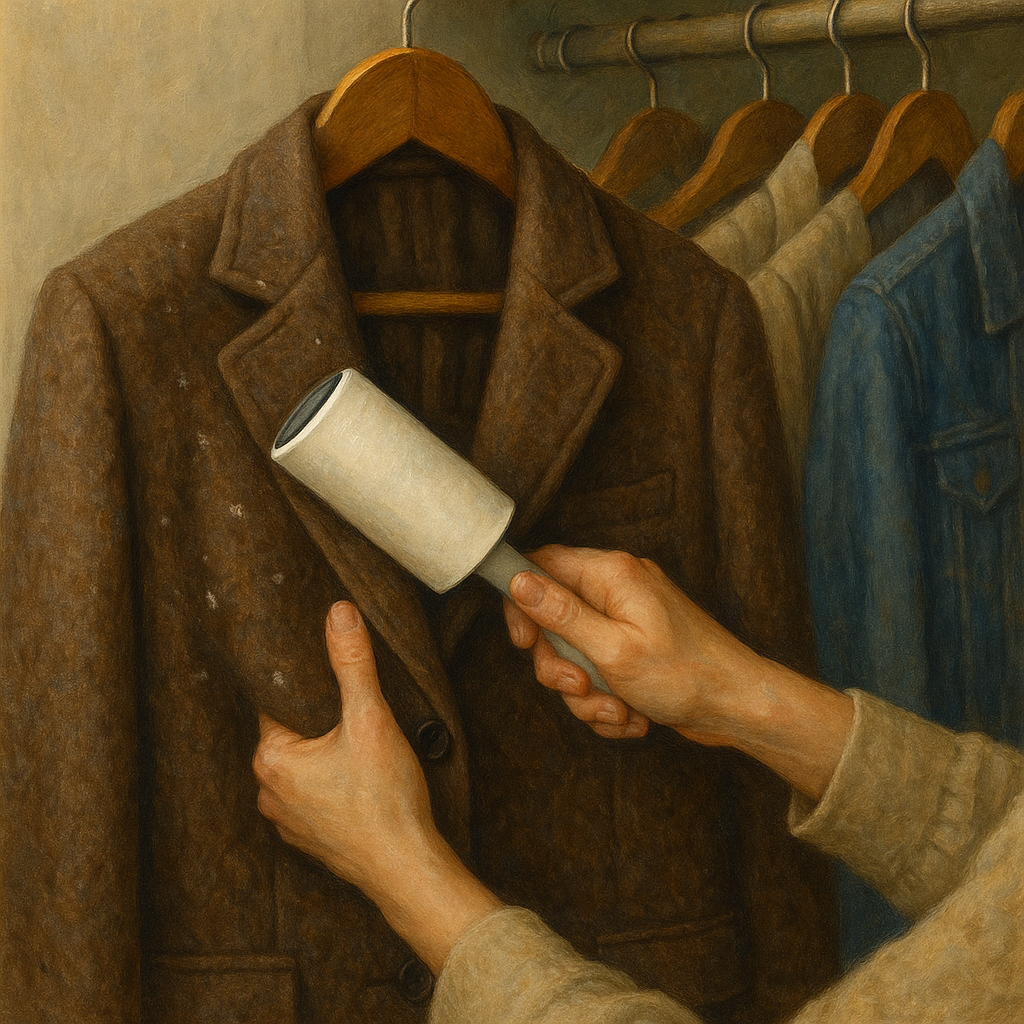
Here's a closet-audit move I started doing after I realized I was buying vintage for the thrill and then dressing like I always do: I run a lint roller over the inside and outside of the piece before it earns a spot on the main rod. It sounds petty, but it tells me, immediately, what kind of relationship we're about to have.
Wool blends and brushed textures can be amazing, but some of them are magnet boards. If one pass pulls up a carpet's worth of fuzz and you can feel the roller dragging, that garment is going to demand a lint check every time you leave the house. That's fine if you're the kind of person who keeps a lint roller in your bag and enjoys the ritual. I'm not. I want to grab-and-go at 7:40 a.m. without realizing I'm wearing half the throw blanket.
On the other side, if the lint roller comes back nearly clean and the fabric still looks crisp, I know I'll wear it more than once a month. This is where I see the trend shifting in my own closet: I'm keeping the vintage that behaves like modern workhorses. Cotton poplin, denim that isn't too soft, tighter knits that don't grab everything. I also pay attention to static. If a skirt clings to my tights in the closet, it will cling in real life. I don't try to outsmart that with hacks. I just decide if I'm willing to wear it mostly in warmer months or with a slip.
Then I do a quick lining check. A lot of older lined pieces have lining that's intact but tired. If it feels sticky or makes that faint crinkly sound when you move it, it won't be comfortable, even if it looks perfect on the hanger. I reserve one section of my closet for stuff that's "special occasion" fussy and I keep the daily-wear lane ruthlessly low-maintenance. The lint roller tells me which lane it belongs in before I waste weeks pretending.
Hem allowances: the tiny seam detail that predicts trend staying power
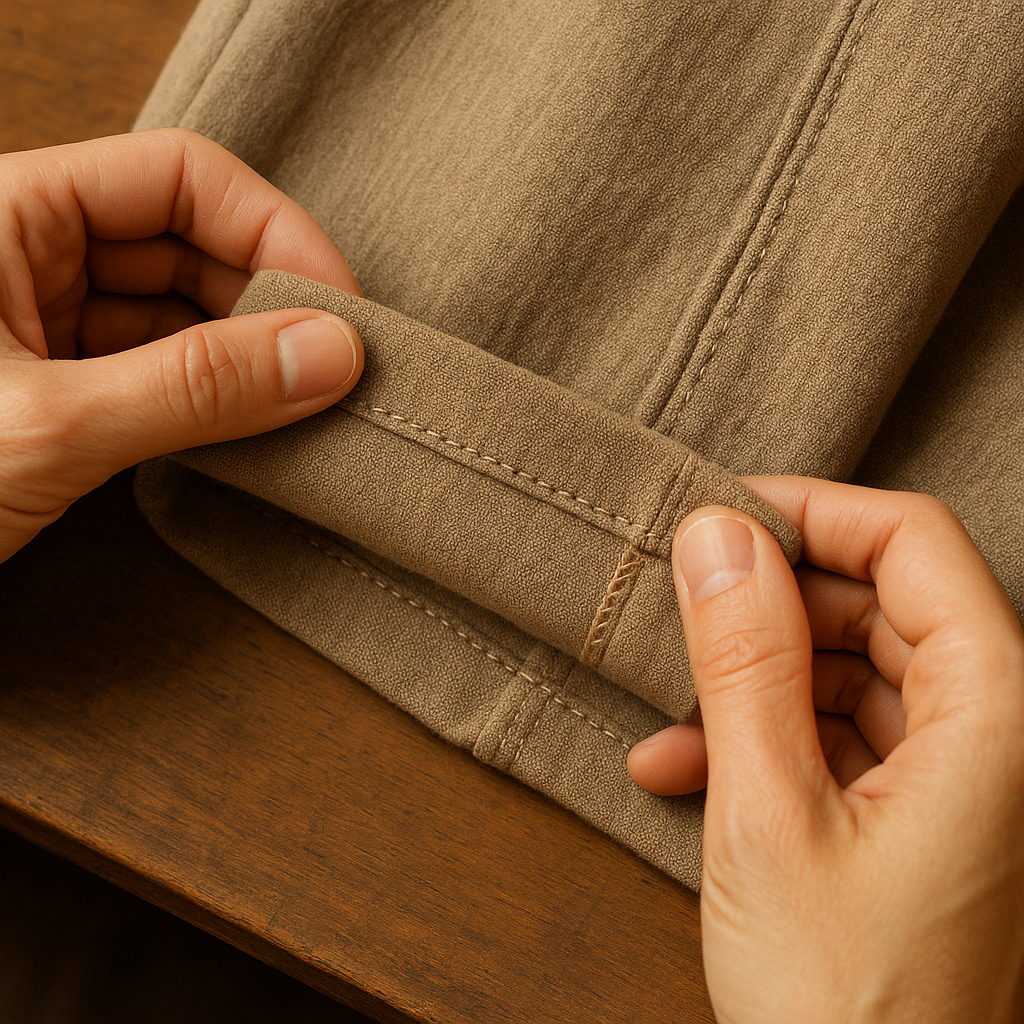
Vintage comes in waves, but the pieces that survive the wave in my closet are the ones I can tweak without destroying them. The easiest, most honest place to see if you have room to work is the hem. Not the vibe. Not the label. The hem.
Turn the garment inside out and measure the hem allowance with your fingers. On a lot of older skirts and trousers, you'll find a generous fold: sometimes 1.5 inches, sometimes more. That extra fabric means you can adjust length for your shoes and your life, and you can do it in a way that still looks like the garment's original intent. When I'm deciding whether a longer vintage skirt is going to be a one-season flirtation or a long-term piece, I check whether I can raise it enough to clear my everyday footwear without it looking abruptly chopped.
I'm careful here because technique matters. If I want to shorten a woven skirt or pair of trousers, I prefer a clean, pressed double-fold hem (fold up, press, fold again, press, then stitch). It's sturdy and it doesn't leave a raw edge to fray in the wash. If the fabric is thick, I'll do a wider single fold with the raw edge finished first, but only if the fabric already has some structure. Knits are different. On knit dresses and tees, I look for a twin-needle hem or a coverstitch look. If I don't have the right setup at home, I won't pretend I do. I'll either leave it or take it to a tailor with the right machine.
The other thing a hem reveals is prior alterations. You can see old needle holes, a shadow line where it used to be longer, or a ridge from an iron that lived there for years. If the fabric shows a stubborn crease line, I treat that as a styling constraint. Maybe this skirt wants boots. Maybe it wants a slightly longer length so the old line sits inside the fold. That little seam decision is how I stop buying vintage as a trend and start keeping it as clothing I can live in.