
Run these three quick bias checks on your saved looks, and you'll stop mistaking hype, price, and fit fear for a "new you."
The availability trap: your feed is not the market
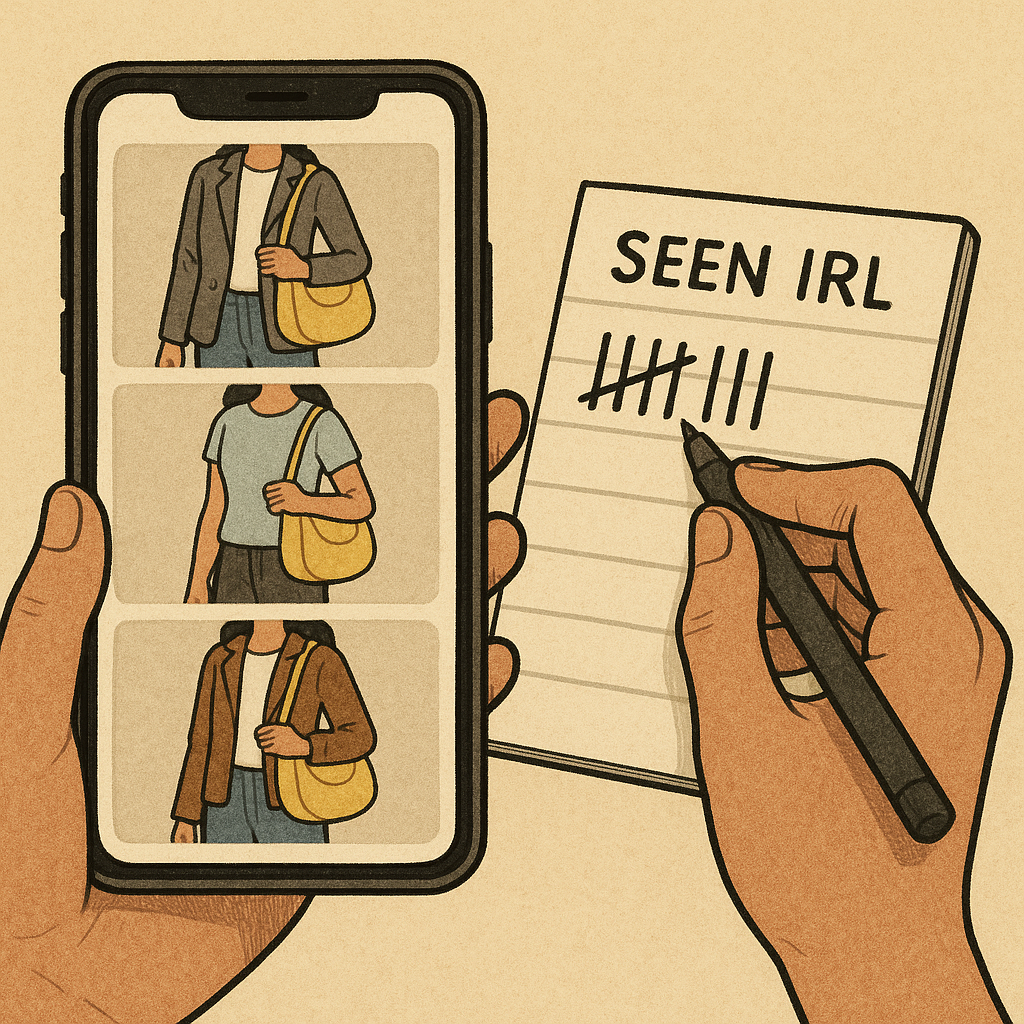
I can tell when I'm about to overbuy because my brain starts talking like my For You page: everyone is wearing it, it goes with everything, it sells out instantly. That's availability bias in a trench coat. The check I do is annoyingly simple: I force the trend to prove it exists outside the same three scroll zones.
Open your saved folder (Pinterest boards count, but TikTok bookmarks are the usual culprit) and pick one specific item you're tempted by: silver ballet flats, a butter-yellow bag, barrel-leg jeans, whatever's living rent-free. Now do a 3-source scan where each source has a different incentive:
- Your closet evidence: pull 5 outfits you wore in the last month (a photo log is fine) and ask, "Where would this new piece physically go?" Not vibe-wise. Hanger-and-hook-wise.
- Search results shopping pages: not to buy, just to see breadth. If it's only showing up in one retailer's private-label line, that's a different signal than a bunch of unrelated brands making versions at once.
- Street-level reality: I use my commute for this. Coffee run, school pickup, the grocery store. If I don't see a single version in the wild for two weeks, I treat the trend as "internet-loud" and I slow down.
The hands-on part: I literally keep a note called "Seen IRL" and tally quick marks. It's boring, and it works. A lot of trends are perfectly fun, but they aren't ubiquitous. Your feed just has a very confident algorithm and a very short memory.
Anchoring is why the $248 version feels "reasonable"
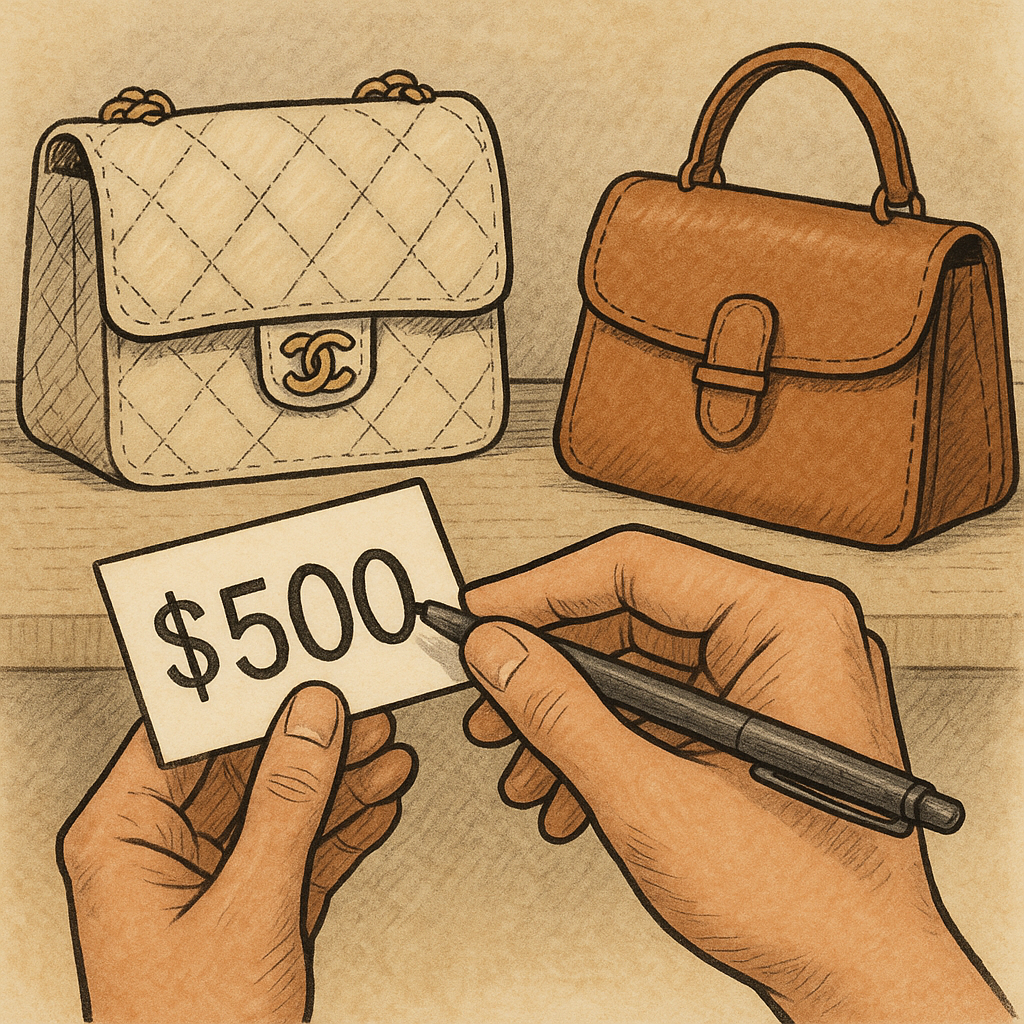
This is the one that gets me when I'm trend-spotting: I see a designer version first, my brain locks onto that number, and suddenly a mid-tier dupe feels like I'm being disciplined. That's anchoring. It's not a character flaw, it's just how our pricing brains work.
Here are the two moves I use to get the anchor out of my head before I decide whether the trend is even for me.
- Start with a decoy price on purpose. I pick a common "high" number for the category, write it down, and then ignore it. For a leather bag trend, I might write $500. For shoes, $300. It sounds silly, but once I've named an anchor myself, I'm less likely to swallow the first one a brand hands me.
- Do the three-number ladder. I look at one version under $60, one around $150, and one over $300, even if I think I know which I'm "supposed" to like. Then I ask a blunt question: am I responding to the design, or am I responding to where it sits on the ladder?
Then I do a practical check that has nothing to do with taste: what will it cost to live with it? If it's a shoe trend, I look at outsole material and whether it can be resoled. If it's denim, I check if the fabric has enough recovery that the knees won't bag out by lunch. If it's a blazer, I look for shoulder pads I can remove and whether the lining is stitched cleanly at the hem. Those details are where trend pieces either turn into workhorses or turn into donation-bin guilt.
When the trend is truly good for your closet, it stays appealing even when you strip the price story away.
Loss aversion: the "I'll regret it" feeling is a sales tool
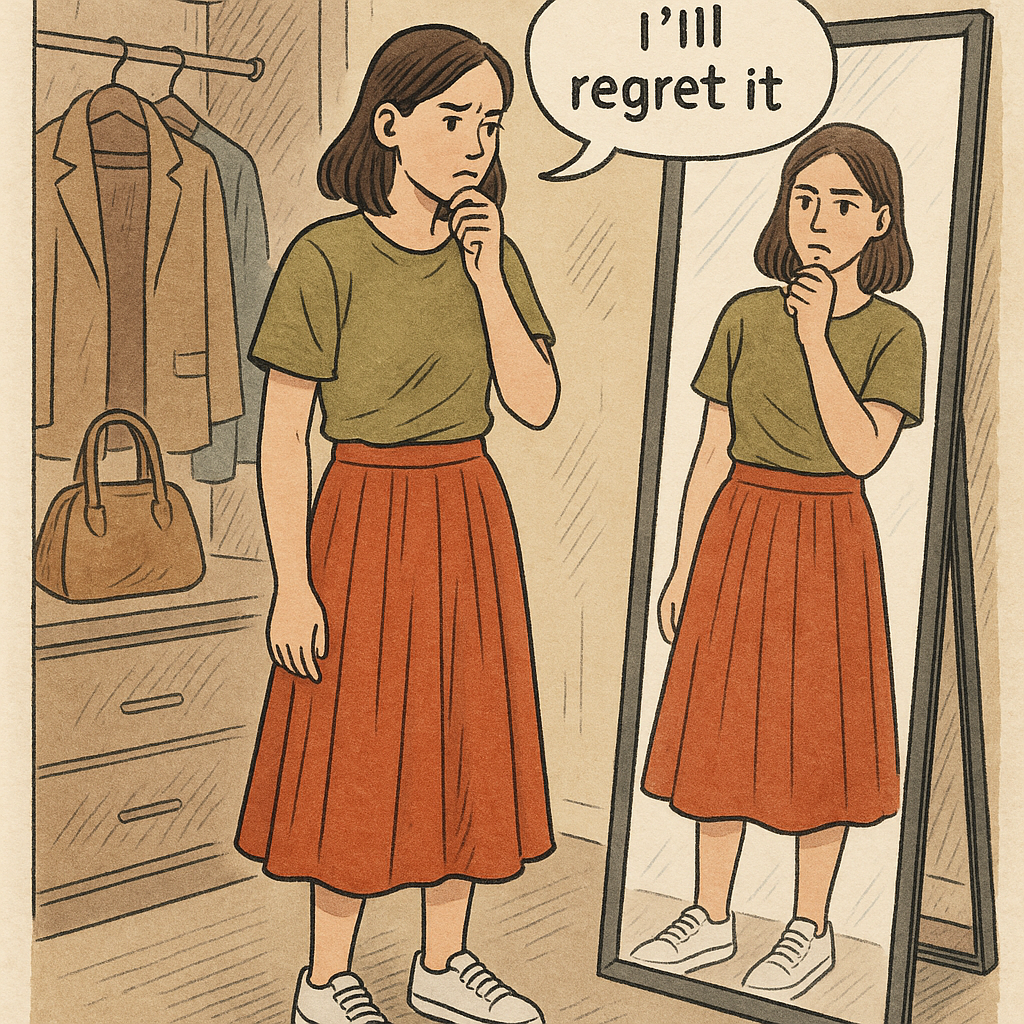
Loss aversion is the reason a limited drop can make you consider a color you never wear, in a silhouette you normally avoid, with a return policy you haven't read. The fear isn't "I want it." It's "I'll lose the chance." Brands know it, and honestly, so do we. The trick is giving your brain a different kind of not-missing-out.
My go-to is what I call the regret swap. Instead of asking, "Will I regret buying this?" I ask, "What will I regret more: buying it and babysitting it, or skipping it and wearing what I already own?" Then I make the question concrete with a wear test that takes ten minutes:
- Put on the shoes you'd realistically wear with it. Not the aspirational heels. The sneakers, loafers, or boots you grab when you're late.
- Build one full outfit with your current closet. Top, bottom, outer layer if you need it, bag. If it's a trending bottom (say, a micro-mini or a maxi with a dramatic hem), I sit down, stand up, and do stairs. I'm looking for constant tugging, twisting, and that tiny panic that starts when you know you'll be adjusting it all day.
- Check the return friction. If it's final sale, if it requires a paid label, or if it has a short return window, I treat that as part of the price. Loss aversion hits harder when returning is annoying.
One more thing that matters in trend forecasting: watch your own language. If you keep saying, "I'll make it work," that's usually not style ambition. That's your brain trying to avoid the pain of missing out. When the trend is right, you don't have to negotiate with it. You put it on and you leave the house.