
Three hands-on ways I use AI outputs without getting duped by recycled looks, bad sourcing, or wishful runway math.
Treat the model like an intern: make it show receipts
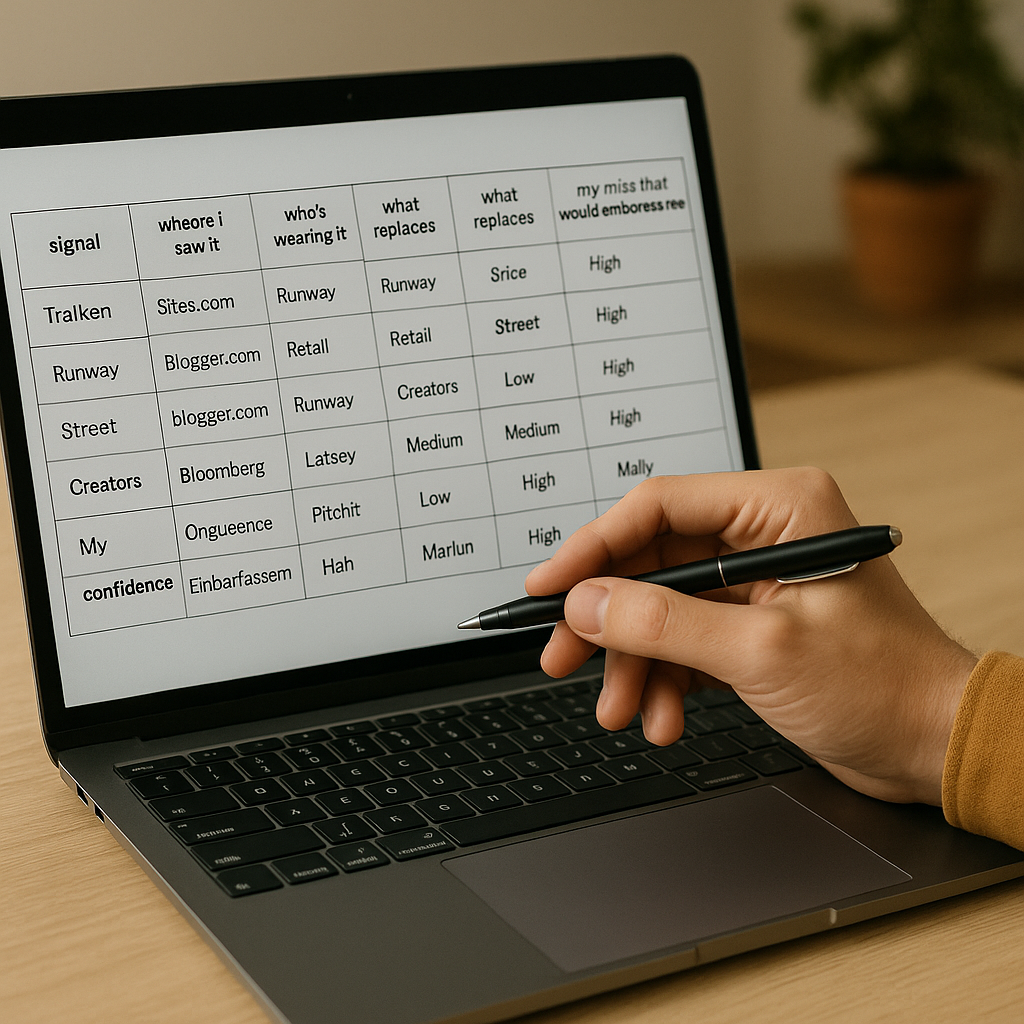
I use AI for trend forecasting the same way I use an eager new assistant: I let it talk, then I make it prove it. The fastest way I know to do that is a dead-simple Google Sheet where every claim has to earn a row. Columns: signal (what it is), where I saw it (actual URLs or publication names), who’s wearing it (runway, retail, street, creators), what it replaces (the outgoing look), my confidence (low/med/high), and the miss that would embarrass me (so I stay honest).
Here’s the key: when I ask a model for “early signals,” I don’t accept a tidy list. I ask for three examples per signal across different sources, and I’m picky about what counts as a source. A lookbook on a brand site is fine. A resale listing can be useful. A TikTok slideshow with no brand tags is entertainment, not evidence. If it can’t give me verifiable touchpoints, it doesn’t get a row.
This is where the fashion-specific failure mode shows up: AI loves to average the internet. It will confidently hand you 2021 Pinterest leftovers (corset tops, “dark academia,” neon green) dressed up as a fresh call. My sheet catches that because the “where I saw it” column forces time and context. If every link is an old blog post, a stale shopping roundup, or one viral photo used a thousand times, I flag it as recycled and move on. The magic isn’t the spreadsheet. It’s the friction. It slows me down just enough to stop repeating the same microtrend with a new caption.
Use image search to spot the recycled-visual trap
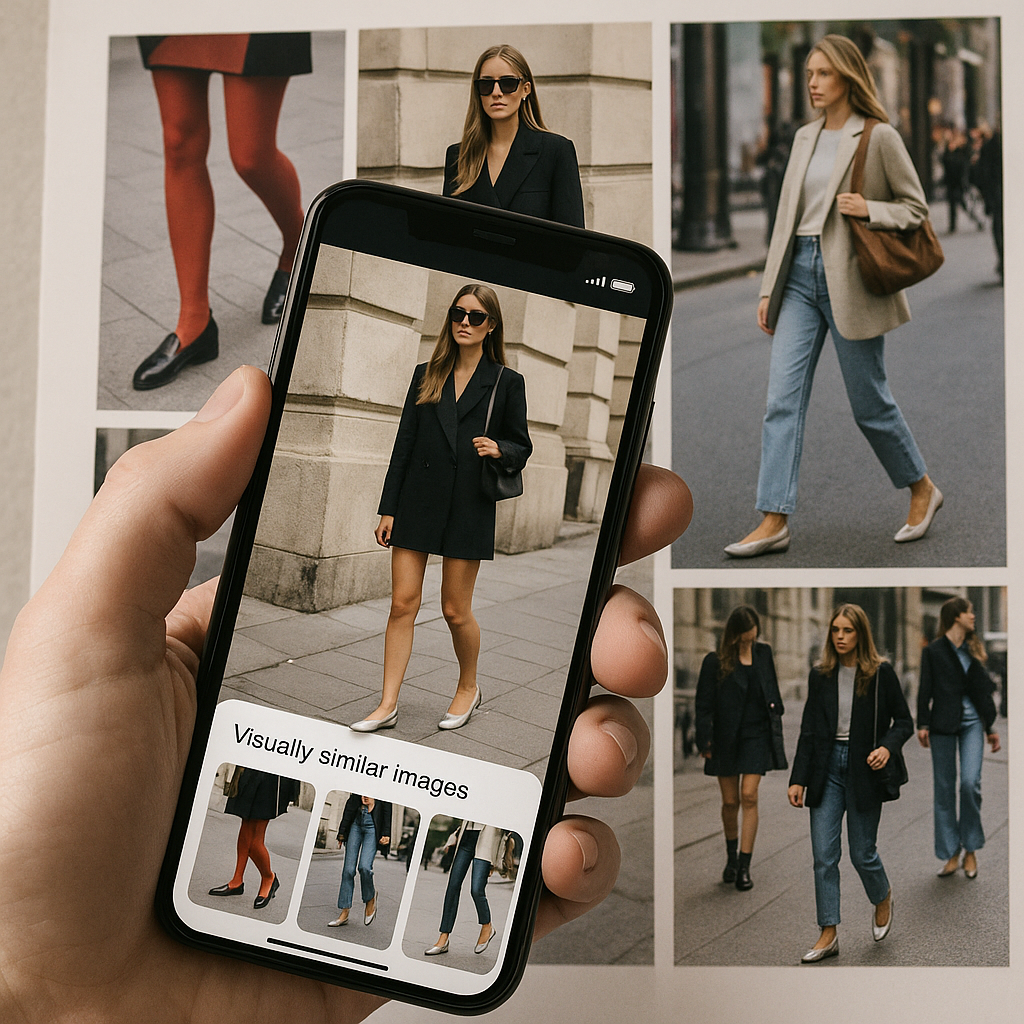
One thing I learned the slightly annoying way: AI is easily hypnotized by a strong image. Feed it a collage of street-style shots and it’ll “forecast” whatever the photos already imply, even when those photos are the same three looks reposted for months. So I do a quick visual sanity check before I let an output steer my shopping or my styling advice.
My move is Google Lens (or any reverse-image search) on the hero images that keep appearing in trend decks and “what’s next” threads. I’m not trying to play detective for fun. I’m trying to answer one question: Is this a living pattern, or a single viral visual loop? If the same shot of a silver ballet flat (or that one red tights photo, or a specific slouchy bag on a specific person) traces back to an older season, a brand campaign, and then a hundred reposts, I treat it like a reference image, not a market signal.
Then I look for the unglamorous confirmations AI usually skips: small product drops across multiple retailers, not just one; size runs that are selling through; dupes showing up in fast-fashion; and the boring-but-true sign that people are wearing it badly in candid photos. When something’s real, you see it in imperfect versions: the wrong sock choice, the scuffed toe, the coat thrown over it because it’s 42 degrees. AI tends to surface the cleanest, most editorial instances. Reverse-image search helps me find whether there’s messy, normal adoption happening, or if I’m staring at one polished campaign image that’s doing all the work.
This also protects you from the “new name, same item” problem. AI will happily rename an old silhouette and call it a wave. If Lens shows the exact shoe, exact bag, exact jacket has been circulating since two falls ago, I’ll still wear it, sure. I just won’t pretend I’m forecasting anything. I’ll call it what it is: a durable piece that never left the group chat.
Translate vibes into numbers you can shop and style
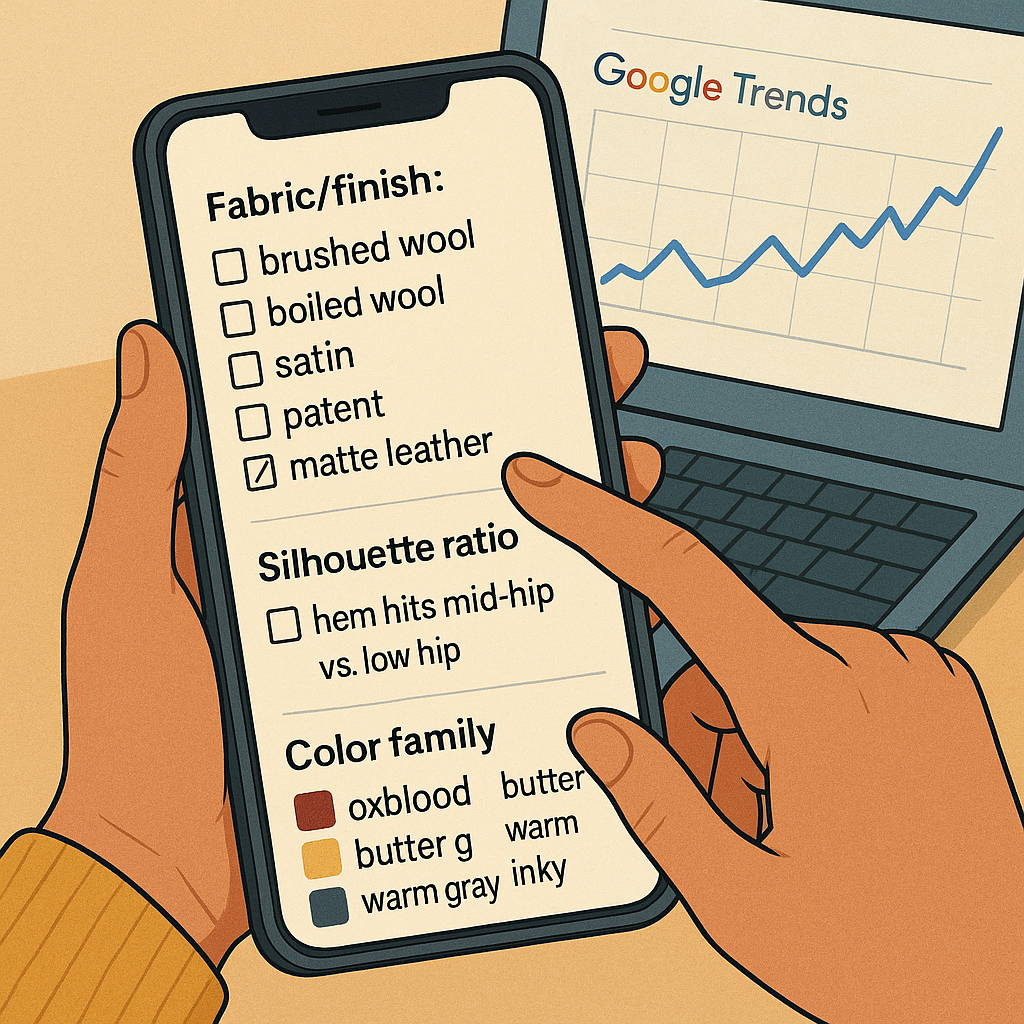
AI trend talk is great at mood. It’s terrible at the part that matters when you’re deciding what to buy: how much, how often, and what, specifically. “More texture,” “soft tailoring,” “coquette,” “quiet luxury,” “gorpcore-adjacent” are not instructions. They’re vibes. So I force a translation step: I won’t act on a forecast until I can express it as two or three concrete, shop-usable variables.
I do this with a mix of product filters and Google Trends, and I keep it unsexy on purpose. Example structure:
- Fabric/finish: brushed wool, boiled wool, satin, patent, matte leather.
- Silhouette ratio: hem hits mid-hip vs. low hip, pant leg opening in inches (if listed), maxi length vs. midi.
- Color family: oxblood, butter yellow, warm gray, inky navy.
Then I ask AI a better question: not “what’s coming,” but “if I walk into a retailer site and sort by material, color, and shape, what should I see more of over the next 8 to 12 weeks?” After that, I test it. If the model says “butter yellow is rising,” I check Trends for “butter yellow cardigan,” “butter yellow sneakers,” and “butter yellow dress,” because a color that’s only searched with one item type is usually just a viral product, not a wardrobe shift.
And I’m ruthless about what counts. If the only growth is “outfit” searches, it might be content, not demand. If searches are up but retailer assortments are flat, it may be aspirational chatter. If assortments are expanding but searches are quiet, it can mean the industry is pushing a look that hasn’t caught yet. That’s still usable information, but it changes how I play it. I’ll style it with what I own before I buy into it.
This is the part where a forecast becomes personal. A trend that’s “happening” can still be wrong for my closet if it doesn’t map to items I wear twice a week. Numbers make that obvious fast. If I can’t turn the vibe into a specific knit, a specific shoe shape, or a specific color that works with my existing coats and bags, I don’t need the trend. I need better styling, or I need to log off.