
Three eco-fashion tells I trust now: refill pouches, mono-material tags, and the repair receipt I keep on file.
Refill pouches: the boring packaging that changed my buying

I used to roll my eyes at refill stations because they always sounded like a field trip. Then I realized the real signal isn't the cute glass bottle on a shelf. It's whether the product has a refill that normal people will buy when they run out. When a brand makes refills, it has to commit to the formula, the packaging geometry, and a supply chain that keeps the same thing in stock long enough to be worth refilling. That's boring, and boring is where the good eco stuff usually hides.
My quick check is stupidly literal: I search the brand's site for the word refill, then I look for a pouch or cartridge that fits the original container. If all I see is a blog post about circularity and zero actual refills for sale, I treat the sustainability language as marketing garnish. On the flip side, when I see refill pouches for things that get used up fast (laundry detergent, hand soap, even certain deodorants), I pay attention. The whole point is repeat behavior. A limited-edition launch made from pineapple leaves doesn't matter if you never buy it again.
I've also learned to scan the fine print on the refill listing. If the refill is half the size but costs the same as the starter bottle, it's not designed to become your default. If it's meaningfully cheaper per ounce and shipped in a thin pouch instead of another hard bottle, that's the habit forming. It's the same reason I trust brands like Blueland more than a random "earth" capsule collection: the system is built for the second purchase, not the press release.
One more practical note from my own sink area: refills only stick if the container isn't annoying. A pump that dribbles down the side will make you abandon the whole routine by week two. If I'm going to refill, I want a pump that rinses clean, a label that doesn't turn into goo, and a container I won't be embarrassed to keep out. Those are not glamorous criteria, but they're the difference between a one-time eco experiment and a change you keep doing without thinking.
The fiber-content trick: I look for fewer ingredients, not more
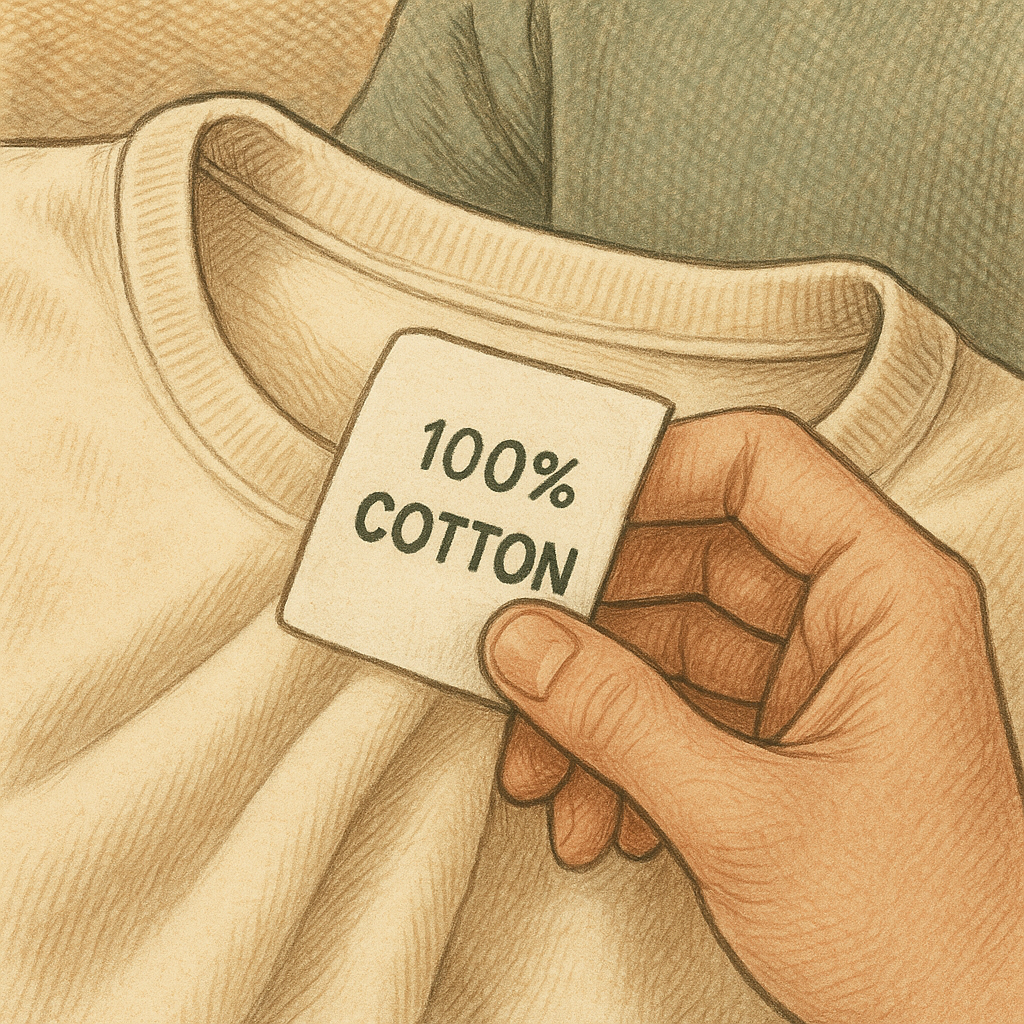
If you're watching eco-friendly fashion trends, you've probably seen the shift from loud claims to quieter, nerdier details: fiber percentages, certifications, repair programs, even resale links baked into product pages. The most useful change I've noticed is how often the "greener" option is the simpler one. Not always, but often enough that it's become my default filter.
When I'm shopping, I don't start with the brand story. I start with the fiber content tag and I ask one question: will this be easy to pass along, resell, or recycle when I'm done with it? A 100% cotton tee, 100% wool sweater, or 100% linen shirt isn't automatically ethical, but it's usually easier to care for and easier to process at end of life than a three-way blend with elastane and metallic thread. Those blended fabrics are comfortable, sure, but they can be harder to repair cleanly and they tend to pill in a way that looks tired fast. I can shave pilling off a sweater, but I can't un-blend polyester out of it later.
My personal rule is: if it has stretch, I want to know why. A tiny bit of elastane in jeans or a fitted tank can be worth it for shape retention. But when I see stretch woven into something that doesn't need it (say, a boxy sweatshirt or a slouchy button-down), I treat it as a sign the fabric was engineered for cost or hand-feel, not longevity. It's also a reminder that "recycled" doesn't always mean "simple." Recycled polyester can be a smart choice in outerwear, but in a delicate knit that snags, it's a headache.
I also look for details that make repairs realistic. A sweater with a tighter gauge knit (less airy, more dense) is easier to mend without the patch screaming at you. Pants with generous seam allowances give you options. Buttons attached with a proper shank (thread wrapped under the button) survive real life better than a flat, tight stitch that pops the first time you tug a pocket. These are the kinds of quiet, shop-floor details that line up with the eco mood right now: less novelty, more "will I still want this after twenty washes?"
The repair receipt I save, even for a $12 fix
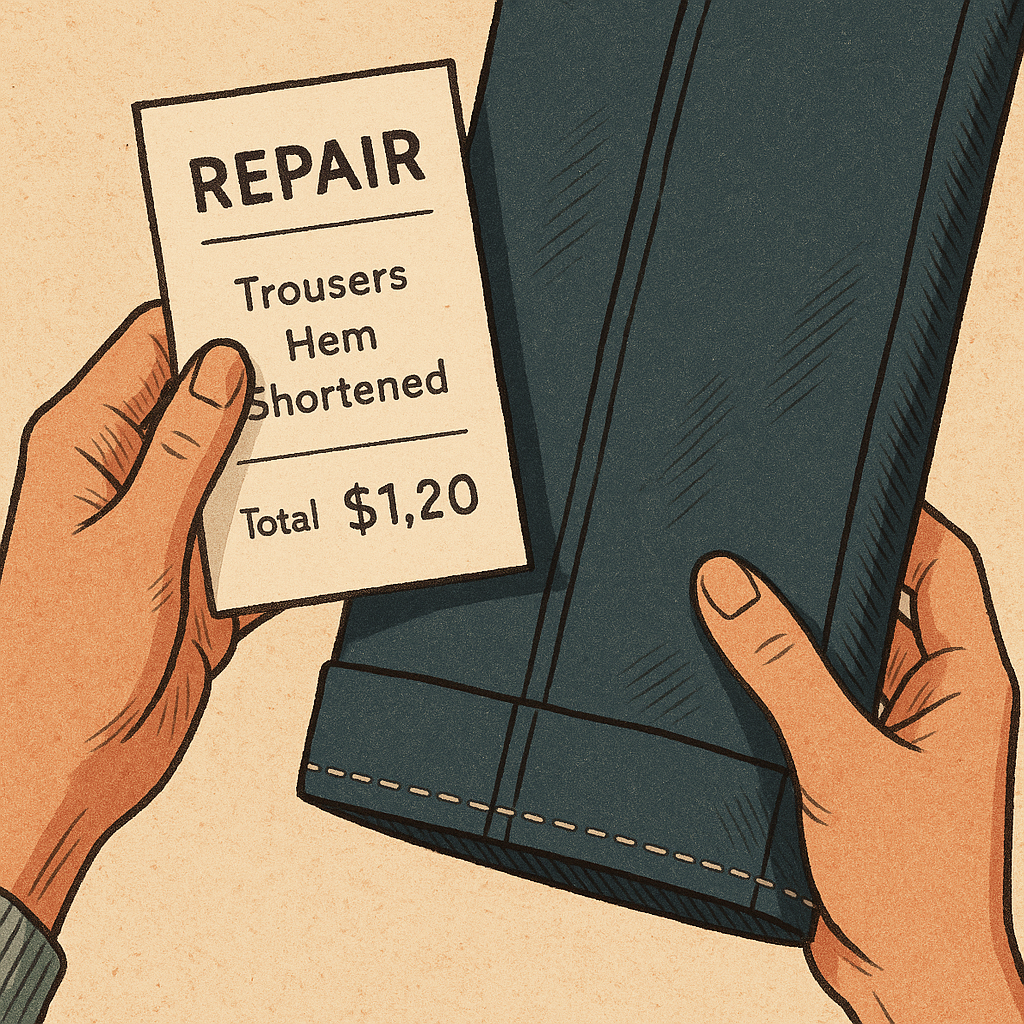
Here's the most concrete eco-fashion trend I can vouch for: repair is becoming normal again, and the people who are doing it aren't pretending it's a moral cleanse. They're doing it because it keeps a great piece in rotation and it makes shopping feel less urgent.
I started saving repair receipts after one small win. I had a pair of everyday trousers that fit perfectly everywhere except the hem, which was getting shredded from one unlucky season of walking fast. I took them to a local tailor and paid $12 to shorten and re-hem them. Nothing glamorous happened. I just stopped ruining my pants. But that $12 receipt became a weird little anchor: every time I started browsing for a replacement, I remembered I already owned the solution and it was in my closet.
Now I keep a simple note on my phone titled "repairs" with the date, the item, and what was done. Not because I'm tracking my virtue, but because it helps me spot what I keep buying that doesn't hold up. If three knit tops in a row get holes at the same side seam, I stop buying that brand's knits. If a certain pair of boots keeps needing heel caps, I budget for it like I budget for dry cleaning. (And yes, I still avoid dry cleaning when I can, but some fabrics are fussy.) This is also where the trend angle shows up: more brands are offering repair kits, spare buttons, and visible mending collaborations. The ones that impress me are specific. "Here's the replacement zipper pull" beats "we care about the planet" every time.
If you want one low-friction place to start, do the repairs that remove annoyance. Replace a broken zipper slider, reattach a loose button, fix a seam that scratches your skin, add a sturdy patch to an inner-thigh rub spot before it becomes a hole. Those fixes keep you wearing the thing, which is the whole point. And when I see a brand selling the spare parts or publishing a clear repair guide, I take that as a stronger green flag than any leaf logo on the hangtag.