
From resale tags to fabric blends, these three tells help you spot what will land in US racks next.
Resale geography tells you where a trend is being born
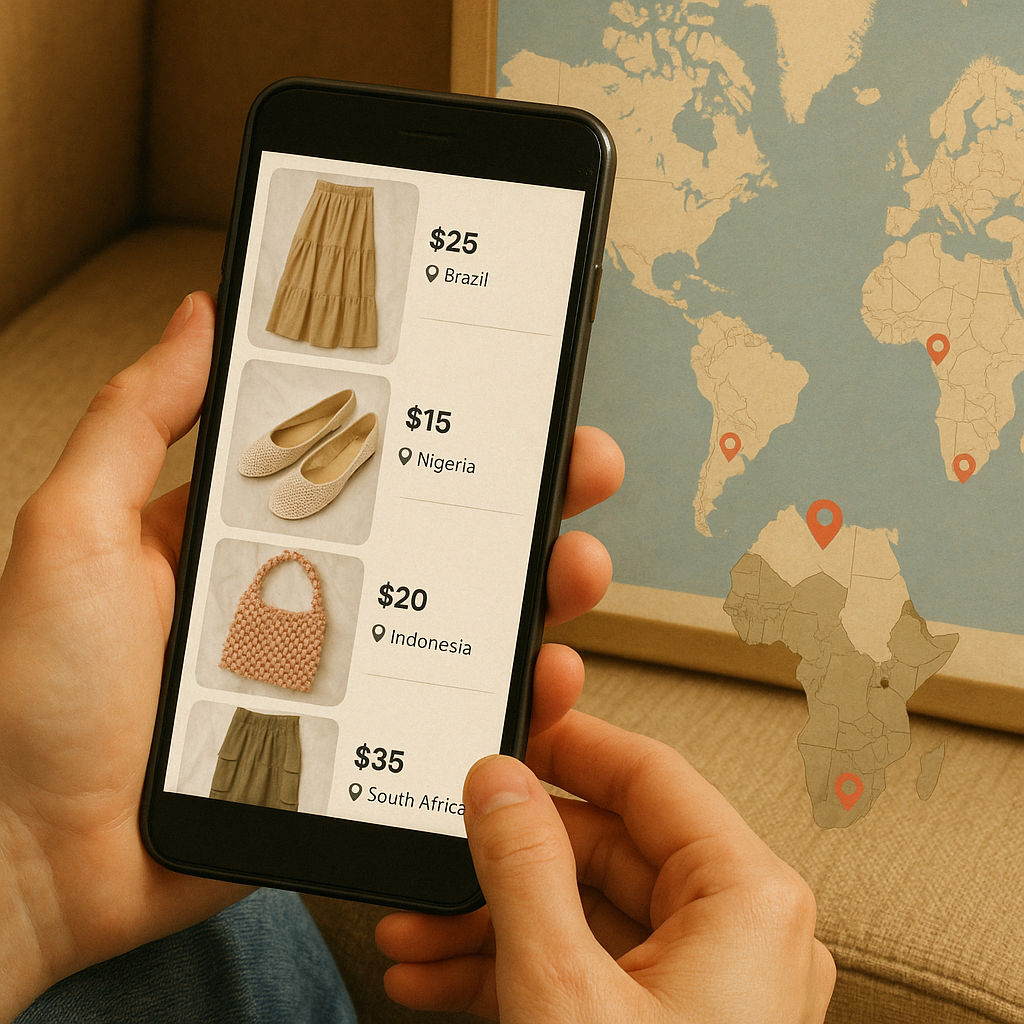
I keep a little ritual that looks like doomscrolling but is basically my low-effort forecasting: I open Depop or eBay, search one specific item (say, cargo maxis, mesh flats, beaded bags), and then I stop staring at the photos. I tap into the listing details and look at seller location density. If the same silhouette is popping up repeatedly from a handful of cities in places like Brazil, South Africa, Indonesia, or Nigeria, I pay attention in a different way than I do when it is mostly US and UK sellers reposting last season's haul.
Here's why it works: resale is where you see adoption before the brand naming catches up. Emerging markets often remix a look for climate, commuting, and local price points, which is exactly the kind of pressure test that shakes out whether a trend is wearable or just photogenic. When I see multiple sellers in the same region listing similar shapes, and the descriptions get oddly specific ("office-friendly," "wedding guest," "for the heat"), that is a signal the item is being used, not just collected. I also watch for local language borrowing into English captions, like a fabric name or a styling term that keeps repeating across sellers who aren't connected.
Two practical tells I use so I don't talk myself into patterns that aren't there: (1) I check if the photos look like normal indoor lighting and wrinkled bedsheets, not studio backdrops. (2) I compare prices to shipping. If the item is priced like someone wants it gone and shipping is the bigger cost, that is usually a closet clear-out, which means the trend had enough local saturation to create secondhand supply.
The hangtag translation: when sizing and fiber content start shifting
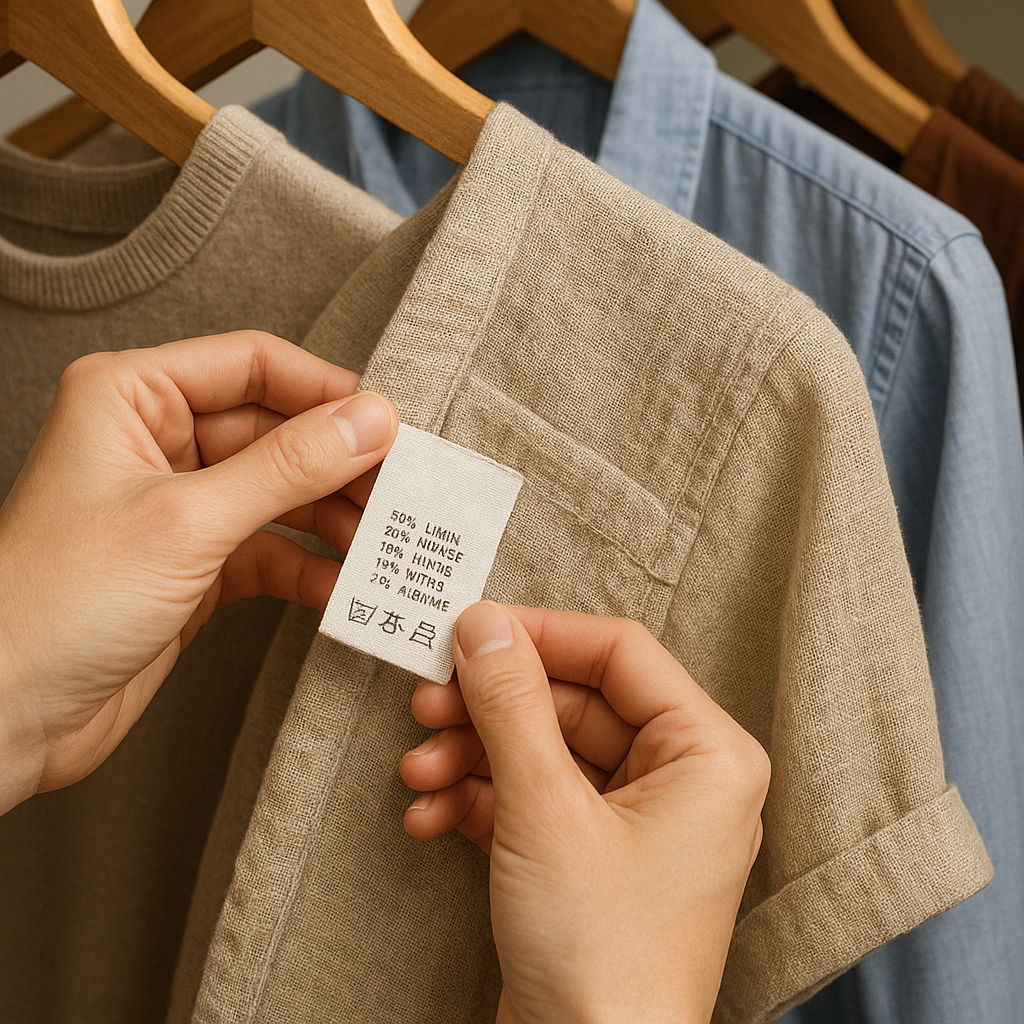
This is the least glamorous thing I do, and it's the one that's saved me the most money: I read hangtags and care labels like they're gossip. When a look starts moving from "cool internet" to mass production, the first clue is often not the silhouette. It's the material story and the sizing language that suddenly shows up across unrelated brands.
Example from my own closet chair pile: a few summers back, I started seeing linen-blend everything on resale coming out of hotter, high-humidity places, but the pieces weren't fragile. The descriptions kept mentioning that the fabric didn't "collapse" in the heat. When I dug into labels on similar new items here, I noticed the same blend strategy repeated: linen mixed with viscose or rayon for drape, sometimes a tiny percent of elastane for recovery. That's a manufacturing response to real wear conditions, and it tends to arrive first where those conditions are daily life. Once you notice that blend, you start spotting the same fabric logic migrating into US mall brands. It's not a guarantee the trend will be cute on you, but it is a sign the supply chain is committing.
I also watch for sizing shifts that show cross-market planning. When brands add petite/tall ranges, numeric sizing alongside letters, or more detailed fit notes ("relaxed through hip," "high rise"), that often correlates with them selling the same pattern block in multiple regions. You can feel it when you try the piece on: the armholes sit a little more intentionally, the waistband has better elastic recovery, the grading between sizes is less chaotic. That's the unsexy part of trendspotting, but it is how you tell whether a look is about to become easy to buy, not just easy to pin.
If you want a quick way to do this without turning into a label detective, pick one item category you already wear a lot (tees, trousers, button-downs) and track only fiber content changes for that category for a month. You'll start seeing the pattern in a way that sticks.
Import math: the shipping threshold that predicts copycats

I don't pretend I'm reading global trade data from my phone, but I do watch one very practical thing: the moment a piece becomes popular enough that people will tolerate annoying shipping. When I see a specific accessory or silhouette repeatedly listed from outside the US and the shipping is the pain point everyone complains about in comments, that is when I start expecting copycats to hit US shelves.
The pattern I see goes like this. First, the item shows up in small batches on Etsy or in niche resale listings, often with handmade vibes or tiny production runs. Then you get the friction phase: buyers are asking about delivery dates, import fees, and whether it will arrive for an event. During that phase, the buyer is basically telling the market, "I want this, but not like this." Brands love that sentence. It's demand plus a clear obstacle that a domestic supply chain can solve. A few weeks later, you start seeing the same look in more standardized materials, with fewer finish details, photographed on a clean white background. That's when it has crossed from emerging-market style signal into mass market product planning.
My hands-on way of using this without spiraling: I pick one listing that feels like the seed and I track it three times, one week apart. Not obsessively, just a quick check. Did the price jump? Did the seller run out and restock? Are there suddenly multiple sellers using the same phrases in their titles? If yes, it is moving. If the original is still the only one and the shipping is still the main story, it might stay niche, and that's fine.
One caution, because it matters: a screenshot of a listing doesn't confirm quality or authenticity. If I'm buying from an overseas seller, I look for clear photos of seams, closures, and materials, and I stick to platforms with buyer protection. Trendspotting is fun. Chargebacks are not.