
Three quick closet checks I use to spot silhouette shifts early, then clear space without purging the pieces that still work.
The sit-down test for hems, rises, and weird bunching
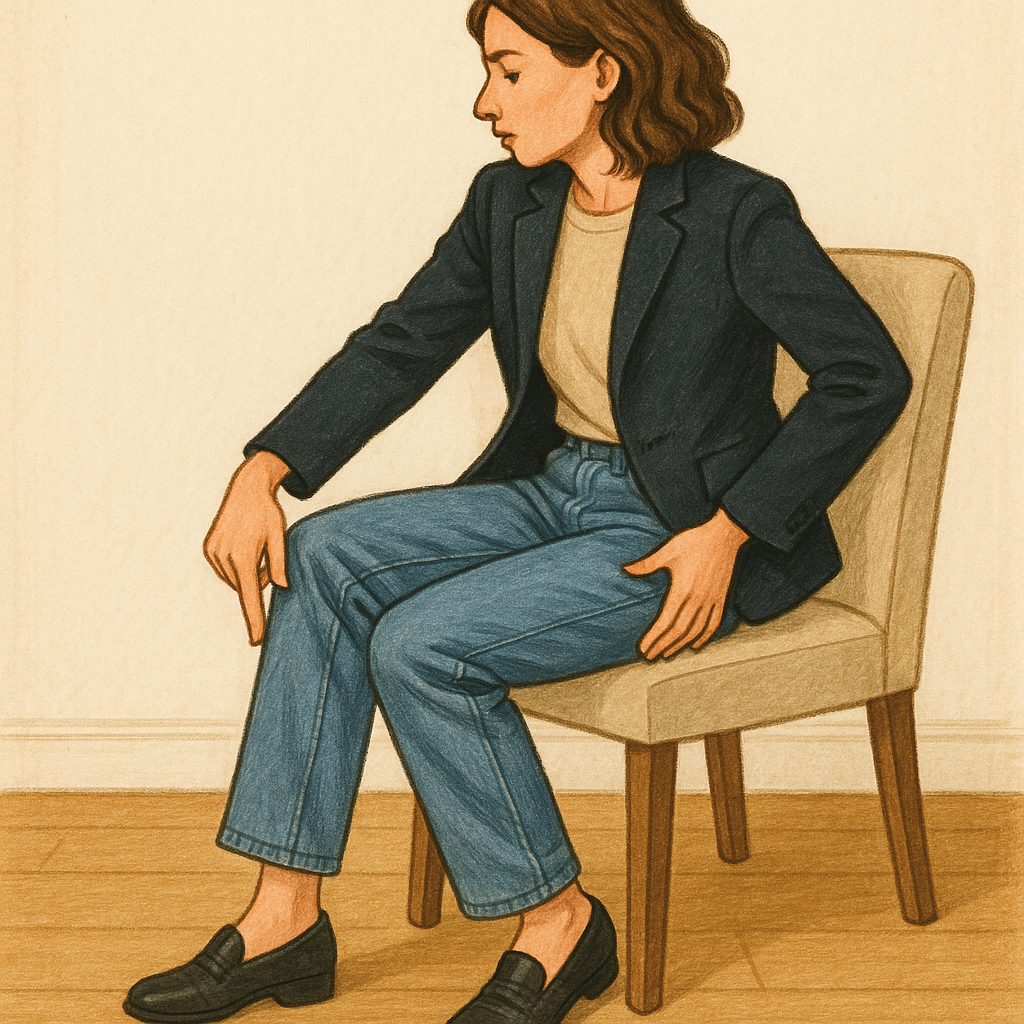
I don't decide whether a shape is done while I'm standing in front of the mirror doing my best mannequin impression. I decide it in a chair, because that's where the seams start tattling. Pick three outfits you wore a ton in the last year: the jeans you grab on autopilot, the blazer that makes you feel pulled together, the trousers you swear are "workhorse" and then somehow never wear. Put them on with the shoes you normally pair, then do the boring stuff: sit, cross your legs, reach for something on a low shelf, get up, sit again. Watch for three tells.
First: where does the waist land once you sit? If a mid-rise that used to feel normal is suddenly trying to fold into your ribcage, that's a clue that your brain has adjusted to a higher rise (or a looser waistband) and anything structured is going to feel fussy. Second: hems. When I started seeing wider legs everywhere, I thought my straight jeans were fine until I sat and noticed the hem was hiking up like it was trying to become a cropped jean. That's not a moral failure. It just means the proportion is changing, and your eye is following it. Third: bunching at the hip crease. If fabric is pooling right where your thigh meets your pelvis, the cut is probably fighting what you're reaching for lately, even if the size technically fits.
Here's the closet-space move that follows: anything that fails the sit-down test goes on a separate hanger facing the opposite direction for two weeks. Not a donation bag. Not a dramatic purge. Just a visual flag. If you don't reach for it in that time, it doesn't get to live in the prime zone anymore. Mine go to the far right of the rod (still on hangers, still visible), and suddenly there's breathing room for one incoming piece in the newer proportion without cramming the whole rack.
One shelf, one silhouette: stop the stack creep
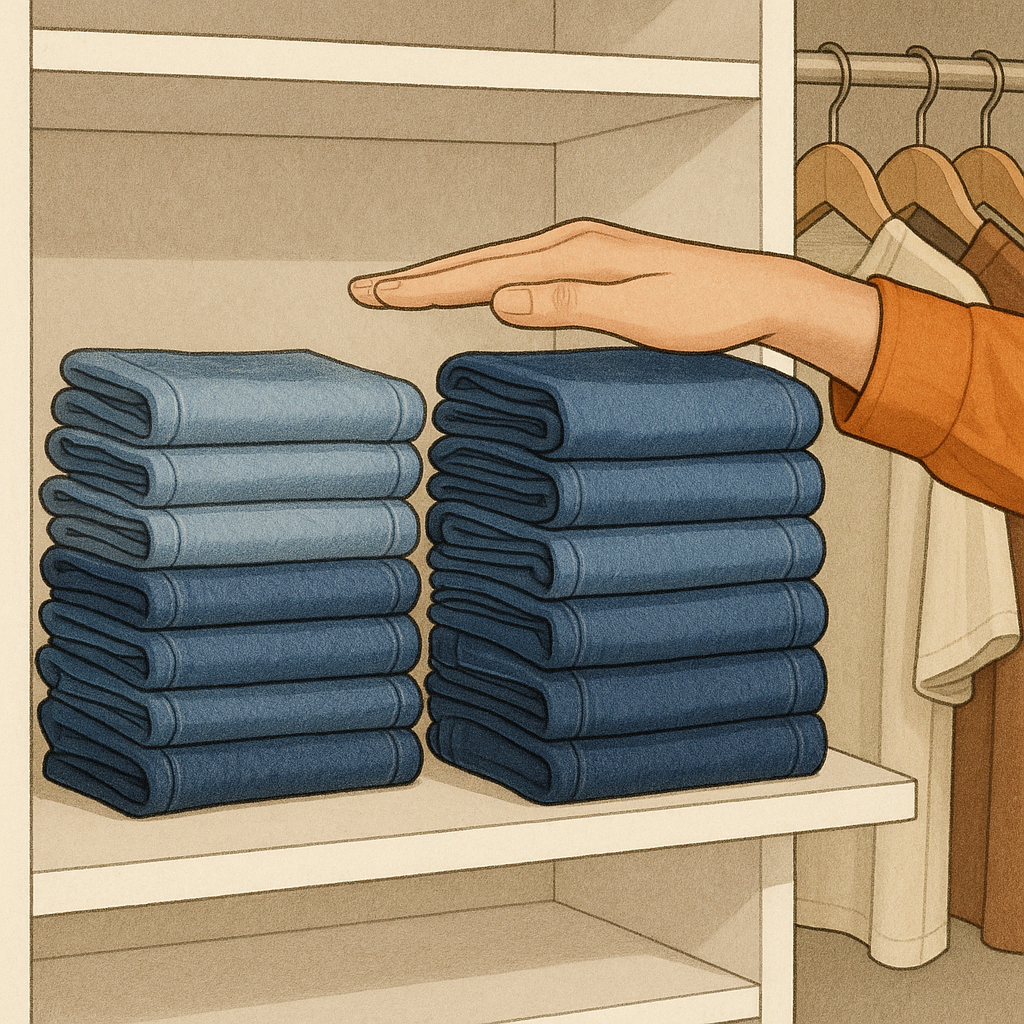
Stack creep is how I miss a silhouette shift until it's already in every store window. It starts innocently: you fold jeans, the pile gets a little wobbly, you press it down, and suddenly you can fit seven pairs where five used to live. It feels like a win until the stack becomes a junk drawer with waistbands. The trick that's saved me is giving each shelf a job that matches a shape, not a category.
Take one shelf (or one bin if you're using those clear ones) and make it the only home for the silhouette that's having a moment in your life right now. For me, it's been fuller-leg pants and longer shorts. When a new proportion is coming, it tends to take up more physical volume. Wide legs and longer inseams fold into bulkier rectangles. Boxier knits don't compress the way a fitted tee does. If you pretend those pieces can share the same real estate as the older slim stuff without changing anything, you end up with knee-high piles and that little avalanche every time you pull something from the bottom.
So I separate by shape: one stack for slim/straight cuts, one stack for wide/relaxed cuts. Same garment type, different footprint. Then I set an honest capacity limit: the stack can't be taller than my hand from shelf to shelf. When it hits that height, I have to move something. No exceptions, no balancing act.
The most useful part is what it reveals. If the relaxed-cut stack fills up fast and the slim stack stays untouched, you aren't guessing about what you're drifting toward. You're watching it happen in a way that also protects space. And if you want to keep a few older silhouettes because they still serve a purpose, this method does it without guilt. I keep one straight jean that looks sharp with loafers and a blazer, but it doesn't get to sprawl across the same shelf as the pants I'm reaching for twice a week. It earns its footprint, like everything else in there.
Triage your hangers by shoulder width, not by trend
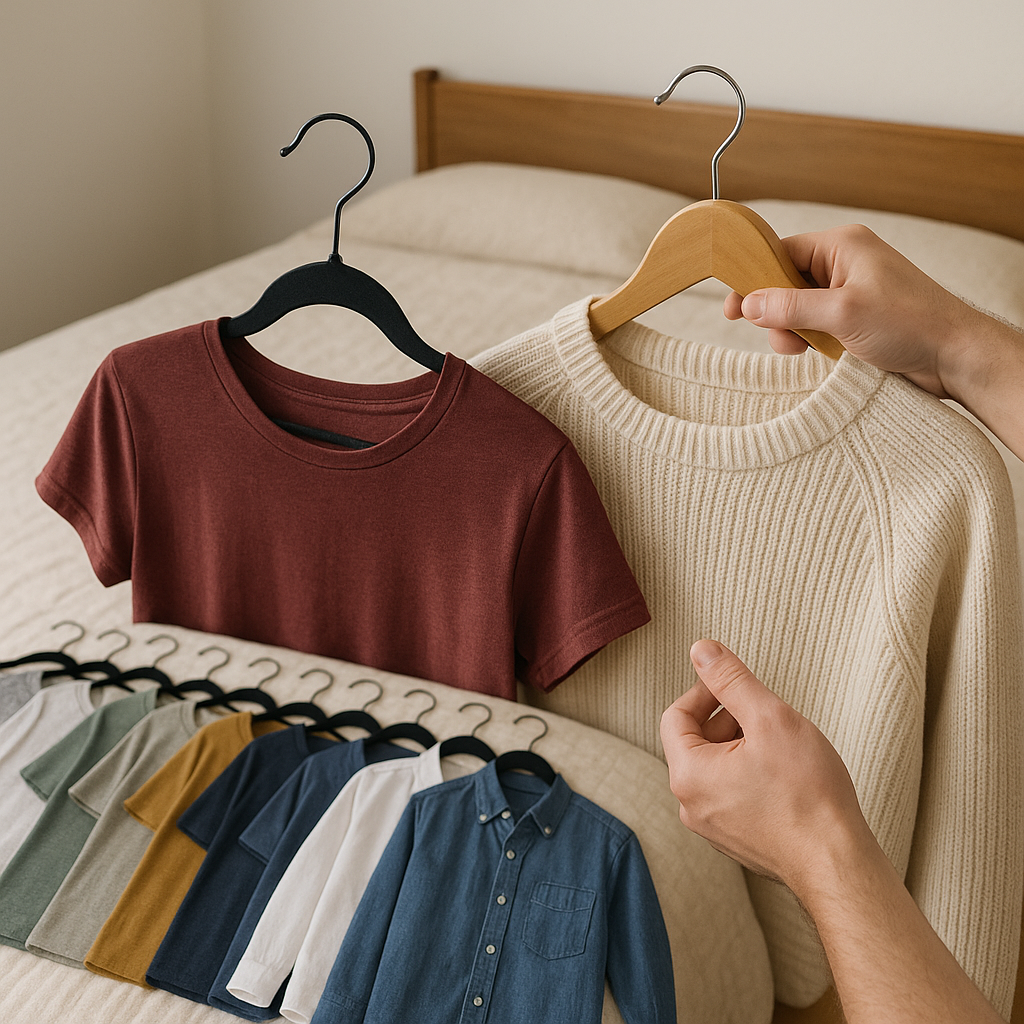
When silhouettes swing, tops are the sneaky ones. Pants announce themselves with obvious leg shapes. Tops quietly change everything by shifting the shoulder line and the overall width, which is exactly why they start eating your hanging space. If you have a rod that feels crowded even after you swear you didn't buy anything, go look at the shoulders on your hangers. I'm serious.
Pull ten tops you wear often and line them up on the bed. Now check three spots: the shoulder seam placement, the sleeve head, and how much fabric hangs past the side seam when the shirt is on a hanger. If the seam is drifting outward (even by an inch), you are living through a broader-shoulder, boxier moment. That doesn't mean you need to replace everything with oversized pieces. It means you need to stop storing those tops like they're still slim-cut button-downs that behave nicely on skinny hangers.
Here's what I do to keep my rod from turning into a packed subway car. I switch anything with a wider shoulder or a structured knit onto sturdy, broader-shouldered hangers (the kind meant for jackets and sweaters). If you keep them on thin velvet hangers, they slump and overlap, and you lose visibility. The broader hanger keeps the garment's shape and, weirdly, makes it take up less chaotic space because sleeves aren't collapsing into each other.
Then I group by shoulder width, not by color. Narrow-shoulder pieces on one section of the rod, broader pieces on another. It sounds fussy, but it turns into a fast read: if the broader-shoulder section is suddenly the longest part of the closet, you've spotted the shift early. That's your signal to make room there (maybe two extra inches of rod space) before you buy the next boxy cardigan or cropped jacket that needs a little air around it. And you don't have to exile your older tops. You just stop pretending they all hang the same.