
Three crowd-sourced signals I trust: search auto-suggest, event photo dumps, and comment-section fabric callouts.
Search-bar receipts beat hot takes
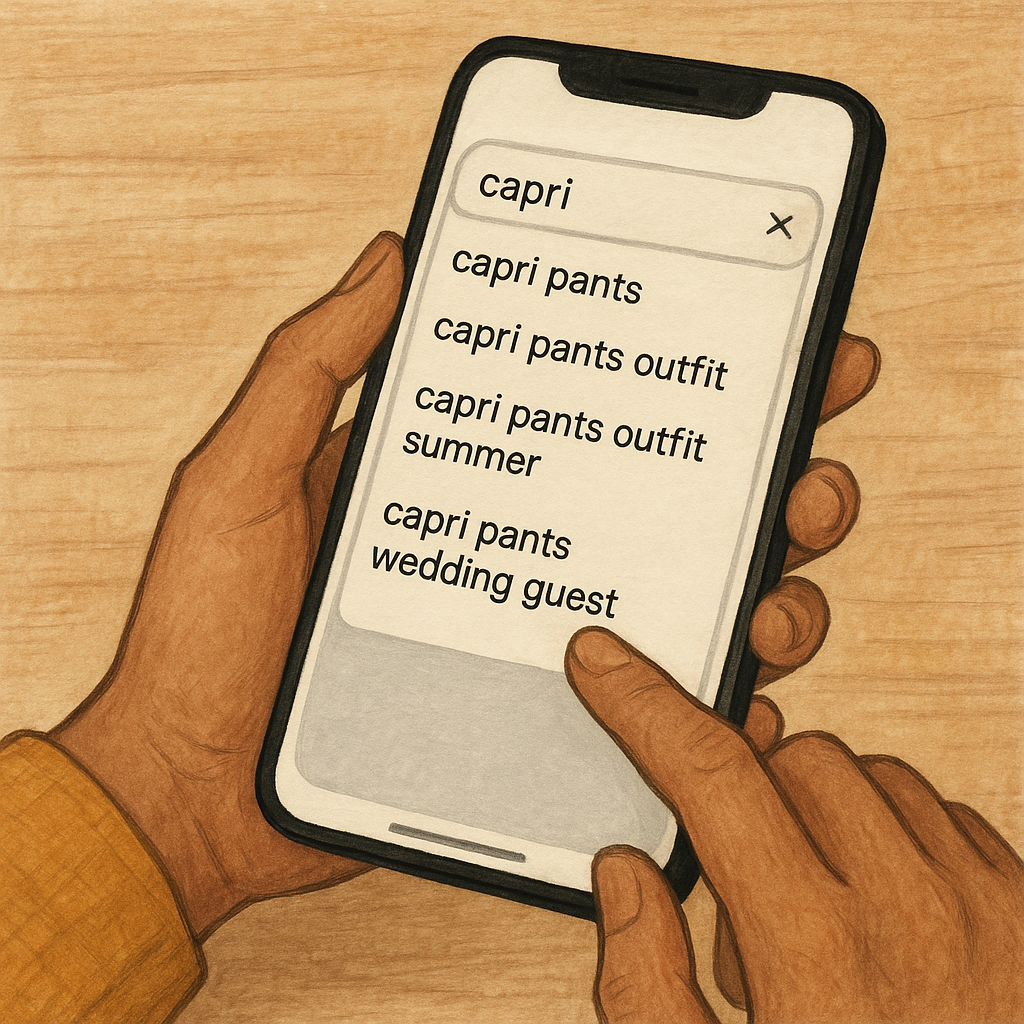
I don’t trust my feed for early signals anymore because it is too good at echoing whatever I lingered on for half a second. The quickest crowd-sourced reality check I use is the dumbest: the search bar. Open Google, TikTok search, Pinterest, even YouTube, and start typing the core noun (not the full aesthetic name). I type things like capri barn mesh satin silver crochet then I stop and read the auto-complete suggestions like they’re gossip from a very blunt friend. The point isn’t to find one viral keyword. It is to see what regular people are pairing it with in the wild: capri pants wor versus “capri pants outfit wedding guest” tells you who’s buying and why. mesh flat turning into mesh flats wide fee tells you it has moved past stylists and into problem-solving shoppers.
Then I cross-check with Google Trends for a sanity check on the shape of the curve. I’m not looking for a moonshot spike. I’m looking for a steady stair-step over 90 days, and I compare two or three adjacent phrases so I can tell whether I’m seeing a true shift or just a headline week. If you want this to feel like a deal-radar move instead of trend tourism, add one more filter: type the material or detail people complain about. polyester itchy see through pilling When those start showing up as suggestions next to the same silhouette, that’s demand meeting reality. It also tells you what to inspect before you buy: lining, seam finish, stretch recovery, not just whether the photo looks cute.
My personal rule is simple. If auto-suggest is finishing the phrase and the 90-day trend line is climbing without a single celebrity name attached, I start watching resale listings and mid-tier brands, not designer runway recaps. That’s the crowd talking with their wallets, even when they don’t realize they’re doing it.
Event photo dumps reveal the uniform before stores do
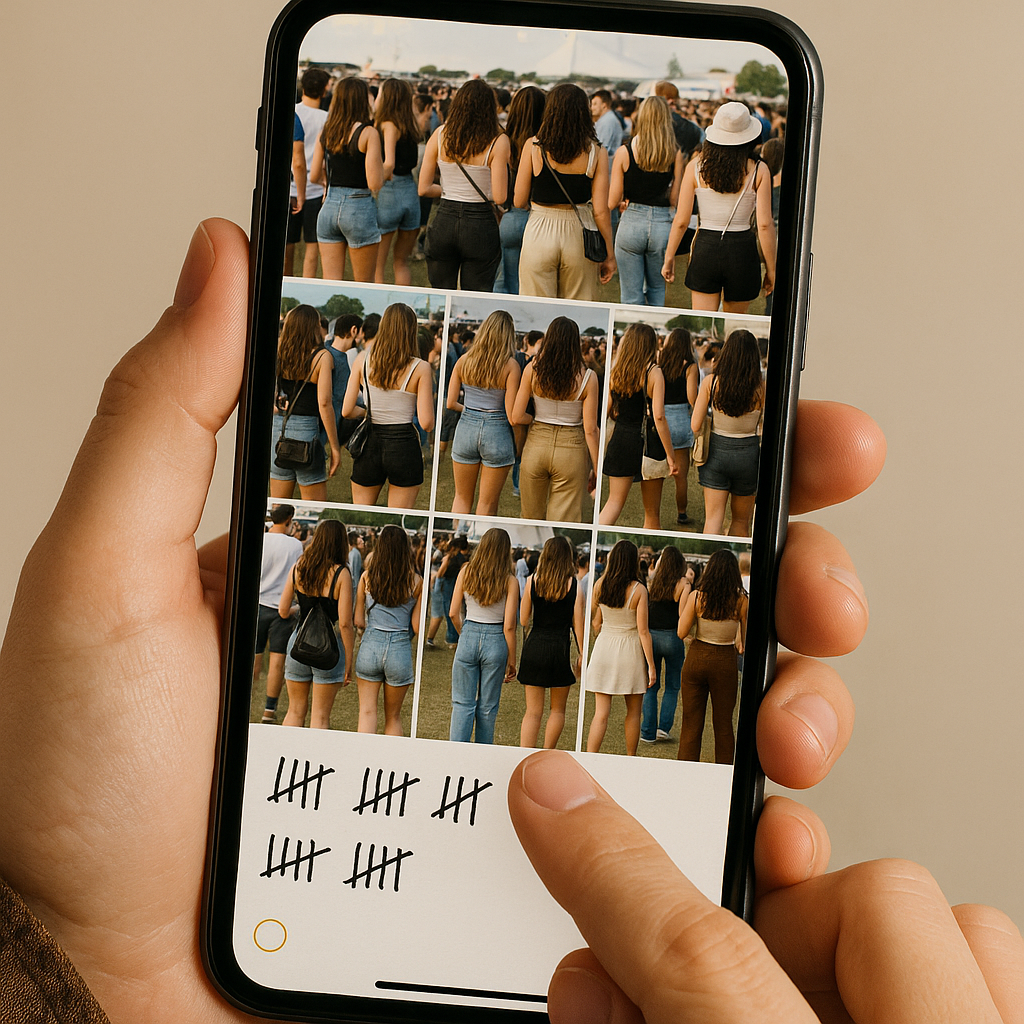
If you’re noticing the same look everywhere, stop staring at the influencers who are paid to repeat it and start looking at the people who bought a ticket. I do this with concerts, sports games, street fairs, and summer festivals, but the trick is where you source the photos. Official event accounts post a handful of posed shots. What you want is the chaotic photo dump: local photographers, venue hashtags, crow galleries, and the tagged shots where nobody asked to be the example of a trend. That’s where you can see the uniform forming, including the compromises people make when they can’t find the exact item they pinned.
I pull up 30 to 50 images and do a quick tally in my Notes app. Not a spreadsheet, just hash marks. Shoes, bag shape, and one clothing detail that is hard to fake. For example, a shoe color is easy to copy with any pair. A specific toe shape or a certain strap placement is harder, and that is what tells you whether it is a true wave or just a styling prompt. Same with pants: wide le is too broad. A low-slung waistband with a long rise, or a puddle hem that is clearly being stepped on, is a more specific signal.
This method is also how I catch when a trend is about to peak, because you start seeing the telltale substitutions. The identical look starts showing up in cheaper fabrics, with the same silhouette but different drape. You can spot it in the way a skirt clings or a blazer collapses at the shoulder. When I see a lot of shiny, thin synthetics in a shape that used to be crisp, I know the mass versions are landing and the early adopters are already bored. That’s when I shop more like a scavenger than a collector: I look for one well-made piece that can survive after the wave, and I skip the fragile copies that only look good in a single posed photo.
Bonus: you also get honest weather data. If everyone is carrying the same light jacket or ditching socks with a shoe that wants socks, that’s not a runway story. That’s a crowd story. And crowds are where the trend either lives or dies.
Read the comments for fabric complaints, not hype (one word matters)
Here’s the part I wish I’d learned sooner: the comment section is a materials database. Not because commenters are experts, but because thousands of people will ask the same practical question the moment a look crosses into everyday shopping. I scroll past the hype and hunt for three types of lines: fit questions, fabric callouts, and return stories. When the same wording repeats across unrelated creators, that is crowd-sourced trend analysis you can use.
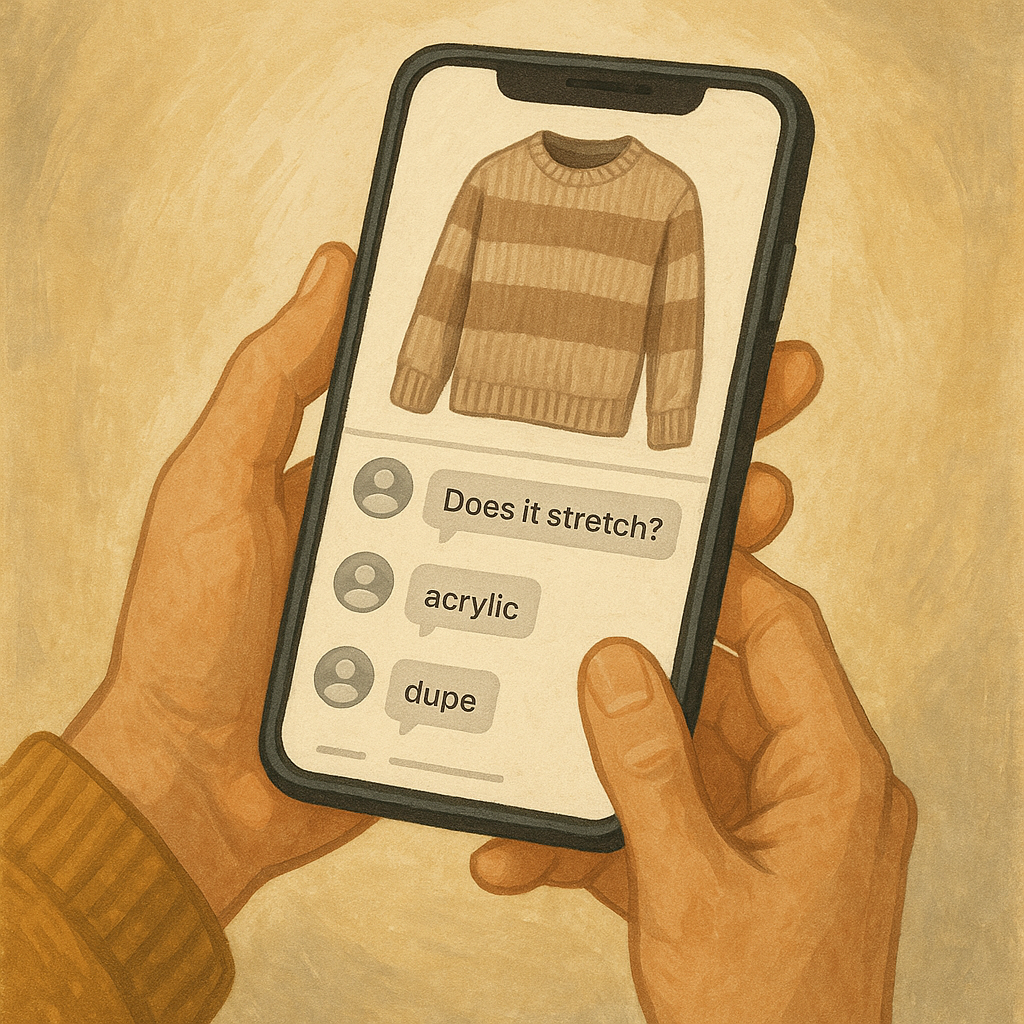
Start with fit questions because they signal intent. Does it stretch is casual. Is it lined is a purchase question. “How tall are you and what size did you get?” means the item is converting outside the creator’s exact body and styling skill. Then I watch for fabric words that show up without prompting: poly acrylic scratchy thin static sheer pill Those aren’t glamorous, and that’s why they’re useful. People only bring them up when they’re disappointed or surprised.
One word I track like a little alarm bell is dupe When the top comments turn into dupe hunting, the trend is about to flood. You can almost feel the market shifting from inspiration to substitution. That doesn’t mean you shouldn’t buy anything in the category. It means you should get picky about construction details that dupes get wrong: does the knit snap back after you tug it, are the seams finished cleanly, do the buttons feel like they belong on a coat or on a craft project?
To keep it grounded, I pick one item and run it through the crowd twice: once on TikTok (comments), once on Reddit (threads where people admit they returned it). If both places complain about the same flaw, I believe them. If one group is whining about shipping and the other is talking about how the fabric shines under overhead lighting, I adjust. The goal isn’t to dunk on a trend. It’s to show up early with your eyes open, and to bail before your closet turns into a pile of scratchy evidence.