
When the same old details start showing up in three unrelated places, the revival is already in motion.
The zipper pull gives it away before the silhouette does
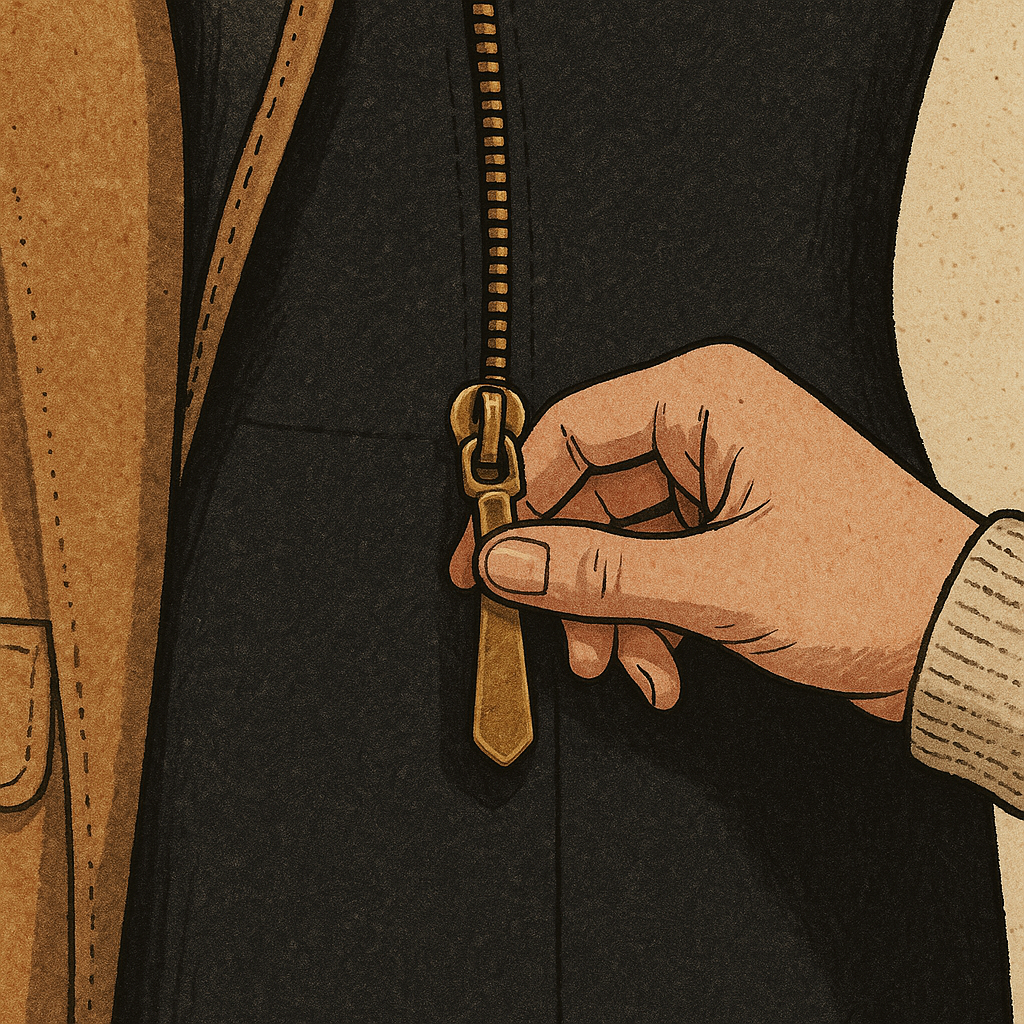
Most people try to spot a vintage revival by looking for the obvious stuff: the big collar, the mini skirt, the low-rise, the shoulder pad. I start smaller, with the thing your hand touches in the fitting room without thinking. Zipper pulls. When a decade is coming back, the earliest tells show up as hardware mood boards: elongated pulls on jackets, chunky ring pulls on knits, antique-brass finishes that look like they came off a 1970s duffel, or that slightly squared-off 1990s pull tab that makes even a plain black dress feel era-coded.
Here are the three checks I do in under a minute:
- Is the pull designed to be seen? If it swings, clinks, or has a logo that faces outward, it is meant to read from six feet away. That is a runway-to-mass signal, not an accident.
- Does the finish match across categories? When I see the same antique gold tone on a belt buckle, a bag zipper, and a boot, I stop calling it a one-off. I saw this happen with shiny silver in the late-90s revival wave, and the copycat speed is always the tell.
- Is the hardware slightly inconvenient? Tiny pulls you have to pinch, ring pulls that snag a sweater sleeve, extra-long pulls that slap your wrist when you walk. Designers will put up with annoyance if the look is the point.
If you're trying to catch a vintage swing early, save screenshots of close-ups, not full outfits. A full look can be styling. A specific pull shape repeating across brands is direction.
When dry cleaners start asking about it, it's already trending
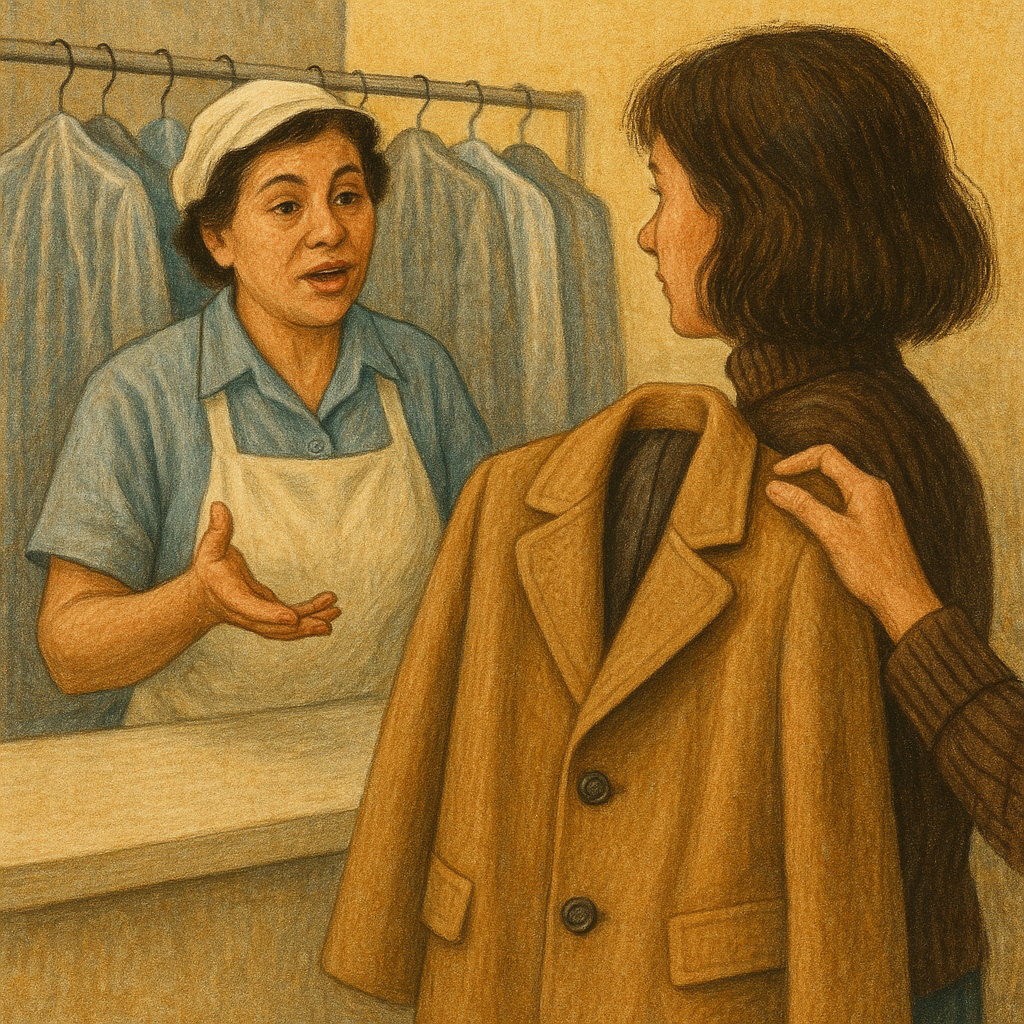
I didn't learn this from a runway recap. I learned it while picking up a coat and getting a mini-lecture from the person behind the counter. If you want revival signals that are ahead of your feed, listen to the service people who handle everybody's clothes. Dry cleaners, cobblers, and alteration shops see the shift before it gets a name because their work orders change in clusters.
The questions they start asking are the alert. Not the generic ones, but the oddly specific ones that only happen when a certain garment type starts flooding in. Stuff like: Do you want the shoulder pads back in, or removed? Do you want the crease pressed into these trousers? Are these buttons original, or should I replace them to match? Can you live with a little shine on this satin after cleaning? Those are decade problems.
My personal checklist when I'm eavesdropping (politely) at the counter:
- Repeat requests: If I hear the same ask twice in a month, I pay attention. Hemming wide-leg trousers is different from hemming flares, and they know the difference.
- Fabric-specific chatter: The moment they start warning people about acetate lining, fragile vintage knits, or suede care, it means those pieces are back in circulation.
- Repair, not replace: A revival is real when people are fixing, not just buying. Re-stitching loose belt loops, replacing broken zippers, reattaching hook-and-eye closures on a skirt waist. Those aren't tasks you bother with if the item is a one-week fling.
This is the kind of signal I file under a personal style alert because it's grounded in behavior, not hype. People don't pay for a repair because a creator told them to. They pay because the item is becoming a staple again.
The lining test: what brands stop cheaping out on first
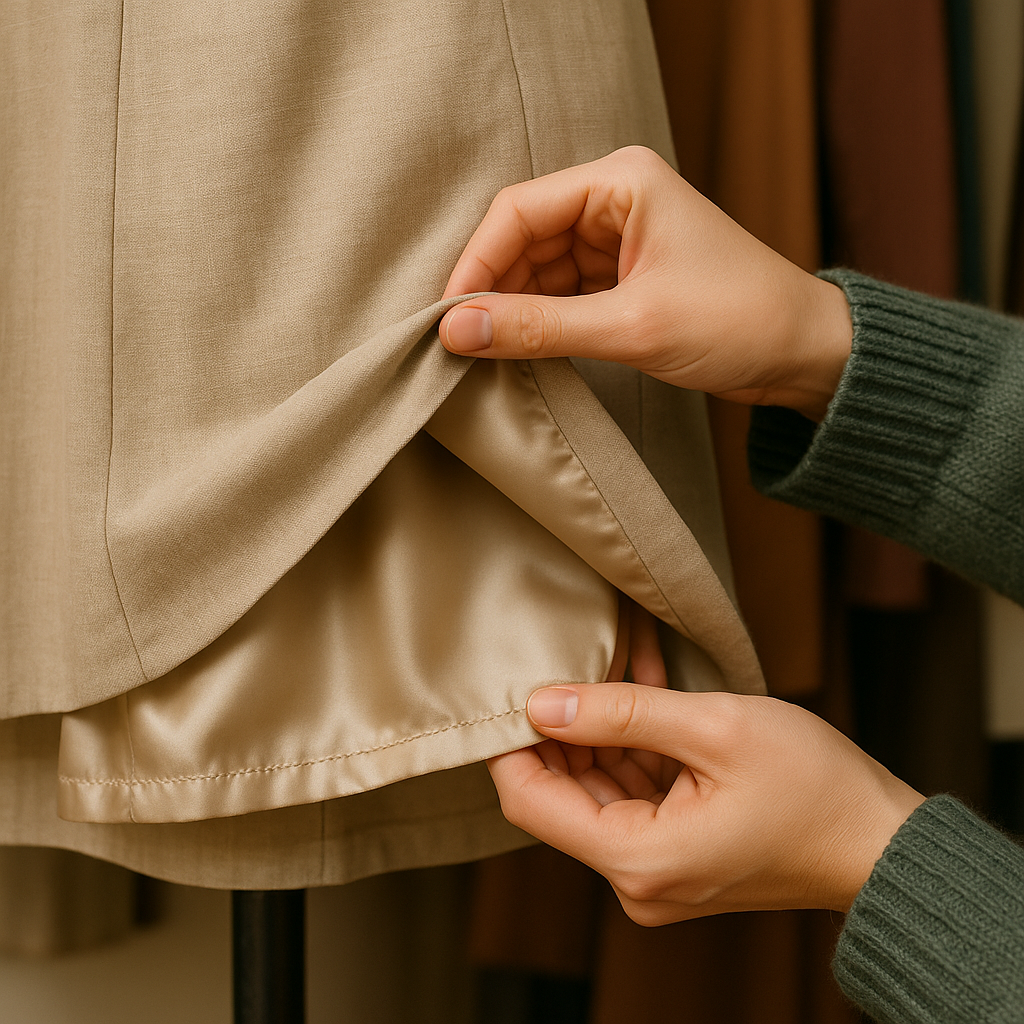
If you only look at the outside of a garment, every revival can feel like a styling trick. The inside tells you whether brands are committing. When a vintage era starts rising, one of the first quiet upgrades is lining and interior finishing, because that's what makes the piece behave like the decade it's referencing.
Here's how I do the lining test without being weird about it. I grab the hem between two fingers and flip a small section up, the way you'd check a seam allowance at home. I'm looking for three things that tend to shift when a throwback is being built on purpose:
- Skirts and dresses: A sudden return of fuller linings, slip-like layers, or a lining that runs close to the hem instead of stopping mid-thigh. When mid-century shapes are creeping back in, brands need the garment to glide, not cling.
- Jackets: A lining that feels a little more substantial, sometimes with a satin finish, sometimes with interior piping that keeps seams from twisting. If 80s and 90s tailoring is in the air, a jacket has to slide over knits and hold its structure.
- Trousers: Partial lining (knee or thigh) starts showing up again when silhouettes widen or fabrics get drapier. You can feel it immediately when you step into them. Less grabbing at the calf, less static in dry weather.
This isn't about pretending a mall brand is suddenly making heritage pieces. It's about noticing when they stop cutting the first corner they usually cut. If linings and interior details are improving across multiple racks, that points to a longer-lived revival. Nobody invests in the inside of a garment for a trend that's supposed to burn out in six weeks.