
A bag-strap scuff, a cuff fold, and a cluster of identical sneakers are the tells I trust before a trend hits every rack.
The sidewalk shoe cluster check
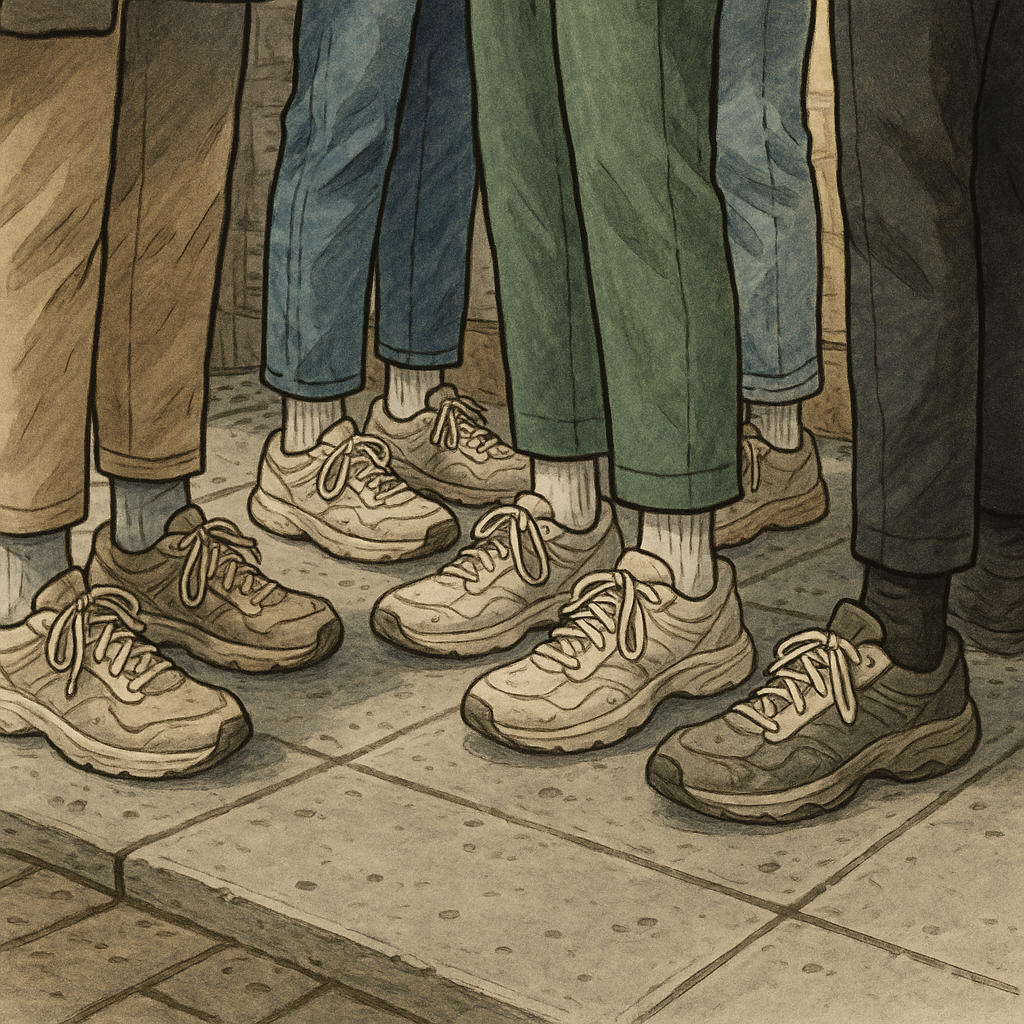
I do this when I want a clean read on what people will tolerate on their feet, not what a lookbook says they will. Pick one busy, normal-person corridor: outside a coffee shop line, a farmers market, an arena entrance, a transit platform. Stand where you can see feet without staring at faces, and count clusters, not one-offs. A cluster is five or more of the same shoe type in ten minutes. Once you start counting, you notice the difference between a brand being present and a silhouette becoming the default.
Right now, my early warning signs come from details that only show up when a shoe has crossed from fashion-person to everyone: identical white socks pulled to the same height; the same chunky runner shape in three different age groups; and the same “I bought these for comfort” expression on people who clearly also care about the outfit. If you see Sambas or Gazelles, that’s not a signal anymore. It’s the baseline. The signal is when you see the next layer: slim profiles starting to look too flat next to wider denim, so people migrate to slightly beefier soles, or to trail-inspired runners that still read clean with trousers.
Then I look down at condition. Are the toes pristine, or do you see creasing, scuffs, and dulled suede? When you see wear, it means the shoe isn’t just being tried, it’s being lived in. That’s when I start watching for the copycat shape (same outline, different logo) because that’s what usually explodes right before the peak. If you only remember one thing from this check, make it this: clusters plus wear beats hype every time.
Bag straps don’t lie
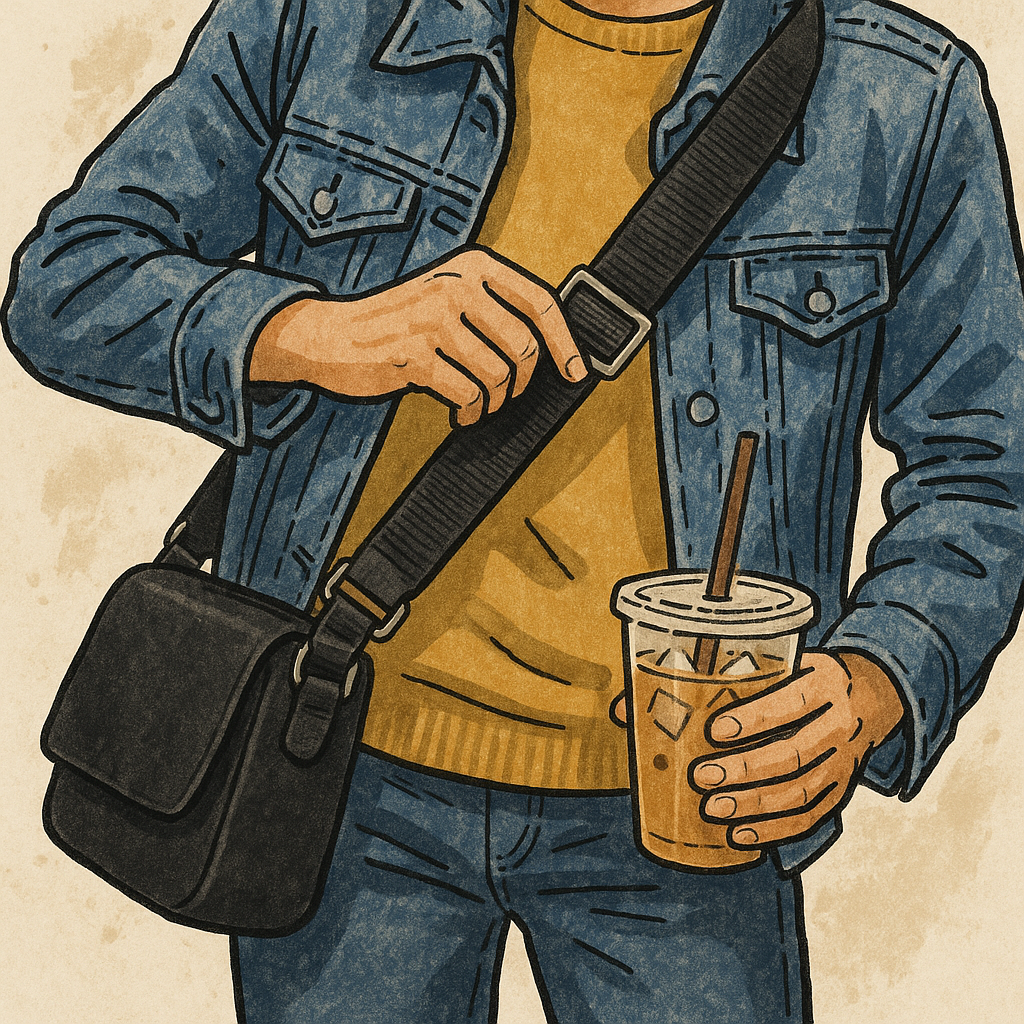
If I’m trying to spot a trend before it’s fully merchandised, I ignore the bag itself and stare at the strap situation. It sounds nitpicky, but it’s one of the fastest ways to see where outfits are headed because bags have to function. People will put up with an odd neckline for a night out. They won’t put up with a bag that constantly slides off when they’re juggling an iced coffee and a phone.
Here’s what I clock: strap width, strap length, and where it hits the body. When I start seeing more wide, seatbelt-style straps across a lot of different looks, that’s usually a sign we’re headed into a more utilitarian season, even if the clothes still look polished. Crossbody placement matters too. High-and-tight across the chest often shows up when jackets are cropped and the torso is visually short. When bags drop lower again, it’s usually because hems and layers got longer and people want the line to feel relaxed.
The other tell is hardware. If I’m spotting shiny silver buckles and snaps on a bunch of different brands, it’s a good indication that silver is winning over gold in the everyday mix, not just in jewelry. You’ll see it in belt buckles, bag clasps, and even the finish on sunglasses. And yes, I check the scuff points. On popular bags, you’ll see the same stress marks: the strap edge gets fuzzy, the buckle finish dulls, the corner piping goes first. When you see those “wear maps” across multiple people in the same week, it means the bag has crossed from special purchase to daily driver. That’s the moment I stop buying into it and start looking for the next shape that solves the same carrying problem.
One more nerdy move: I watch how people adjust the strap while walking. If you see constant tugging, the shape is trending but annoying. Those are the ones that disappear fast once the novelty wears off.
Cuffs and hems: the ground-truth signal (not the runway)
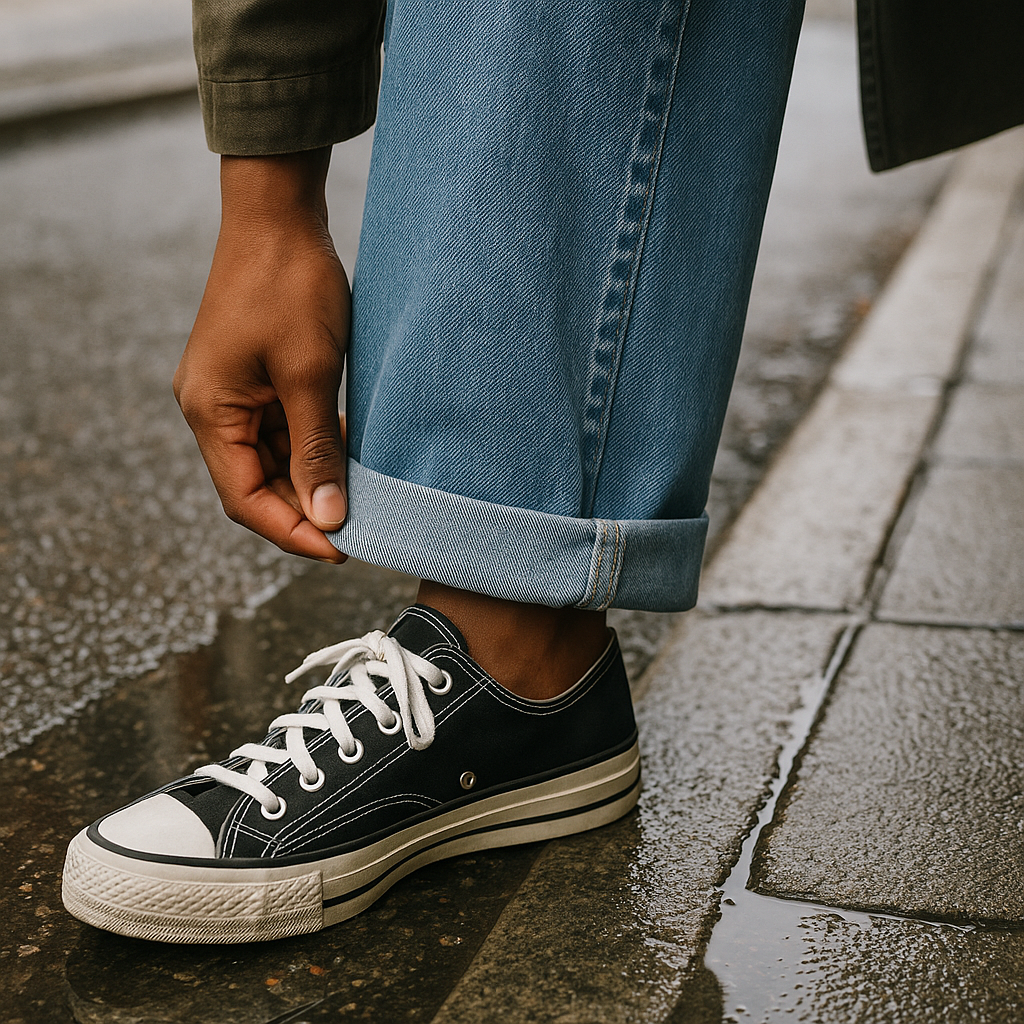
I trust hems because sidewalks are honest. If it rained last night, the city turns into a live fit test: puddles, curb grime, bike grease, escalators. People will unconsciously adjust their pants to survive it, and those adjustments show you where silhouettes are moving long before retailers catch up.
When wide-leg jeans started dominating, you could spot the transition stage in one place: the cuff fold. Lots of people were doing a single chunky cuff to keep the hem off the ground, and you’d see the same move repeated across different brands. Not a styled cuff, a practical one. The fabric would look slightly stiff from the fold, and the crease line would be permanent by week two. Once that cuff move becomes common, it tells me the hem length is about to change in the next wave, either shorter inseams offered at retail or a pivot toward shapes that don’t drag (barrel legs, cropped wide, straighter cuts).
I also watch shoes vs hem interaction. Are people stepping on their pants and not caring? That’s a sign the look is still in the fashion tolerates inconvenience phase. When you start seeing people pinching the hem up on stairs, doing that little heel-kick to free fabric, or rolling once before crossing the street, the annoyance is widespread. That’s when the next silhouette usually sneaks in as a relief.
To make this useful for your own closet, do one field trip with a note on your phone. Write down three things only: (1) how many pants are pooling on the ground, (2) how many are cuffed, and (3) what shoe they’re paired with. You don’t need photos. A week later, repeat in a different neighborhood. If cuffs and puddle-dodging show up in both places, you’re looking at a real shift, not a one-block uniform.