
Three quick reads I do on posts and comment sections to spot which influencer trends are about to spill into normal closets.
The five-minute comment scrape that beats the like count
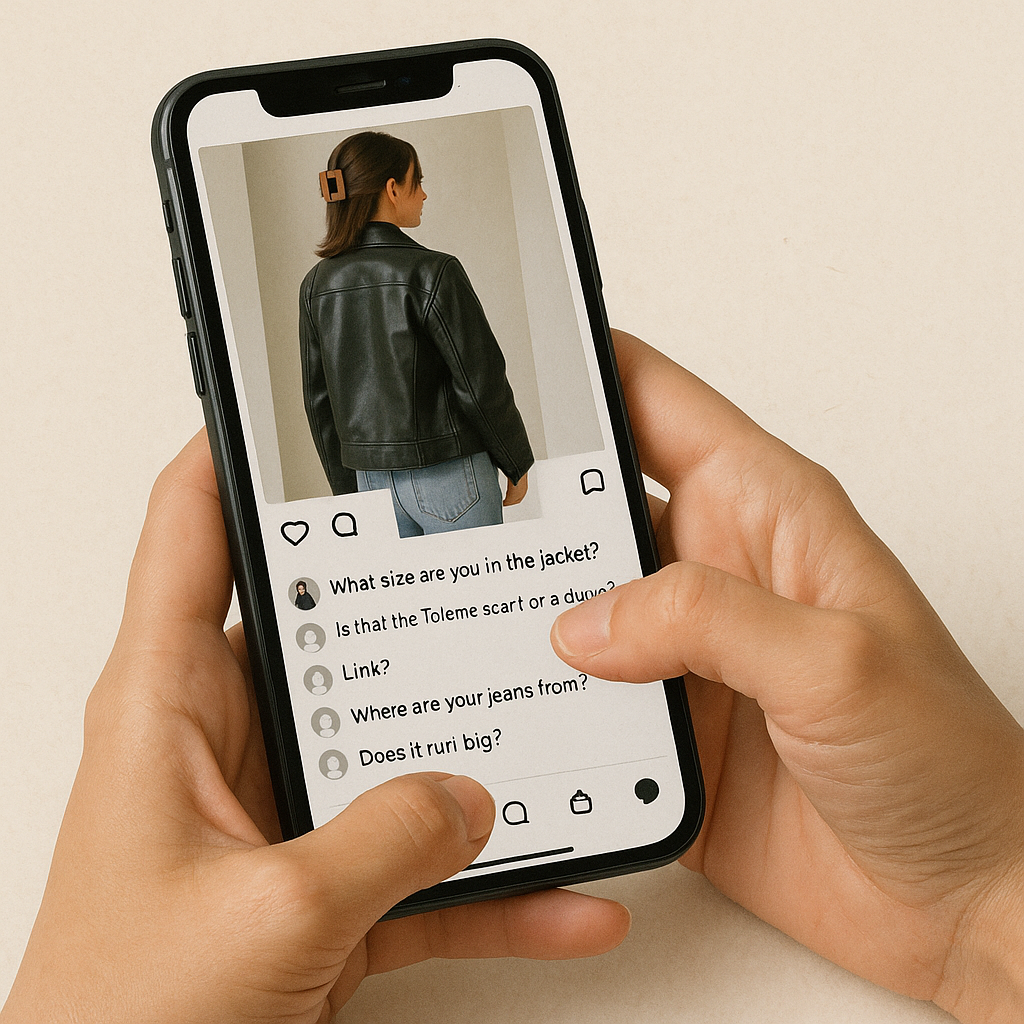
I start with a single post that seems to be everywhere: the same leather jacket silhouette, the same hair clip, the same caption energy. Then I ignore the likes and do a tiny, dumb thing that keeps me from getting fooled by big accounts. I open the comments and scroll until I've seen about 30 to 50 of them (not just the top five). I'm looking for how many of those comments are actionable, meaning they contain a concrete question or a specific purchase intent: "What size are you in the jacket?" "Is that the Toteme scarf or a dupe?" "Link?" "Where are your jeans from?" "Does it run big?" Those aren't compliments. That's friction, and friction is how you can tell an audience is trying to convert inspiration into an order.
Now the ratio part. If the caption is a novel and the comments are mostly heart-eyes and bots, it usually stays in the influencer bubble. But when the caption is short (or even sloppy) and the comments are dense with sizing, fabric, and sourcing questions, that trend is trying to crawl out of the screen. Bonus tell: people answering each other with specific substitutes. "Try the Uniqlo one" or "Abercrombie has a similar cut" means the crowd is already building a shopping map without the creator. That's the moment I flag it.
If you want to get more systematic, I keep three buckets in my notes app and I count as I scroll: buy intent (size/link/where), wear intent ("would this work for work?" "How do you style it in winter?"), and noise (compliments, emojis, spam). I don't need perfection. I just need to see buy intent beating noise more often than it should for that account. That's my early warning that the look is about to hit resale, mall brands, and your group chat at the same time.
Why I track the haters (and not for drama)
Sentiment isn't a vibe check for me. It's a filter for which trends have enough surface area to become normal-person wearable. The weird part is that a little backlash helps. When a look is too niche, you mostly get polite praise from people who already follow that creator for that exact niche. When it has breakout potential, you get a mixed crowd, and the mixed crowd argues in specifics.
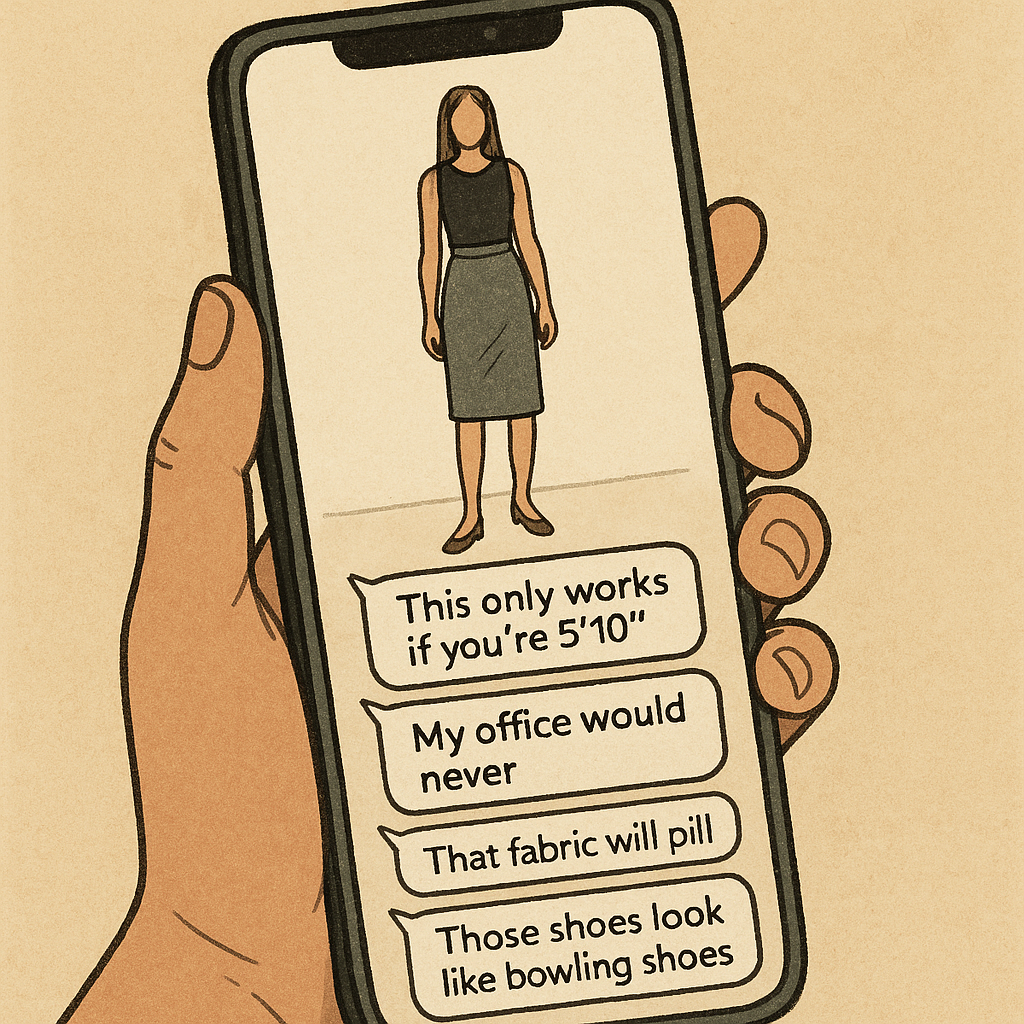
Here's what I mean by useful negativity: comments like "This only works if you're 5'10"" or "My office would never" or "That fabric will pill" or "Those shoes look like bowling shoes." I don't need them to be right. I need them to be detailed. Detailed critique means people are picturing the item on their own body, in their own life, with their own constraints. That's adoption in progress. It's the difference between watching a styling video for entertainment and trying to translate it into a closet decision.
I keep a simple rubric when I'm scanning a post that seems like it might be the next wave:
- Constraint comments: height, workplace dress code, climate, comfort, budget, foot pain. These are gold because they tell you where the trend will mutate.
- Material skepticism: polyester callouts, "is this itchy," "does it stretch," "does it show sweat." This is where you see which versions will sell (cotton poplin vs. shiny blend, genuine leather vs. bonded).
- Dupe sourcing: not just "dupe?" but named alternatives like Zara, Quince, COS, Mango, or a specific Amazon descriptor. When the crowd starts building the substitute list, the trend is leaving the runway of one creator's links.
Then I look for what I call the compromise outfit in the replies: someone says, "I tried it with a white tee instead," or "I swapped the micro skirt for a midi," or "I did kitten heels, not platforms." That compromise version is often the one that explodes, because it's the one people will wear twice a week without feeling like they're in costume. If all the negativity is vague ("cringe," "no"), I don't count it. If it's specific, I pay attention, quietly, like I'm reading product reviews.
Save two screenshots: the first post and the first copycat
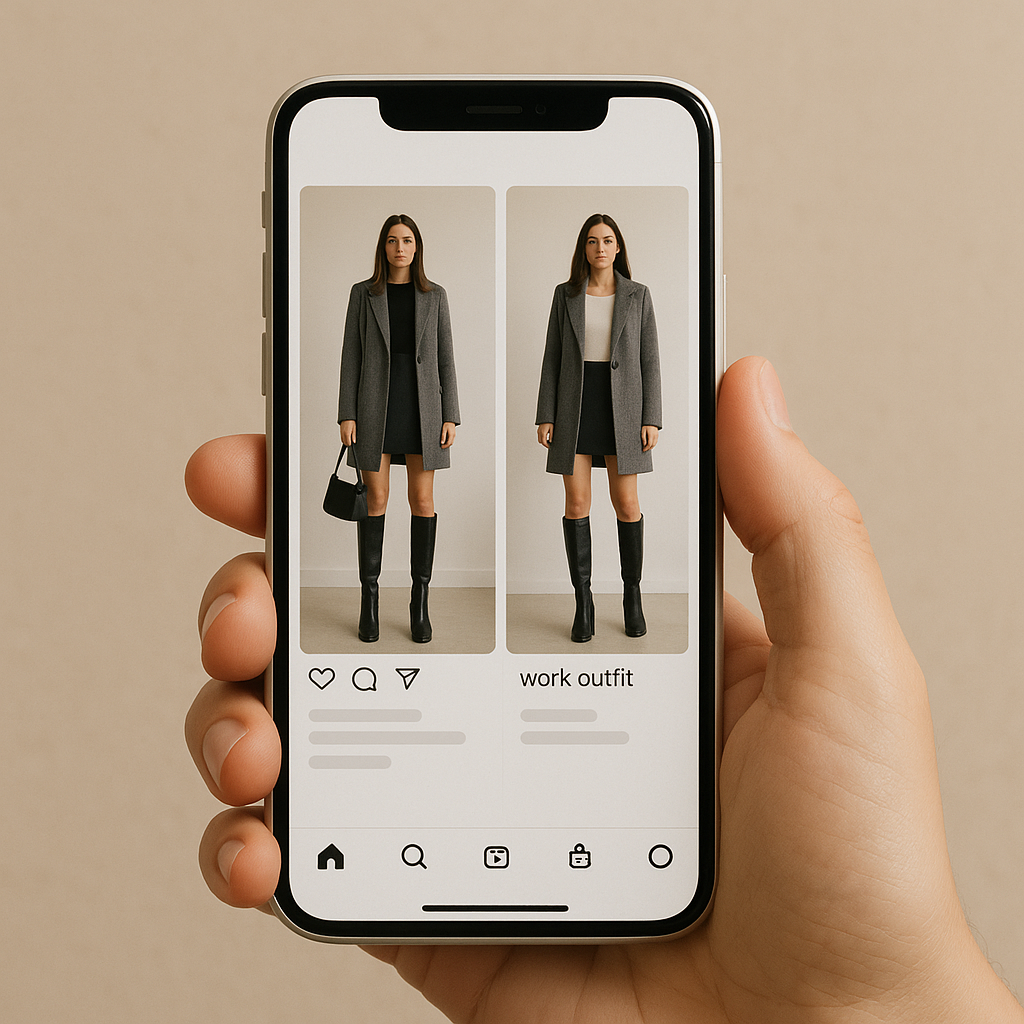
If you want a hands-on framework that doesn't require a dashboard, do this: save two screenshots. One is the original post that made you pause. The other is the first decent copycat you see from a smaller creator or a different platform. Not an obvious stitch or duet. I mean the moment the idea gets recreated as if it was the creator's own thought. That's the handoff point, and it's where you can spot what part of the look is the trend and what part was just that one person's styling skill.
When I compare the two, I'm not judging aesthetics. I'm marking what survives replication:
- The anchor item: Is everyone copying the same object (a slouchy knee boot, a silver cuff, a thin belt), or are they copying a proportion (long coat over short skirt, big top with tiny bag)?
- The caption shift: The original tends to be story or vibe. The copycat captions turn into utility fast: "work outfit," "date night," "fall uniform," "capsule." Utility language is the bridge to mass adoption.
- The comment questions change: On the copycat, you often see more basic questions: "What do I search for?" "What are these pants called?" "Where do I find this on a normal budget?" That's a crowd trying to turn a look into a search term.
This is also where influencer sentiment analysis gets practical. If the copycat post gets a higher proportion of skeptical, nitpicky questions ("Will this work if I have wide calves?" "Is that coat heavy?" "Does the skirt ride up when you walk?"), it tells me the trend is colliding with real wear. That's not a bad sign. That's the sign you're early enough to decide if you want in, and how you'd adapt it without wasting money.
I keep those two screenshots in a single album on my phone and I revisit them a week later. If the second image already looks dated, it was probably an algorithm flare-up. If it still looks current and the copycats have multiplied, you're watching a trend move from inspiration to inventory. That's when I stop scrolling and start searching with intent: fabric first, then fit, then price, in that order.