
Three hands-on ways I use live transaction feeds to catch drift, spot repeats, and fix a messy chart of accounts before month-end.
The 48-hour rule: categorize while the context still exists
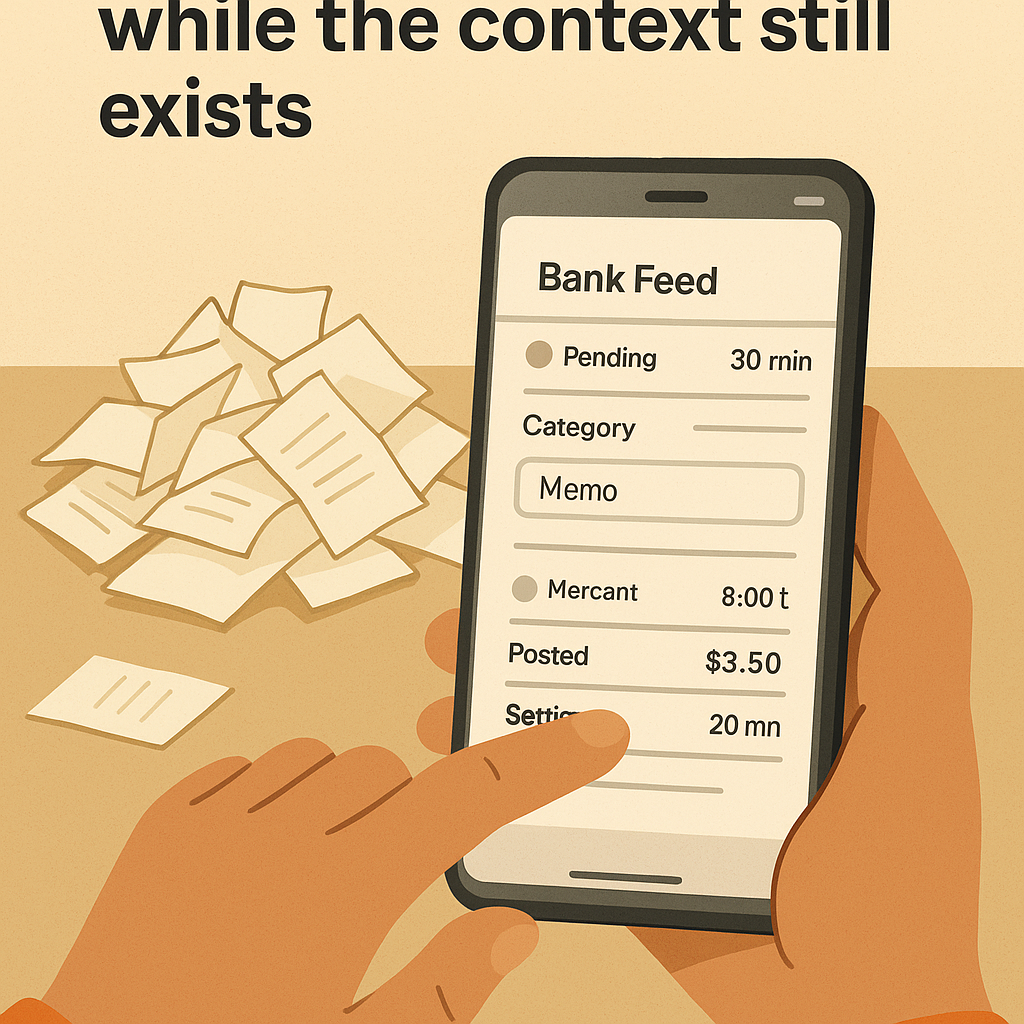
I used to do the classic end-of-month receipt heap, and it always broke the same way: I could see the charge in the bank feed, but I couldn't remember what it was for, which client it belonged to, or whether it should be reimbursable. Real-time card feeds changed that for me, but only when I stopped treating them like a passive statement and started treating them like a daily inbox.
My rule is simple: anything that hits the feed gets a category and a memo within 48 hours. Not because I'm a model citizen, but because that is roughly how long the context stays in my brain without me having to open three tabs, scroll emails, and text someone. If it is Monday and my card shows a charge from AWS, I'm far more likely to remember whether it was a one-off domain renewal or my usual hosting. By Friday, it's all just numbers.
Mechanically, I do it the same way every time: I open my aggregator (I have used Plaid-connected feeds and direct bank connections) and I sort by newest. I look for three things the feed gives me that a receipt pile doesn't: the merchant descriptor (sometimes messy, but still a clue), the exact timestamp, and whether it is pending or posted. Pending matters because it is your early warning. If a vendor double-swiped you, you will often see two pending authorizations before one drops. I flag it right then so I don't miss the reversal later and accidentally record both.
I also use the bank rules, but I keep them on a short leash. Rules are great for repeat vendors (UPS, Slack, Adobe) and terrible for one-time edge cases (a hotel bar coded under the hotel name, or a client meal that looks like a grocery store because you bought snacks at the same place). When I do set a rule, I make it narrow: merchant name contains, not category contains, and I never let a rule auto-post to the ledger without review. That is how miscoded expenses multiply quietly.
This is the weird payoff: once you categorize in real time, you stop needing perfect receipts to tell the story. You still store them for substantiation, but your books stop depending on them to remember what happened.
Catch subscription creep by watching the micro-authorizations
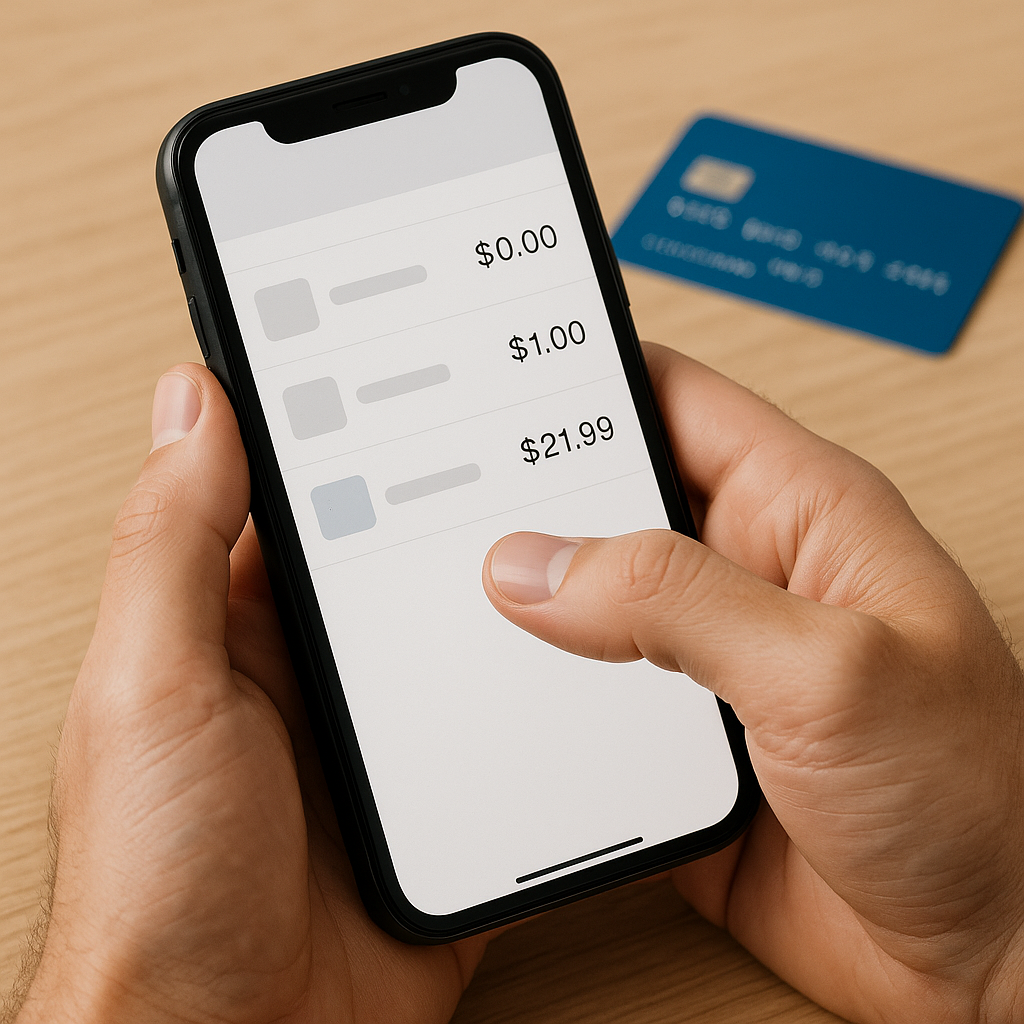
The most useful thing about live transaction data isn't the big expenses. It's the tiny, easy-to-ignore ones. If you have ever had a software trial turn into an annual plan because you missed the cancellation window, you know exactly what I mean.
Here's what I do now: I watch for micro-authorizations and small first charges as a separate stream. In the card feed they often look like $0, $1, or a small odd amount, and they show up before the real subscription hits. You can't prove fraud from a micro-authorization alone, but you can use it as a prompt to ask, "Did I start something new?" When the answer is no, I investigate immediately while the trail is still warm.
My workflow is a quick three-check loop:
- Match the merchant to a human action. Did I click a free trial? Did someone on the team add a seat? If I can't name the action, it goes on a short list.
- Look for a follow-on pattern. Many vendors will run an authorization, then a real charge within hours or a day. I set a reminder for the next day to see what posted.
- Confirm the billing owner. If you have multiple cards (owner card, ops card, employee cards), the feed tells you which card token was hit. That matters when you're trying to find who initiated it without playing email detective.
When I ran this for the first time, I found two duplicate tools doing the same job, both paid monthly, both quietly renewing. I also caught a new app seat that was added during a crunch week and never removed. Nobody did anything malicious. We were just busy.
Two practical notes from experience. First, merchant names can be unhelpful (the descriptor might be a payment processor or a parent company), so I don't stop at the name if it doesn't ring a bell. I check the vendor portal or the confirmation email before I dispute anything. Second, I do not rely on a "receipt required" policy to catch this. A receipt shows up after the fact. A live feed gives you the early nudge, and that is the difference between canceling a trial and eating another month.
Stop the month-end scramble with real-time accrual breadcrumbs
If you've ever closed the month and thought, I know we spent the money, but what period does this belong in, you're already doing accrual accounting in your head. The trick is to get that thought out of your head and into the transaction while you're staring at it in the feed.
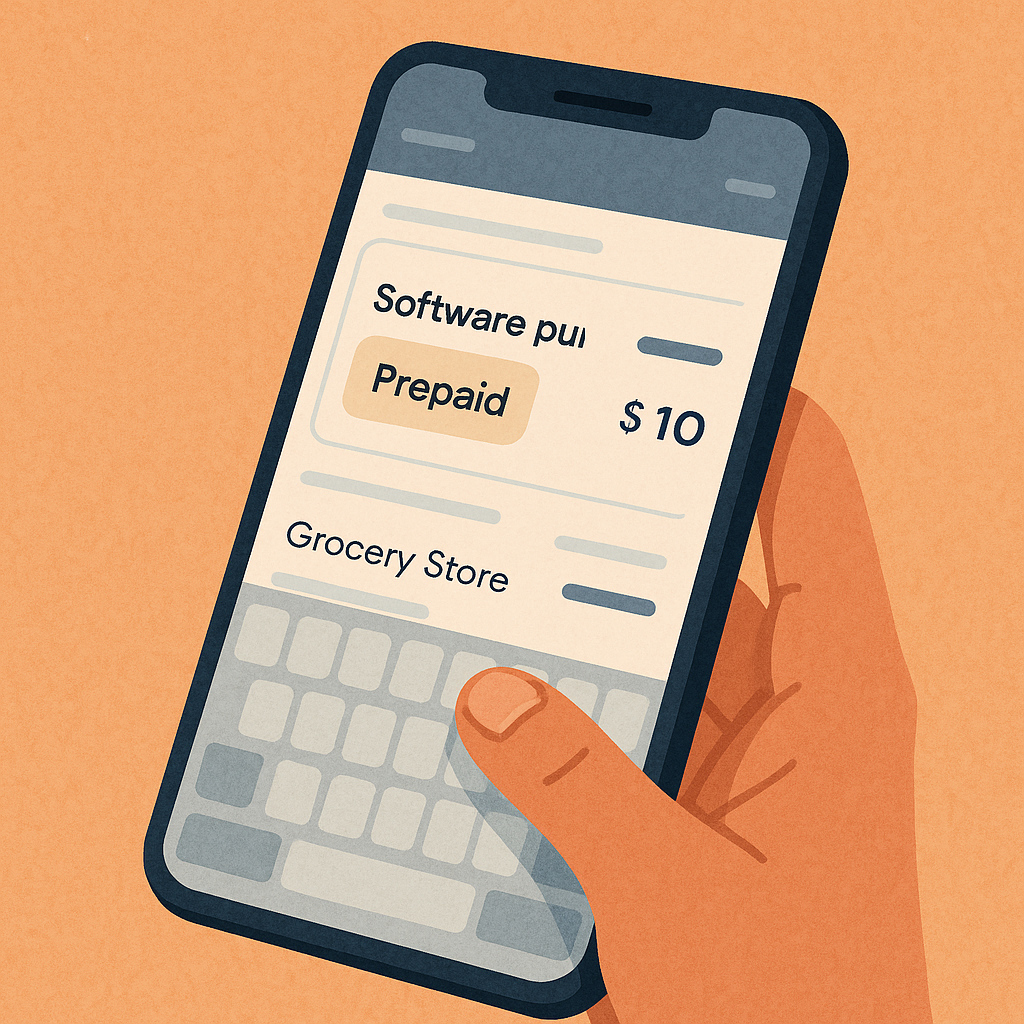
I leave what I call accrual breadcrumbs directly on the transaction: a short memo that tells Future Me what the charge is tied to, and whether it's a prepaid, an expense for this month, or something that needs a split. I don't try to do full journal entries from a phone screen. I just make sure the charge carries enough context that my accounting software isn't forced to guess.
Concrete examples from my own close routine:
- Annual software paid upfront: I tag it as prepaid, and in the memo I write the coverage window (for example, "covers Jul 2026 to Jun 2027"). When I'm building the amortization schedule, I'm not hunting for the invoice date in an inbox.
- Travel that spans month-end: If the hotel charge posts a day before the trip, I note the stay dates. When reimbursements or client bill-backs come up later, the timeline is already attached to the money.
- Multi-purpose vendor runs: The classic is a big-box store where half the cart is office supplies and the other half is a client kit. I split it in the ledger, but the feed memo is where I record the split logic while I still remember what was in the bag.
This is also where real-time data helps with duplicate and missing items. If you get an email invoice for something but you never see the card charge hit, you can catch that mismatch early. Maybe it was billed to a different card, maybe it was ACH, maybe it didn't go through. Either way, you find out before you're staring at a variance report at 10 p.m.
The underrated part is how much calmer reviews get. When my bookkeeper asks, "What is this charge?" I'm not guessing. The memo is already there because I wrote it when the package was still on my desk and I could still remember why I bought it.