
Three places I look for eco materials before brands start shouting about them: a shoe liner, a garment bag label, and a care tag fiber list.
Sneaker linings are the early-warning system
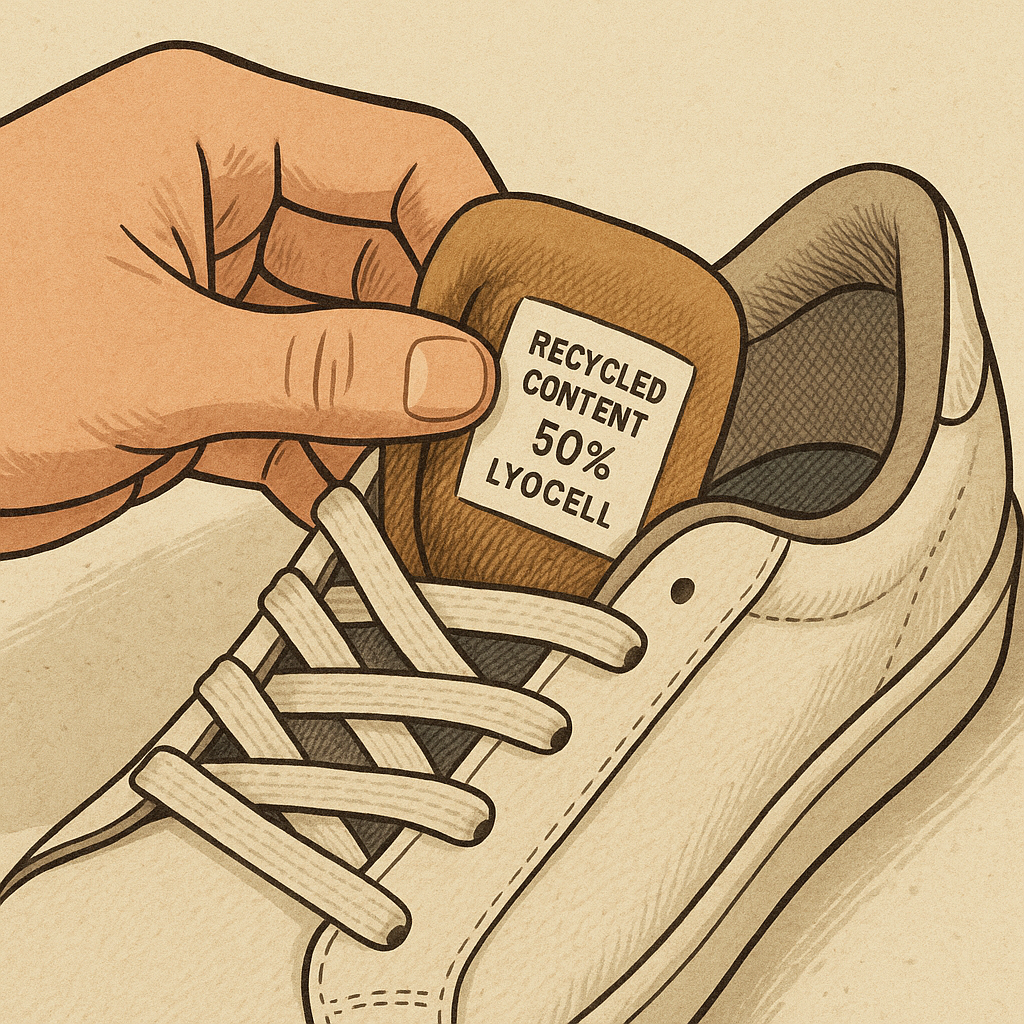
I started noticing this when I was replacing my daily sneakers and realized the loudest sustainability copy wasn’t on the box at all, it was in the lining. Brands can experiment with recycled polyester (rPET), TENCEL Lyocell, and plant-based foams in places most people never photograph, and that makes it a clean test bed. The tell is the combo of touch and labeling: a lining that feels a little cooler and smoother than basic poly mesh, plus a tongue label that suddenly spells out the fiber story in plain language. I look for phrases like “recycled content” paired with a percent, or very specific fiber names (Lyocell, castor oil-based, sugarcane EVA) instead of vague “eco” claims.
Here are my quick checks when I’m trying on shoes, because you don’t get a second chance once you’re back home:
- Tongue label and insole stamp: I flip the tongue up and scan for the fiber list, then pull the insole if it’s removable. A lot of brands print more detail under the insole than they do on the hangtag.
- Smell and glue: I’m not pretending this confirms anything scientific, but if a pair reeks of solventy adhesive in a way the other colors don’t, I assume they’re still dialing in materials and I pass. It’s a simple comfort call.
- Wear spot: I rub the heel lining with my thumb. If it pills instantly, the recycled story might be there, but the spec isn’t ready. Early runs can be rough.
Concrete examples that tend to show up early: sugarcane-based EVA midsoles (often called bio-base in the fine print), recycled mesh collars, and cork-blend footbeds. If you’re watching eco-friendly materials trending without getting sucked into hype, the inside of a sneaker is where the trend is quietly being stress-tested by sweat, friction, and returns. When that lining holds up, you’ll see the same fiber names migrate into tees and lightweight jackets a season later.
The garment bag label nobody reads (I do)
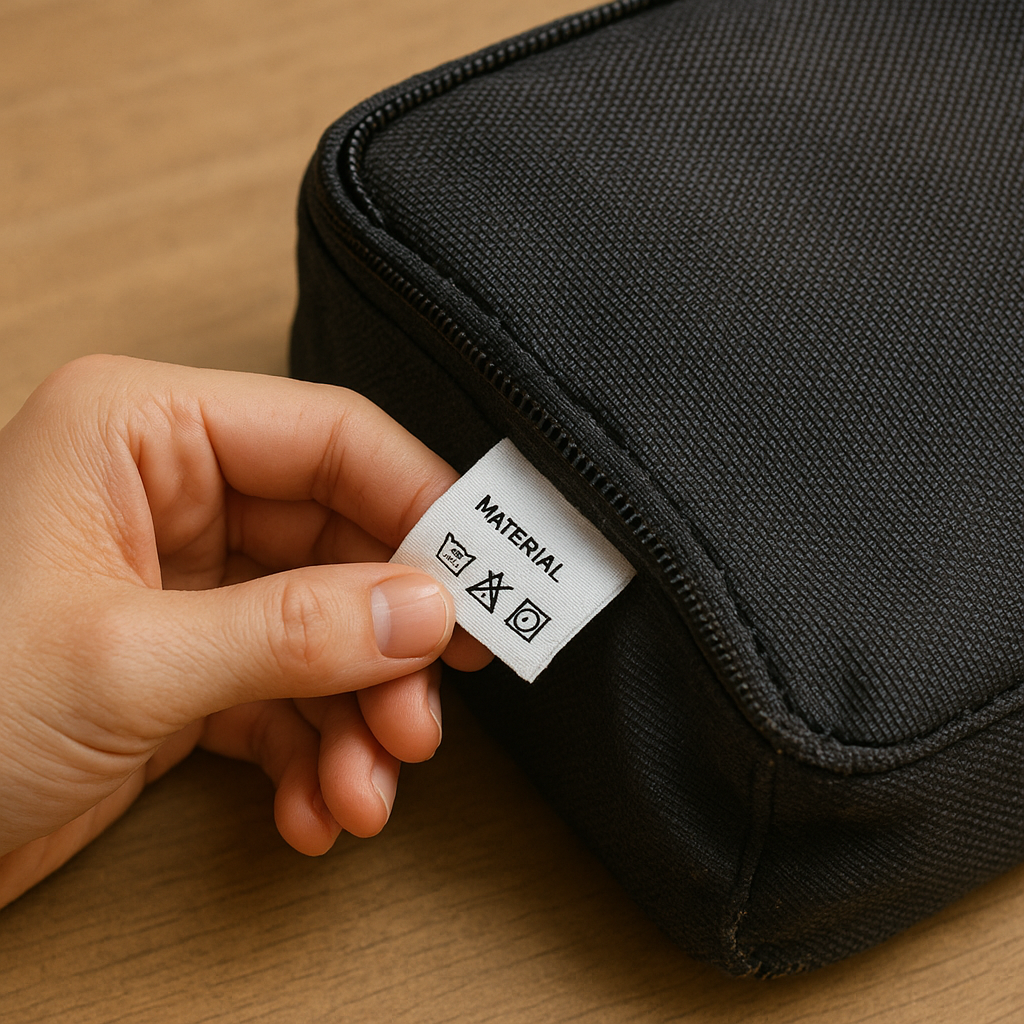
I didn’t pick this habit up from a runway recap. I picked it up from getting annoyed at how fast my old nylon packing cubes got shiny, snaggy, and gross at the corners. The fix wasn’t magic, it was noticing that the brands that take material choices seriously in their outerwear are quietly doing the same in small accessories. Garment bags, tote linings, duffels, shoe sacks, even dust bags for handbags are often where a company will roll out a recycled weave, a dope-dyed yarn, or a lighter coating before they commit it to a whole jacket program.
When I’m shopping, I treat the accessory wall like a tiny trend lab. I reach for the boring pieces that get handled all day and still look decent: the black cube, the gray garment sleeve, the luggage strap. Then I look for the boring details: the little white material label inside the seam and the care symbols that make it obvious whether the fabric is coated, laminated, or just a tight plain weave.
What I watch for:
- Dope-dyed and solution-dyed notes: If the tag mentions solution-dyed yarn, that’s a hint a brand is leaning into lower-water processes. You see it in accessories before you see it in fashion colors.
- Recycled ripstop that isn’t crunchy: The early recycled ripstops felt stiff and loud. The newer ones drape more like broken-in nylon, and that’s when they start showing up in pants and overshirts.
- PFC-free water repellent claims: If a brand is confident enough to say PFC-free on a duffel, it’s usually a sign that same finish is about to land across more categories.
This isn’t me romanticizing a tote bag. It’s just a practical place to spot materials that can survive abrasion and still look good, which is the hurdle eco-focused textiles have to clear before they become mainstream. Once I see a specific fabric family repeat across accessories (same hand feel, same tag language, same finishing), I assume it’s about to graduate into the pieces people photograph.
Care-tag fiber math: the one-minute scan
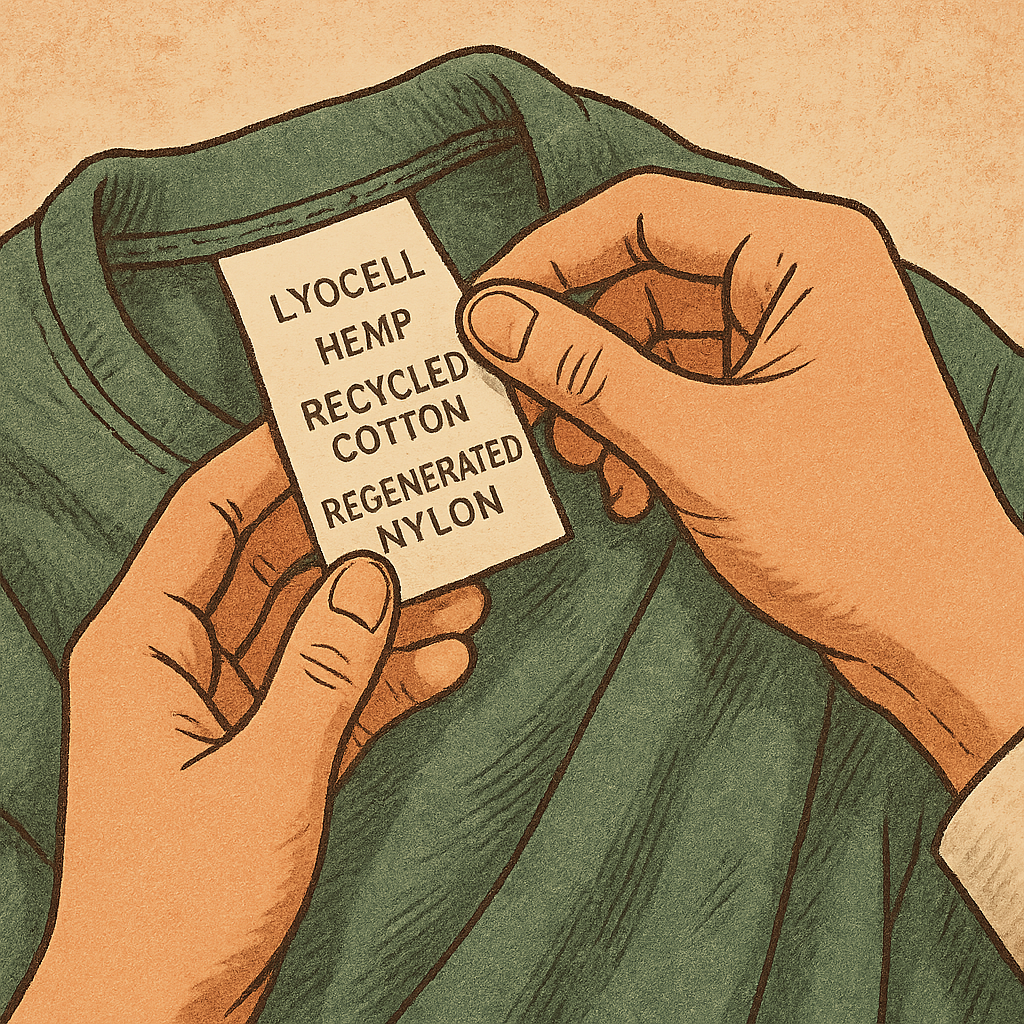
When eco-friendly materials are about to hit a wider wave, the language changes first. You get fewer fluffy hangtags and more specific fiber lists on the care label. That’s the moment I perk up, because brands don’t add extra words to a care tag for fun. They do it because the material is a selling point, or because compliance and sourcing are changing, or both. Either way, it’s a solid signal that the fabric isn’t a one-off.
My routine is low-tech and kind of nosy: I flip the care tag and read the fiber content like it’s a menu. I’m not looking for perfection, I’m looking for what keeps repeating across different brands in the same month. If I see the same fiber name three times in a week while browsing, that’s when I start expecting it to show up in more silhouettes.
Here are the tells that feel predictive, plus what they usually mean in plain terms:
- Lyocell / TENCEL: The hand is usually cool and fluid, and brands like it because it photographs well without looking shiny. When it starts popping up in basics, it tends to spread into dresses and button-ups fast.
- Hemp blends: If it’s 100% hemp, it can read stiff. The early mainstream versions are usually hemp-cotton or hemp-Lyocell so the fabric doesn’t feel like a burlap dare.
- Recycled cotton: Often shorter fibers, so I check for a sturdier knit or a blend that helps it keep shape. If it’s a tee that already looks fuzzy on the rack, I don’t talk myself into it.
- Regenerated nylon: Look for regenerate or well-known programs like ECONYL listed on the tag, not just nylo with a green hangtag.
One small habit that keeps me honest: if a brand is pushing a sustainability story, I still read the tag for the percentage and the blend. A recycle callout can mean 10% or 90%, and the difference shows up later when the fabric pills, bags out, or refuses to recover after washing. I don’t need a lecture, I need a hoodie cuff that doesn’t get wavy by week three. The care tag is where that truth usually lives.