
Three quick checks I use to spot when an old piece in my closet is about to feel current again.
Hatbox test: what you stored away on purpose
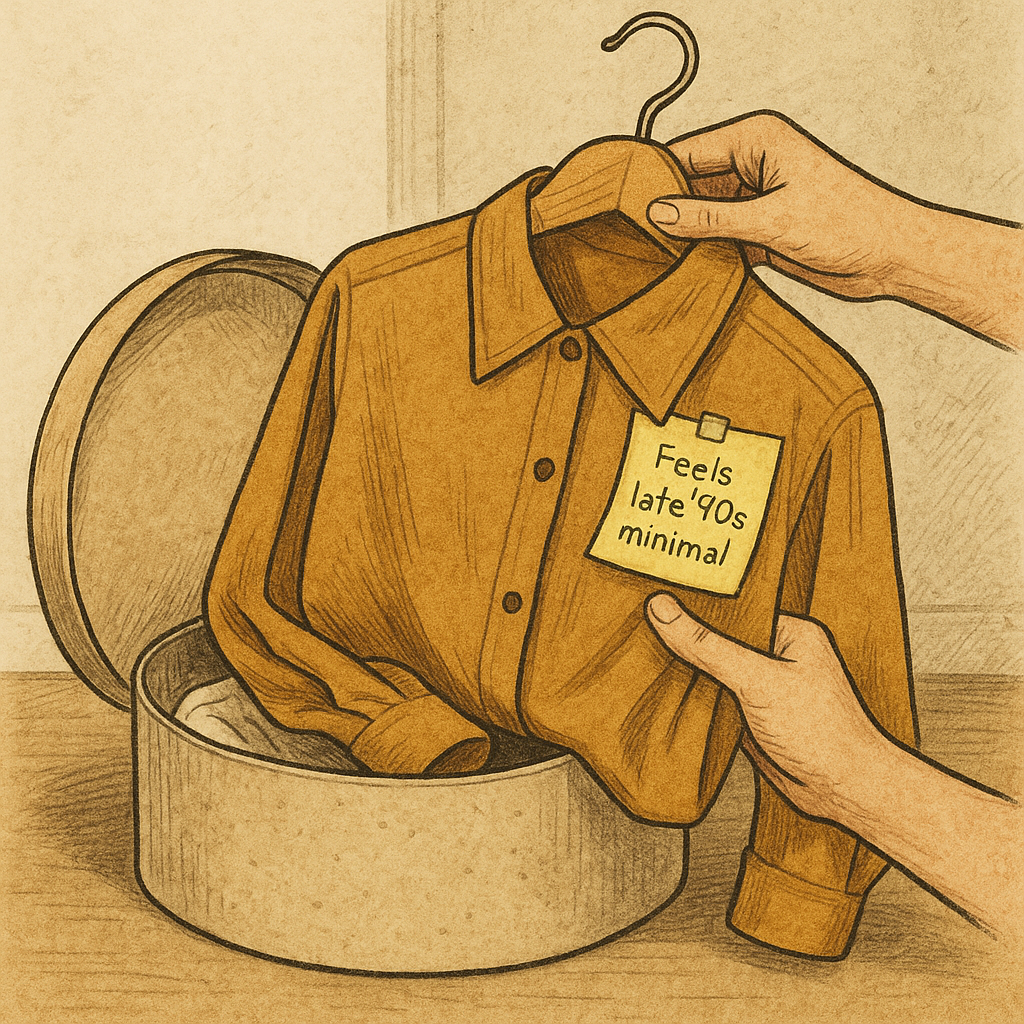
I keep two kinds of not right now pieces: the stuff that got banished because it never worked, and the stuff I packed away carefully because I still liked it but I couldn’t figure out how to wear it in the current moment. The second pile is where vintage comebacks live.
So I do a literal hatbox test. Anything stored in a hatbox, a fabric garment bag, or even folded with tissue in a shoebox is a clue that Past Me respected it. That sounds silly until you start noticing the pattern: you don’t baby a doomed item. You baby the one you suspect will come back around.
Pull those pieces out and check the details that date them without screaming costume. I’m looking for things like a slightly longer collar point on a button-down, a sharper shoulder seam on a blazer, or a skirt that hits an awkward-but-intentional mid-calf. Then I do one practical check: can I wear it with shoes I already reach for? If the only thing that makes it work is a pair of shoes you haven’t worn since a wedding in 2017, it’s not a comeback for your closet, it’s a memory.
What helped me stop mislabeling random old stuff as vintage is putting a sticky note right on the hanger: where it came from and what decade it resembles. If I can’t name anything beyond old, it usually means the piece isn’t distinct enough to ride the next swing back. If I can say, “This feels late ’90s minimal,” now we’re talking.
Button math: count the closures, not the compliments
When I’m trying to catch a vintage comeback inside my own inventory, I stop asking, “Is this cute?” Cute isn’t predictive. Hardware is.
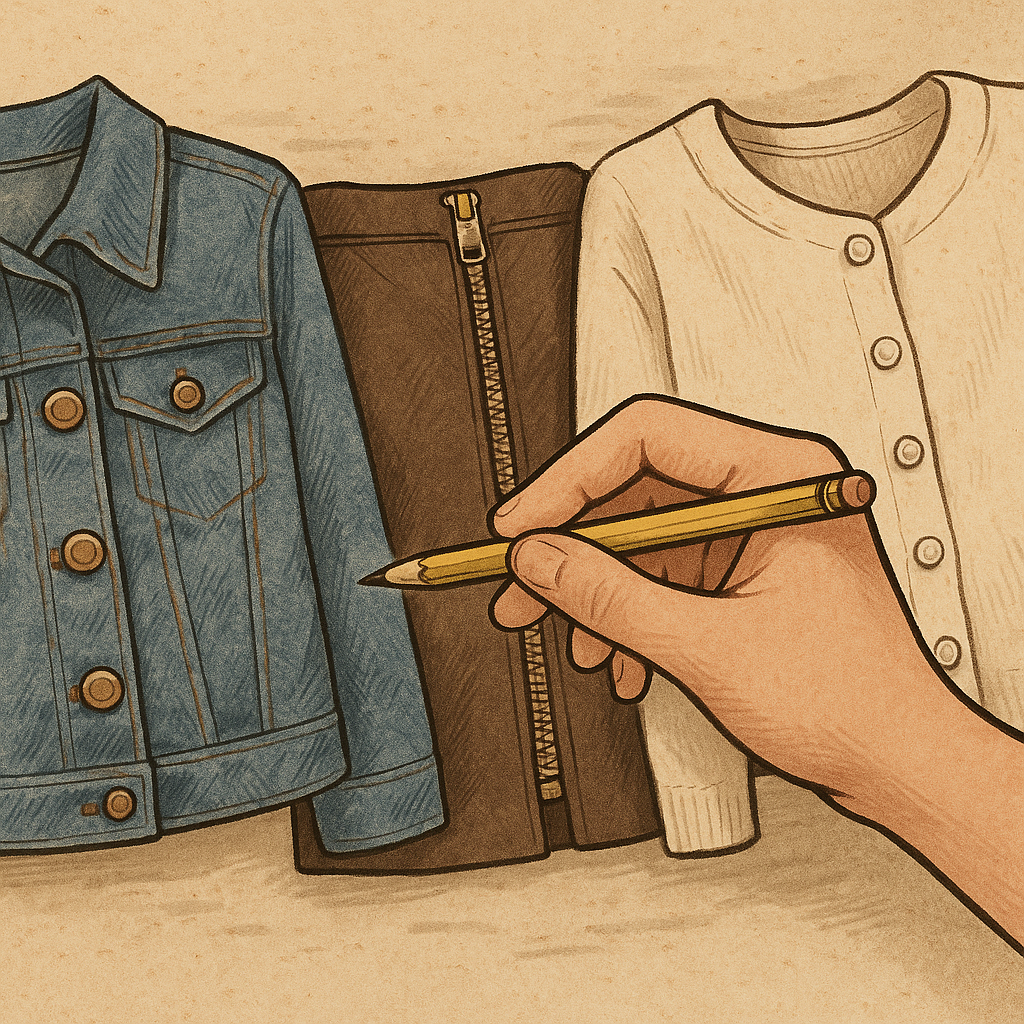
Take five minutes and do what I call button math: count the closures and note their type. Not in a fussy way, just like you’re scanning a thrift rack fast. Pieces that cycle back into favor tend to have closures that match the era they’re echoing. For example, when I see:
- a denim jacket with chunky metal shank buttons (the ones with a tack through the center)
- a skirt with a long exposed zipper in back
- a cardigan with tiny pearly buttons that feel like they belong on a ’60s set
…I don’t need a runway report to tell me what decade is trying to raise its hand.
Here’s the closet-audit move: I line up three or four items on the bed and look only at the closures, not the fabric. If I suddenly have a little cluster of similar signals, that’s when I know I’m not looking at one random piece. I’m looking at my own buying history repeating, which is usually a sign the broader cycle is repeating too.
Then I sanity-check condition. If the buttonholes are stretched or the zipper teeth are missing, no trend swing is going to make the item feel good to wear. But if the issue is just a loose button, that’s a ten-minute fix with needle and thread, and it’s worth doing because closures are also where an older piece looks off first. A fresh sew job makes it feel intentional again.
One more thing I do: I keep a tiny tin of spare buttons in my dresser. Not a huge craft organizer, just a tin. When a comeback hits, the first time you rewear an older piece is when the universe tries to pop a button in public.
The tag tells: union labels, RN numbers, and country flips
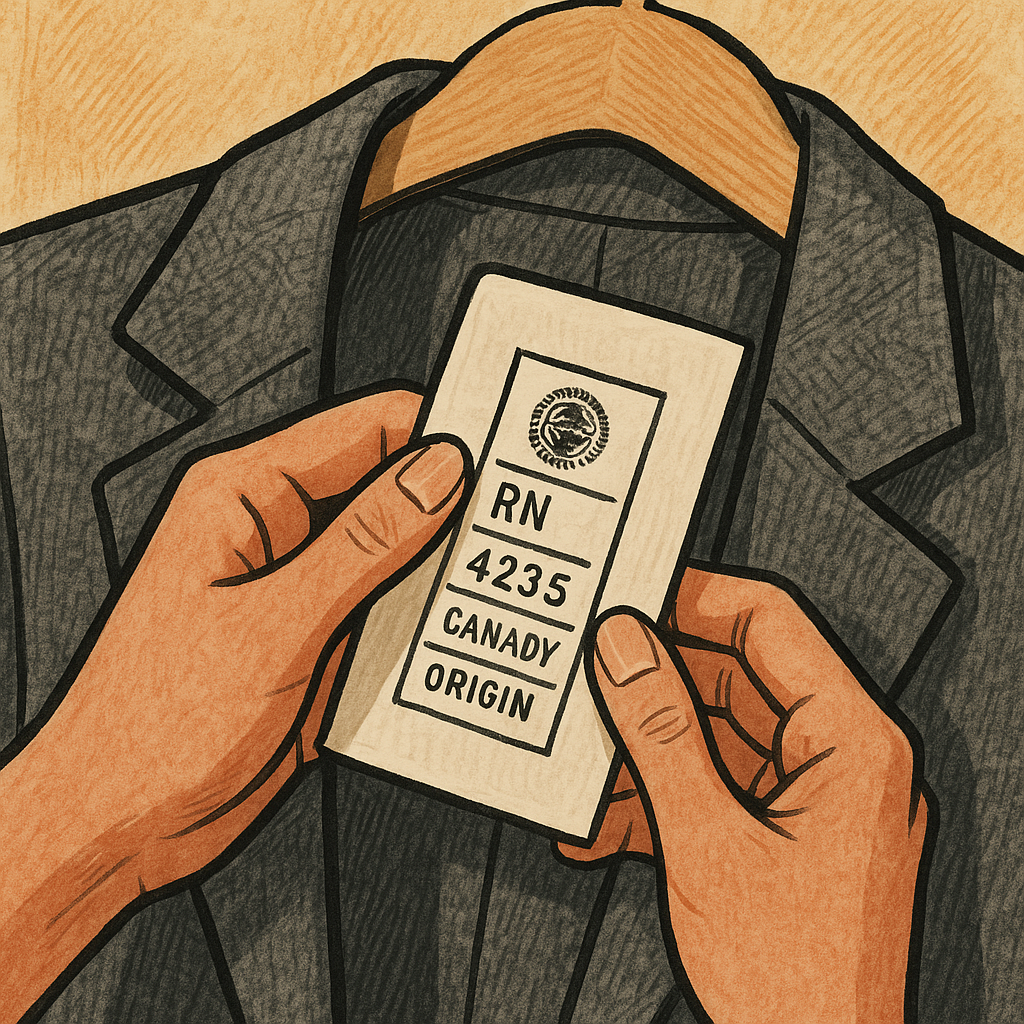
I used to miss vintage comebacks because I was staring at the front of the garment like a normal person. Now I start at the tag, because the tag is where the era hides in plain sight.
When I’m auditing my own closet, I look for three tag clues that are easy to spot without turning it into homework:
- Union labels (ILGWU is the one I see most). If I find a union label in a blazer or a wool skirt I already own, I treat it like a hold candidate. Even if the shape isn’t perfect for this year, the construction usually is.
- RN numbers on older American-made basics. An RN number by itself isn’t a magic dating tool, but it often shows up on pieces that feel sturdier than what I can replace them with today.
- Country-of-origin flips. I can usually tell when something is from a different manufacturing era just by the way the label is sewn in and what it lists (country, fiber content, care). Sometimes the comeback isn’t the silhouette at all, it’s the return of that slightly heavier fabric and cleaner finish that makes everything else in your closet look flimsy.
Then I do a very specific try-on: I put the item on with one modern anchor from my current rotation, like a pair of wide-leg trousers or a minimal sneaker. If the piece suddenly looks less like vintage day and more like an outfit, it stays out on a front-facing hanger for two weeks. If I don’t reach for it in that window, it goes back, but I write a note on a clothing tag sticker: what didn’t work (itchy collar, too-short sleeves, waist placement). That note saves me from re-litigating the same item every season.
Most of my best comebacks have been boring on the hanger and excellent on the body. The tag is how I give them a fair shot before they disappear into the back again.