
Three low-effort ways I crowdsource early trend signals, from a 10-person DM to a weekly screenshot swap.
The 10-person DM that beats your For You page
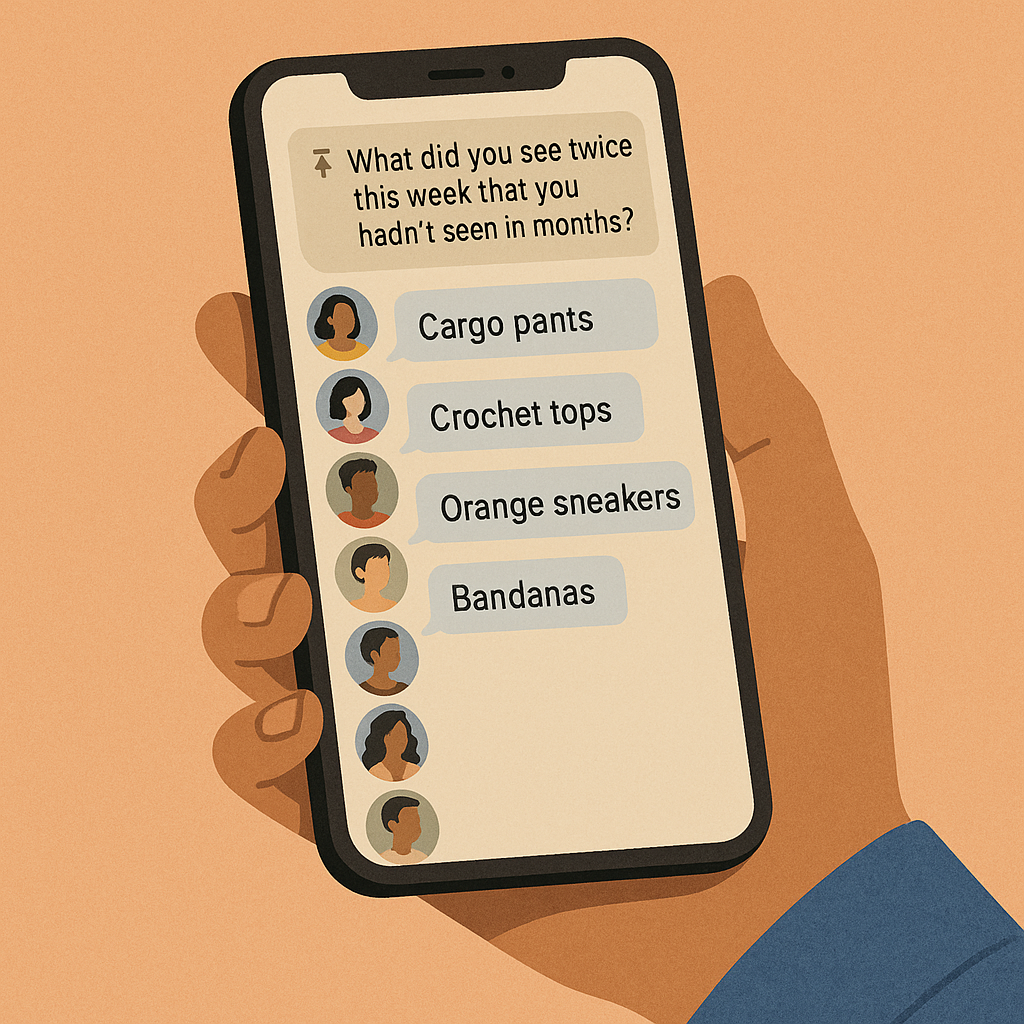
I don't try to outsmart the algorithm anymore. I build around it. The fastest way I've found to spot what will show up in stores two months from now is a tiny DM thread with people who shop differently than I do. Ten is the sweet spot. Fewer, and you only get one taste. More, and nobody posts because it feels like homework.
Mine is a mix: one friend who lives in workout sets, a coworker who only buys vintage, a cousin who follows K-pop styling accounts, a guy friend who notices sneakers before anyone else, and one person who works retail and texts from the fitting-room line. The rule is simple: you can only post something you saw in the wild. That means a subway photo of three strangers in the same shoe, a mirror pic from a bar bathroom, a screenshot of a sold-out colorway, or a quick note like, "Every girl at Pilates had the same socks." (That happened. It was those slouchy scrunch socks that look like you time-traveled from 2003.)
To keep it from turning into a mood board, I pin one question every Monday: What did you see twice this week that you hadn't seen in months? People answer fast because it doesn't require taste, just eyes. If someone shares a link, I ask for one extra detail: did it come in multiple colors, and which one was gone first? That's where the early signal hides. When five people with different feeds mention the same thing, I don't call it a trend yet. I call it a lead, and I start watching how it shows up: styling, not just the item.
Screenshot Swap Friday: one folder, zero hot takes
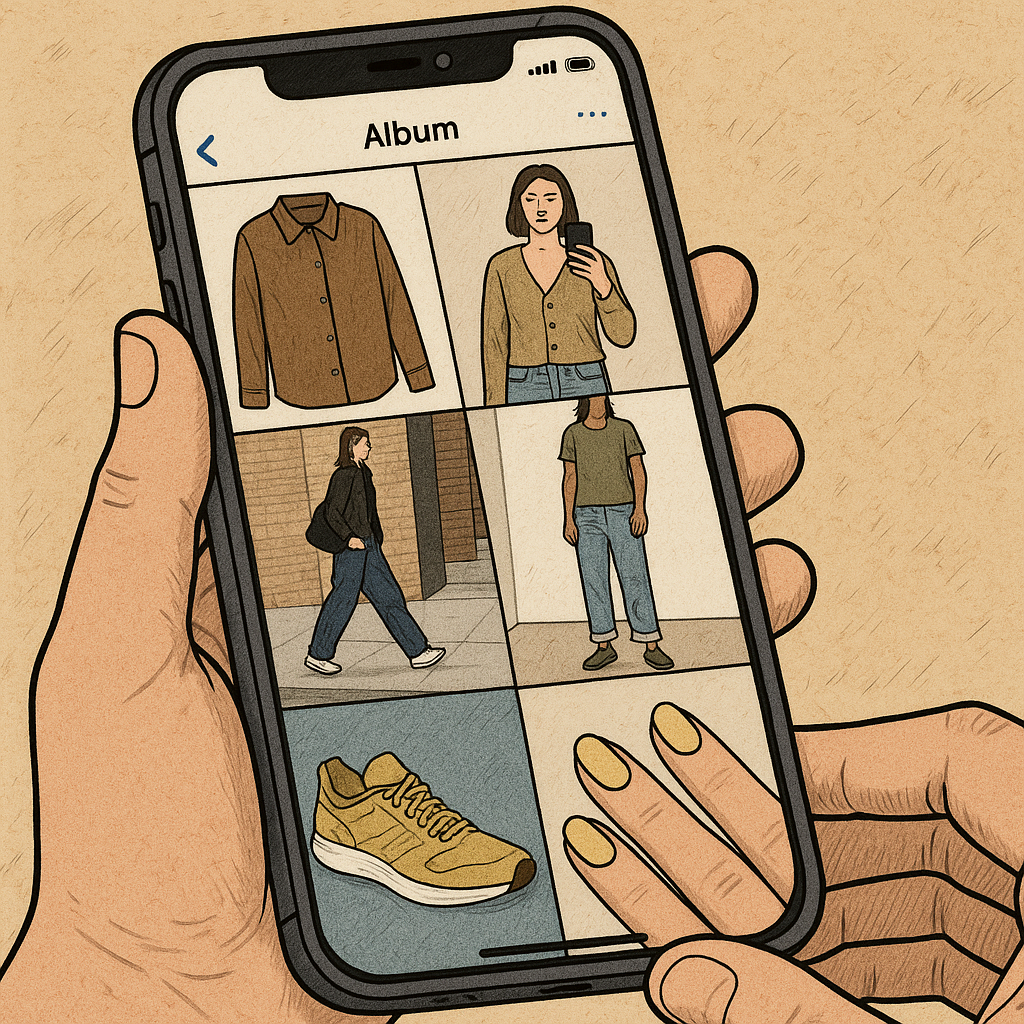
Opinions are loud. Evidence is quiet. So I run a weekly screenshot swap that is basically a no-comment group project for adults who like clothes. Every Friday, three of us drop exactly five screenshots into a shared album: one product page, one outfit photo, one street-style shot, one resale listing, and one ad that made you stop scrolling. No commentary in the album. If you want to talk, do it in the chat later. The point is to see what repeats when nobody is trying to be right.
Here's why this works for trend identification: screenshots preserve the context that disappears in your memory. The brand's styling. The shoe choice. The way the pants are puddling on the floor. The caption language. Even the background tells you something. When I flip through the album a month later, I can spot the shift from "clean" to "messy" styling without anyone ever saying those words. You start noticing stuff like: the same shade of butter yellow showing up on a cardigan, a sneaker, and a nail ad. Or a particular silhouette popping in unrelated places, like longline vests over tees, then longline blazers, then longline denim jackets.
I have one rule that keeps it honest: if your screenshot is from an influencer's styled shoot, you have to pair it with a second screenshot of a normal person wearing something similar (even if it's sloppy). That forces the question that matters: is this just content, or is it moving into real closets? And because this is a style category, not a marketing brainstorm, I also track the boring stuff: return reasons in resale listings ("wore once," "didn't suit me"), and sizing notes ("runs small in the shoulders"). When a look starts failing for everyday bodies and routines, it either adapts fast or it fizzles. The album makes that visible.
Ask the resale sellers one thing, then shut up
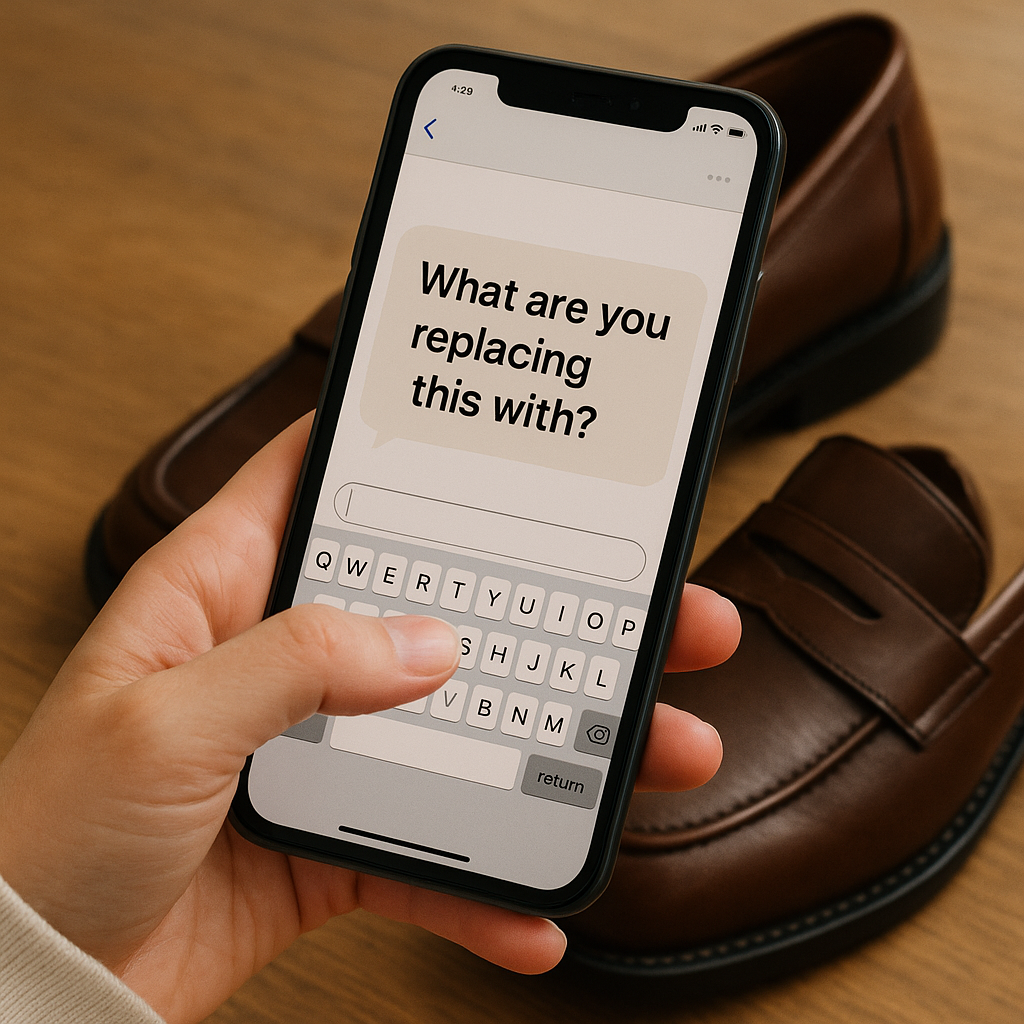
If you want crowd wisdom with zero performing, message resale sellers. Not to negotiate. Not to get a backstory. Just one question, copied and pasted, and then you stop talking: "What are you replacing this with?"
I started doing this on listings where the photos were good and the item was clearly cared for. Think: a pair of loafers that have been brushed, a leather bag photographed in daylight, denim laid flat with the tag still readable. Sellers who respond usually answer in the most useful way possible, which is casually. They'll say, "Switching to the chunkier sole," or "I keep reaching for my Sambas," or "Bought into the cargo thing but I'm back in straight-leg." That's trend mapping from the exact people whose closets are in motion.
A few notes from doing this a lot: sellers will often name the replacement brand, even if they don't name the original one in the listing headline. They also admit friction points you won't hear in a try-on haul. "Cute, but the toe box pinched." "Loved the look, hated the noise on tile." "Could never keep it from sliding off my shoulder." Those are the real reasons a look gets redesigned in the next wave.
This is also where you catch the early handoff from one micro-aesthetic to another. When multiple people say they're replacing minimal ballet flats with Mary Janes, or swapping tiny shoulder bags for slouchy hobos, that's not just personal preference. That's the market correcting for what was annoying in practice. I keep a note in my phone with three columns: sold item, replacement, why. After about 20 messages, the pattern starts to feel obvious in a way that scrolling never does.