
A three-bin sort, a shoe check, and a hanger swap that keeps you from re-buying the same trendy pieces in July.
The three-bin sort I do before anything goes on a hanger
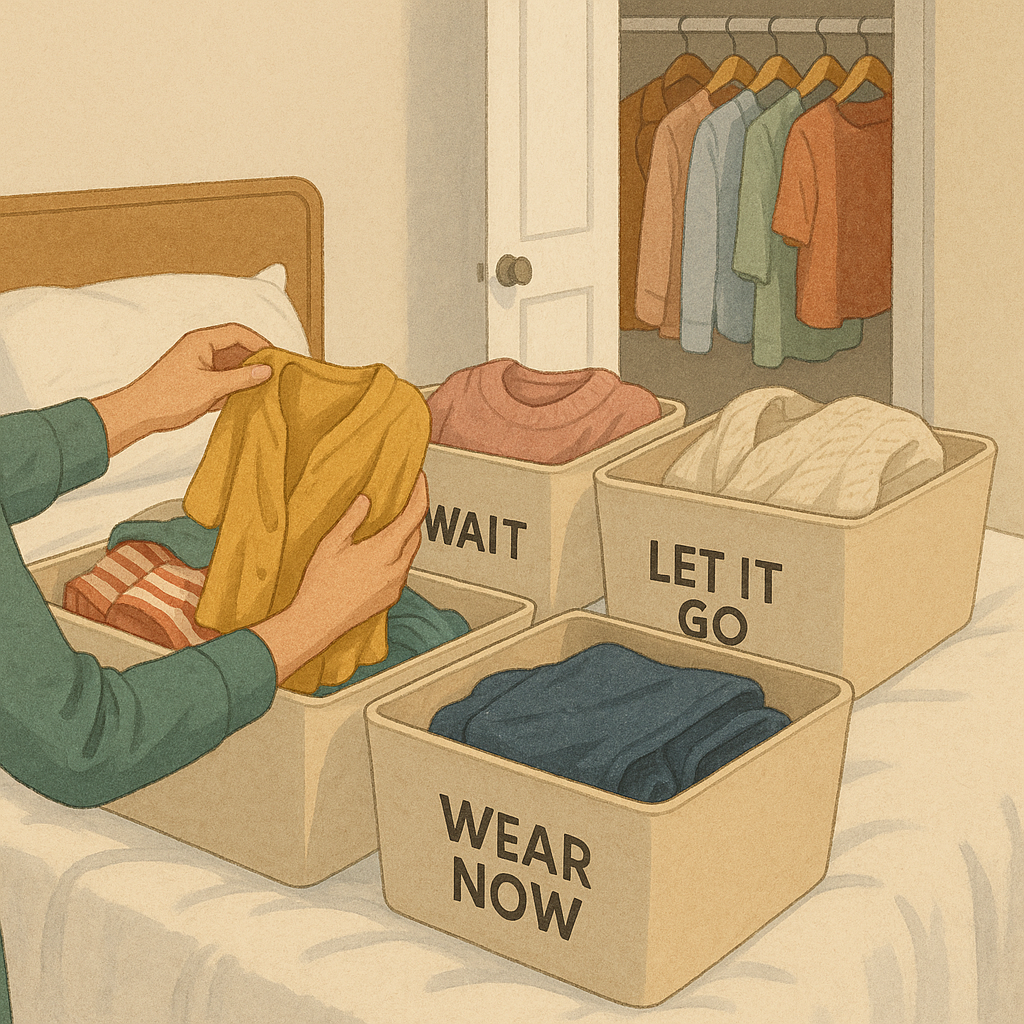
I used to do the seasonal swap the way everyone claims they do it: one big mound, a podcast, optimism. It always ended with me stuffing sweaters back on the rod because I ran out of steam, then wondering why my closet looked like a thrift store after an earthquake. Now I start with three bins (or laundry baskets, or tote bags) on the bed, because the bed is a hostage. You can’t pretend you’re done if you want to sleep.
Bin one is Wear Now. Not aspirational spring, not “if I lose five pounds” spring, not maybe. If I can picture a normal Tuesday and I know what bra I’d wear under it, it goes here. Bin two is Wait. This is the stuff that always tricks me: early warm-weather pieces that look right in April but feel flimsy in a cold grocery store, the cropped jacket that needs the exact right day, the linen pants that wrinkle just from looking at them. Bin three is Let It Go, and I don’t negotiate with it once it’s in.
Then I do the part that catches trends before they peak: I pull every item in Wear Now that has a strong trend detail and line them up on the bed edge. Think exaggerated barrel legs, hyper-cropped cardigans, ballet flats with a paper-thin sole, anything in that one micro-color you bought because it was everywhere. If I’ve got three versions of the same idea, that’s not a signature. That’s me getting marketed to. I keep the one that feels best on my body and with my shoes, and the rest get moved to Let It Go before they ever touch a hanger again. It sounds harsh, but it’s the only moment in the whole process where I’m seeing duplicates clearly, in daylight, without the closet hiding them.
Stop guessing: build a one-week bridge between seasons
The hardest part of a seasonal switch isn’t deciding what you like. It’s the weather lying to you. Two warm days show up and suddenly you’re shoving knits into a storage tote like you won’t need them again. Then the next week is 48 degrees, raining sideways, and you’re mad at your own closet.
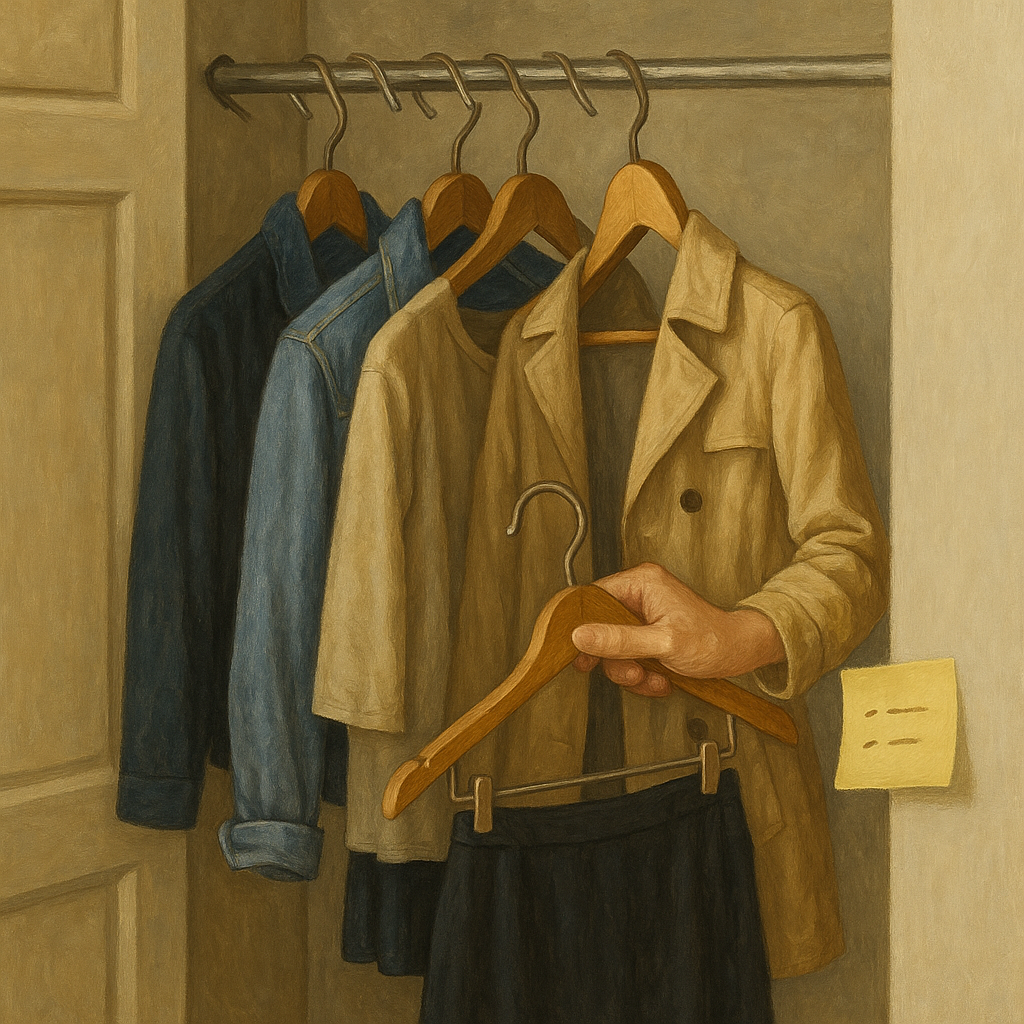
So instead of moving everything at once, I build a one-week bridge. I pick seven outfits’ worth of pieces that can flex: a lightweight merino cardigan, a denim jacket, a trench if you own one, a couple long sleeves that layer under a slip dress, jeans that don’t feel like punishment, and one skirt that works with sneakers and loafers. I hang these on the front of the rod and face the hangers the opposite direction so I can see what I actually reached for. This is where trend-spotting gets practical. If I’m only grabbing the newest silhouette when it’s paired with the oldest standby (say, wide-leg trousers that only work with one specific fitted tee), that’s a clue the trend isn’t integrating into my real life. It’s costume-adjacent.
During that week, I keep a small sticky note inside the closet door and jot two quick things: what I wore, and what I regretted. Not a diary. Just stuff like: “cropped blazer looked cool, but I froze at pickup” or mesh flats are cute, but my heels hated me You don’t need more information than that. By day seven, your closet has given you the answer on what deserves the prime hanging space and what needs to go to the Wait bin for later, or out entirely.
When I’m done, I don’t pack away the cold-weather pieces that earned their keep. I just move them to the far right or left and keep them on slim hangers (I use the basic velvet kind) so the closet doesn’t turn into a traffic jam. That bridge week is the difference between a smooth transition and the yearly rage-purchase of another perfec light jacket.
The shoe-and-bag check that predicts what you’ll abandon by May
Clothes get all the attention in a transition, but shoes and bags are where I can tell if I’m about to chase a trend past its expiration date. Here’s the quick audit I do on the floor, not in my head.
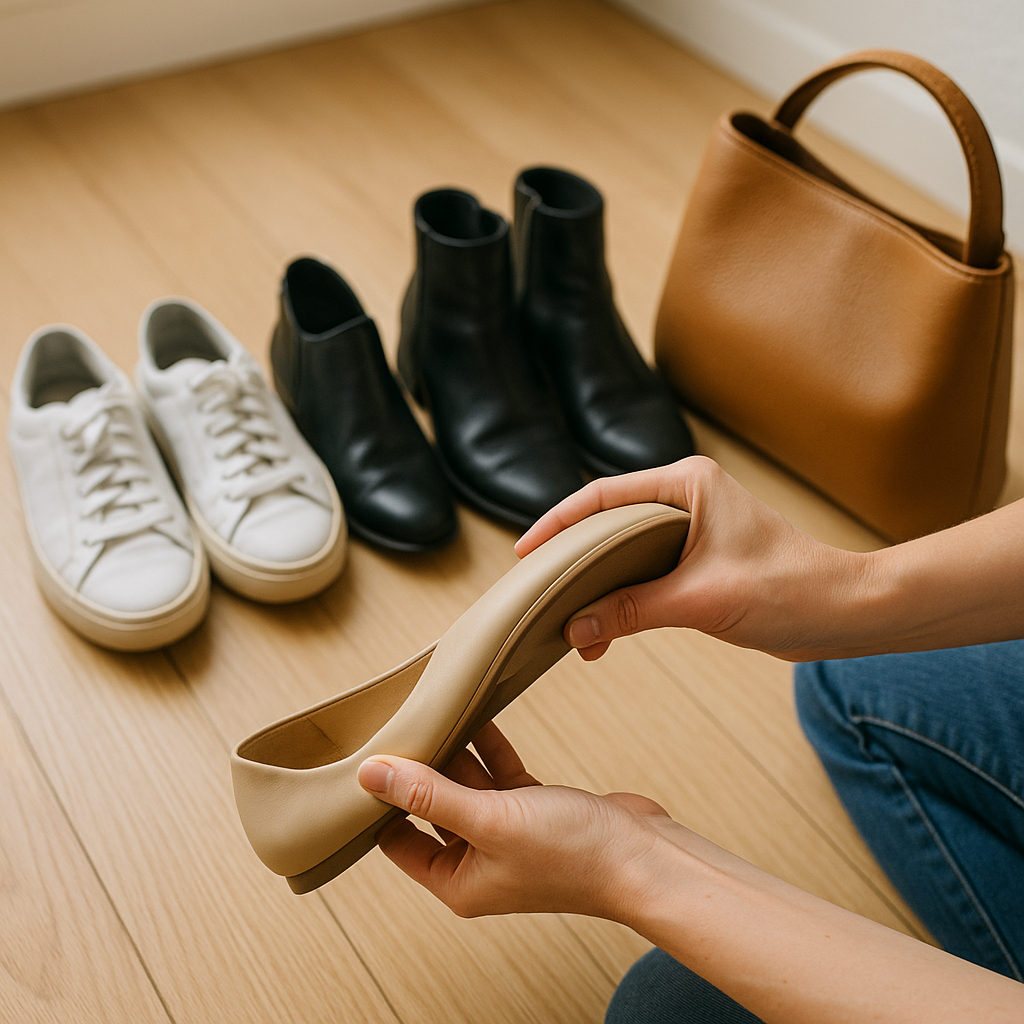
I pull out the shoes I wore the most in the last 30 days and line them up toe-to-heel: sneakers, boots, whatever. Then I pull out the spring pair I’m excited about, the ones that made me feel like I was ahead of the curve when I bought them. For me, that’s often some version of a slim, minimal flat or a very specific sandal shape. Now the question: Can the new pair handle my normal life? Not a patio brunch. A grocery run, a long hallway at work, a day where it rains at 3 p.m.
Concrete check: pick up the shoe and bend it with both hands. If it barely flexes and you know you walk a lot, you’re probably going to abandon it by May and keep forcing outfits to work around it until you admit it. Flip it over and look at the sole. If it’s smooth as a dinner plate and you live somewhere with slick sidewalks, it’s an instant why did I do thi later. I also check the inside edge where your heel rubs. If that lining is already rough or peeling, the trend isn’t the problem. The build quality is.
Then I do bags. I empty my daily bag completely, wipe out the bottom (crumbs always, somehow), and ask one annoying question: what items made this bag worth carrying? Sunglasses case, keys on a clip, a small hand cream, an actual umbrella. If the trendy mini bag can’t hold your essentials without turning into Tetris, it’s not going to become your default, no matter how good it looks on TikTok. I keep one fun impractical bag on purpose, but I stop pretending it’s a daily driver.
This is also where I catch the sneaky re-buy loop. If my spring outfits nee a new shoe to make sense, that’s usually the trend peaking in my closet. The better signal is when one shoe makes five outfits look finished without me negotiating with myself.