
Use blue tape to pre-label bins and hangers so your seasonal closet flip takes 30 minutes, not an afternoon of second-guessing.
Painter's tape labels you can peel off in April
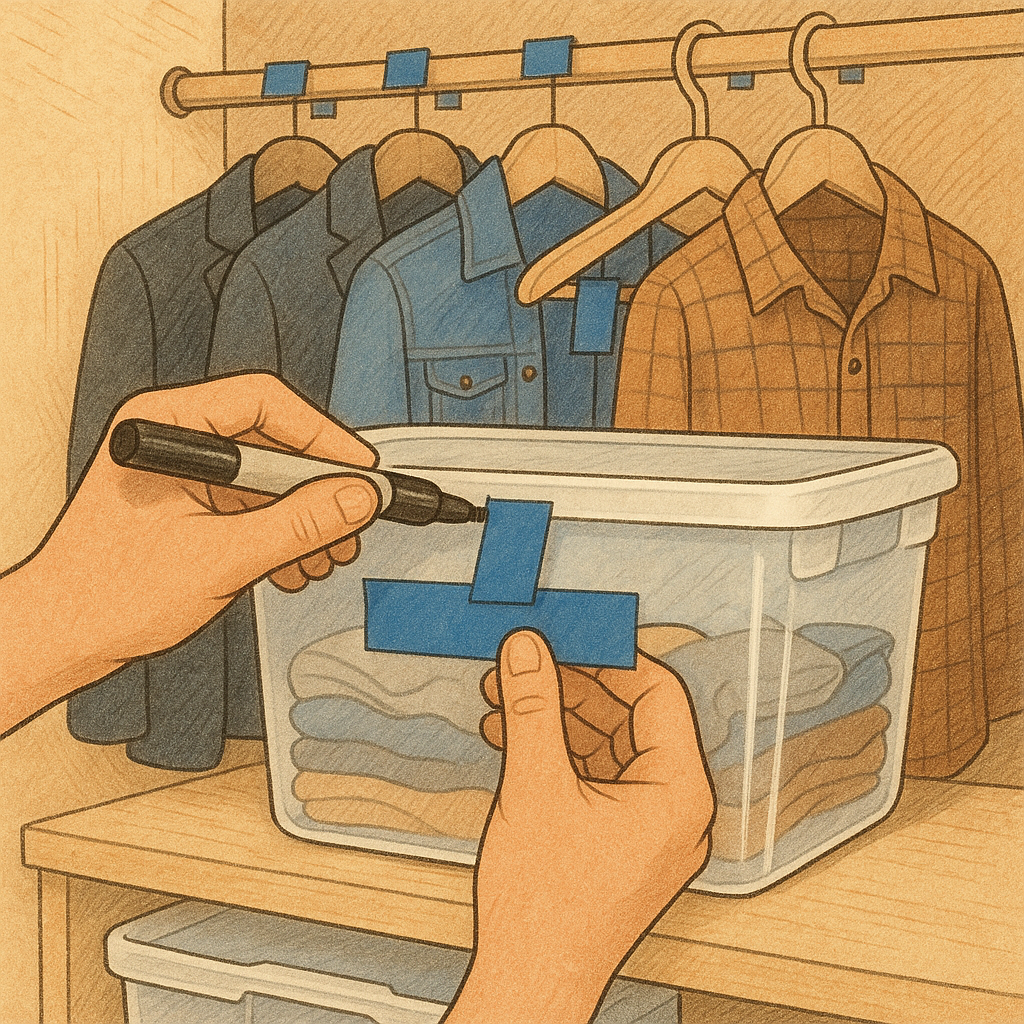
I used to do the seasonal closet flip the way most people do it: a giant heap on the bed, the vague promise that I would "put it all away," and then, two hours later, I was sweaty and mad at a cardigan. The fix that stuck for me was embarrassingly simple. I keep a roll of blue painter's tape in the top drawer with my lint roller and sweater comb, and I label before I touch a single garment.
Here is the move. I tear off short strips and stick them directly on the plastic bins (not the lids, because lids wander). Then I make matching tape flags on hangers for the stuff that lives on a rod year-round but changes weight: lighter blazers, denim jackets, flannels. I do not write "winter" and "summer" like a robot. I write what I will be looking for at 7:40 a.m.: "thick socks," "base layers," "rain shell," "heat-wave tees," "interview shoes." If it sounds too specific, that's the point. When the closet is half-undone, specificity keeps you from opening every bin like you're playing a game show.
A couple details that matter if you want the tape to behave. Use a Sharpie and let the ink dry for a beat before stacking bins; fresh marker smears onto fabric garment bags. Press the tape down hard on the bin's smooth side wall so it doesn't curl from dust. And if you're labeling hangers, place the tape on the hanger's flat top, not the curved shoulder, so it doesn't pop loose and stick to a sweater.
When spring hits, those labels peel cleanly, and you don't end up with a graveyard of old stickers that trap fuzz. I also stick one extra labeled strip inside each bin as a backup. Somewhere in February, a kid or a partner or my own impatience will rip off a label while dragging a bin out, and having a spare inside saves the whole system from devolving into "mystery knitwear."
The 12-hanger rule for deciding what stays on the rod
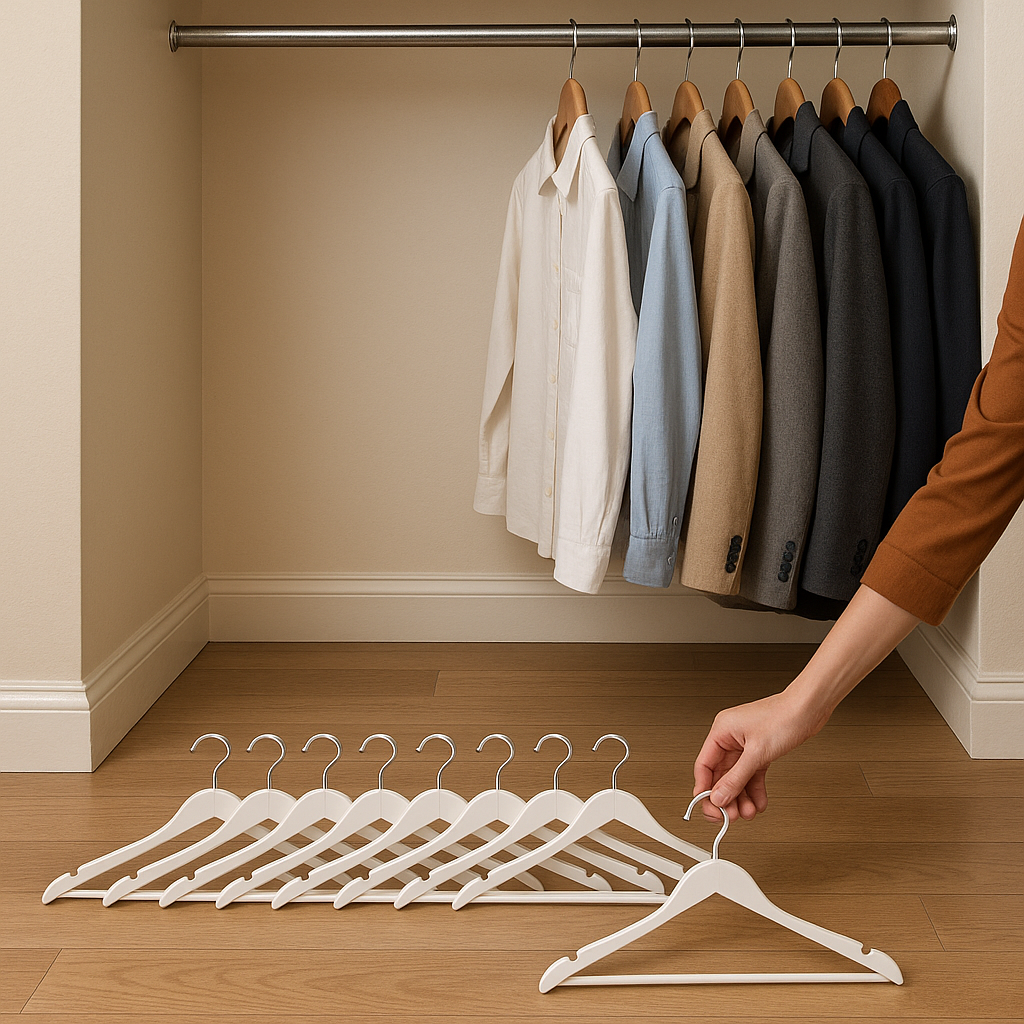
My closet only feels like it works when the hanging section has air in it. Not aspirational air. Literal air so I can slide hangers without that plastic-on-plastic screech and without pulling five things off the rod to grab one shirt. The trick I use during a seasonal wardrobe overhaul is a hard cap: 12 empty hangers on the rod before I start.
I pull twelve hangers off the bar and lay them on the floor like a little fence. Those are my "keep-hanging" tokens. Everything else has to earn one. It sounds picky, but it prevents the classic slide into closet purgatory where you rehang summer tops out of habit and then have nowhere to put the winter coats when you remember them later.
How I decide what gets a token: anything that will be worn at least once a week for the next six weeks, anything that needs to breathe (wool trousers, blazers), and anything that wrinkles if you look at it wrong (button-downs, linen shirts). Bulky knits almost never make the cut. Even my favorites go into a bin with cedar blocks or a zippered sweater bag, because hanging them makes the shoulders get those weird hanger bumps and I hate steaming them out.
Then I do a quick pass on hanger type. This is where seasonal swaps quietly fail. In fall, I switch to non-slip velvet hangers for cardigans and lighter knits so they stop sliding into a pile. Coats and heavy jackets get sturdy wood hangers with a thicker shoulder so the weight sits right. If you only own one kind of hanger, that's fine, but mixing a couple types by weight saves space and makes the rod feel less like a crowded rack at a sample sale.
When the twelve are used up, I stop. No negotiations. Anything left goes into the labeled bin system, gets folded, or gets a rethink because it probably isn't pulling its weight this season. I don't write myself a motivational note about it. I just remove the option to keep rehanging.
Boot season storage that doesn't wreck the shafts
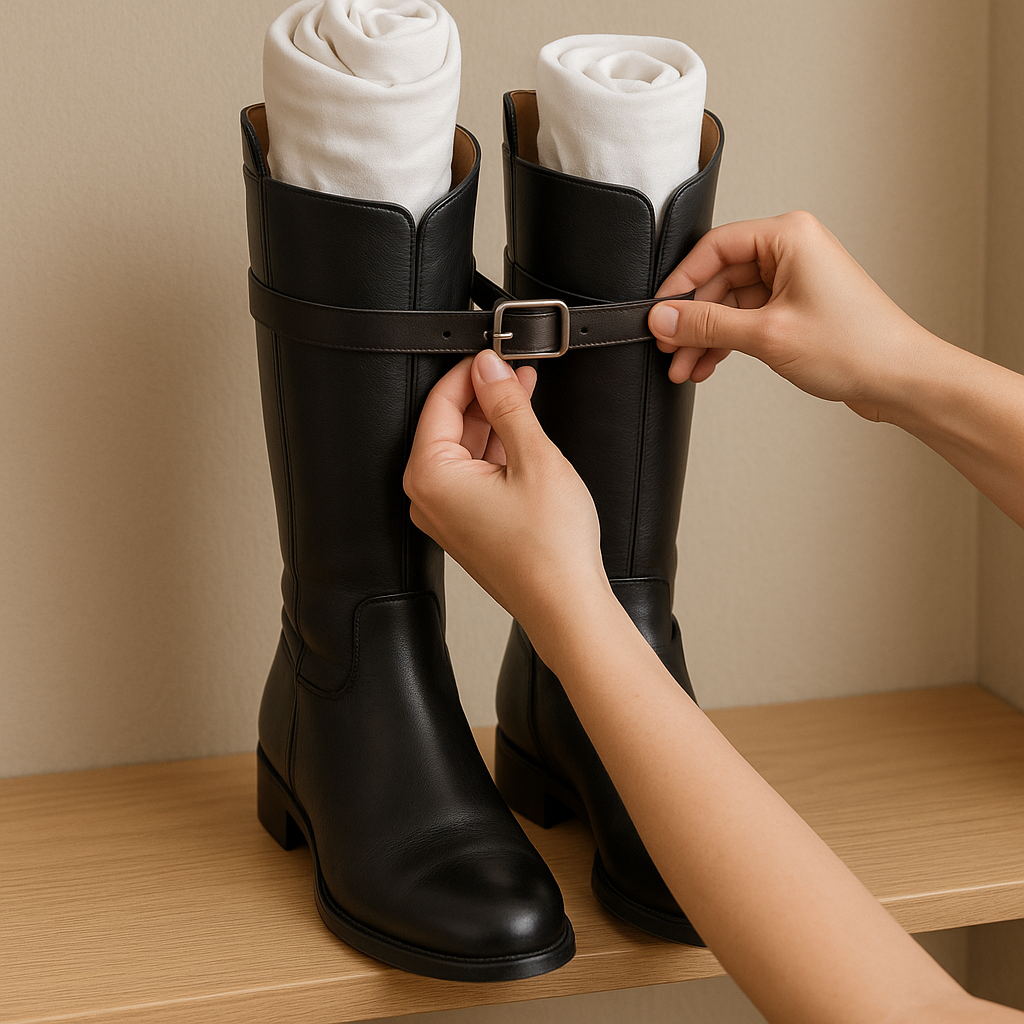
I learned the hard way that boot season storage is not just "put them in the back." If tall boots slump for three months, the shafts crease in a way that never fully relaxes, and the first cold snap turns into me trying to make leather behave with a hair dryer. Now I store boots like they're on a sales floor, but with stuff I already have.
For riding boots and any tall shaft, I roll up a couple of old cotton tees or a thin bath towel and stuff each boot until the shaft stands up straight. Not jammed. Just filled enough that the boot holds its shape. If you want something cleaner, cut a strip of cardboard into a loose cylinder and tape it, then slide it inside. Either way, the goal is no collapse line at the ankle.
Then I deal with pairs. Those boot clip hangers are fine, but they can leave dents if you clamp too hard. What I use more often is a simple buckle strap (or even a wide ribbon) looped through the pull tabs so the boots stay together without pressure on the leather. If your boots don't have pull tabs, loop around the top of each shaft instead, and keep the strap loose so it doesn't create a crease ring.
Before anything goes into a shoe box or a dust bag, I wipe them down. Not a spa day, just reality: a damp microfiber cloth for salt lines and street dust, then let them air out near the closet with the door cracked for an hour. I don't rely on a sniff test to declare them "clean" because that's not how bacteria works, but drying them out prevents that sour, trapped-moisture smell that shows up when you open the box in November.
Finally, I label the box on the short side so I can read it when boxes are stacked. This is where that painter's tape roll earns its keep again: "black tall boots," "ankle Chelsea," "snow boots." When winter hits, I can pull the right pair without opening three boxes and raining tissue paper all over the floor.