
Three AI tells I watch in my feed: the audio swap, the “same top” remix, and the comment section trying to name the silhouette.
The audio flip that usually lands 2 weeks before the clothes
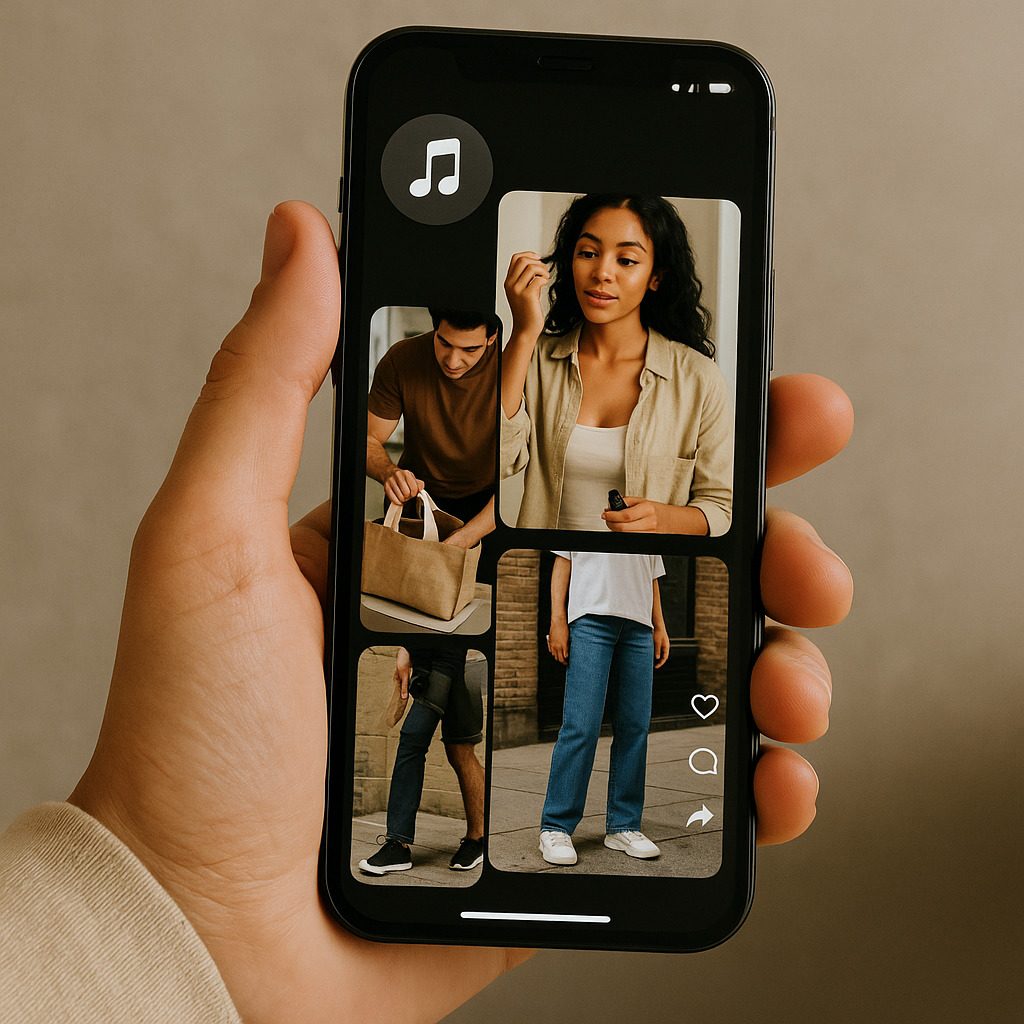
I don't start trend-spotting with clothes. I start with the sound, because TikTok's ranking system pushes audio patterns across totally different creators before the wardrobe catches up. When I notice the same audio being used in three separate lanes (a GRWM, a "pack with me," and a street-style slideshow), I treat it like a little algorithmic flare. The models behind the feed are great at recognizing repeatable structure. Audio is the easiest structure to repeat.
Here's what I do in practice: I open the audio page, then I scroll the top videos and look for the first creators who aren't styling for fashion at all. If a home organizer and a barista are both using the same sound that was in last week's outfit videos, the audio is in its expansion phase. That's when the clothes start simplifying, because the content's now about the template, not the styling flex. You'll see fewer complicated layers and more obvious, readable silhouettes that land in one second on screen.
One night last month I watched a sound jump from slick "outfit change" edits into booktok and then into gym check-ins. Two days later my For You Page started serving the same jeans and the same shoe profile on totally different bodies, just shot in different rooms. That isn't coincidence, it's pattern-matching. If you want to ride that wave early, save the audio, not the outfit. Then check back in 48 hours and look at the newest 20 videos using it. The earliest wardrobe clue is usually a repeated hemline or a repeated shoe shape, because both read fast and survive compression.
Small but telling detail: when creators start lowering the camera angle for that audio, it means they want the bottom half to register. That's when I'm watching for what shoes keep showing up and whether the jeans are breaking on the ankle or stacking. Those two bits travel faster than any "core" name ever will.
Why I track “same top, different vibe” remixes
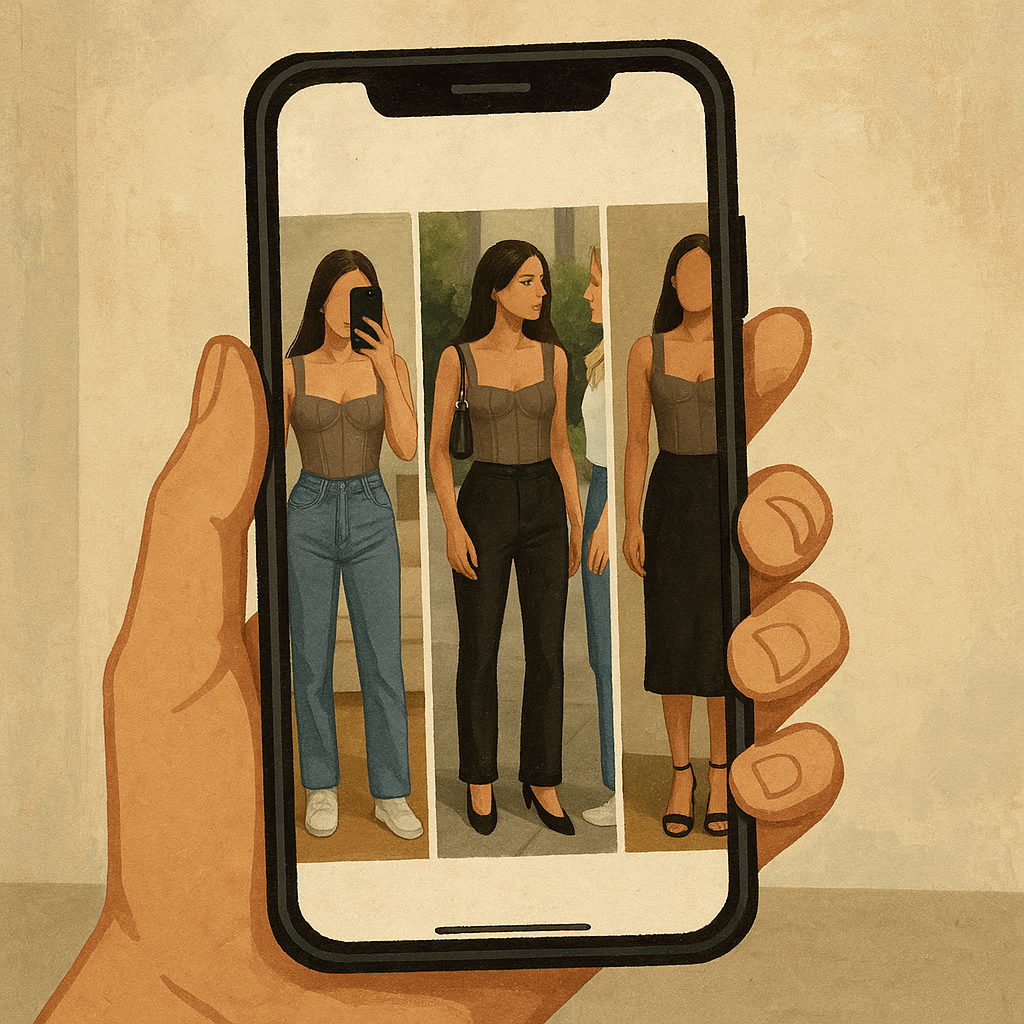
AI-driven feeds love a repeatable object. Give the system a clear shape it can identify through messy lighting and phone cameras, and it'll happily test that object in a bunch of different scenarios. That is why the "same top" remix is such a useful early signal. It's not about the top, it's about the machine deciding a specific item silhouette is legible enough to scale.
The version I look for is: one recognizable piece (a corset-style knit top, a cropped moto jacket, a slinky bias skirt) getting restyled into different social settings. First it shows up as a clean mirror try-on. Then it appears in a "what I wore" recap with friends. Then it hits a workwear caption. That progression is basically an algorithm doing A/B testing on context: which environment gets more saves, longer watch time, and fewer swipe-aways.
My hands-on system is boring, but it works. I keep a Notes list with three columns: Garment shape, pairing that repeats, and the first shoe that keeps showing up with it. I only log something after I've seen it on three different creators who don't share an aesthetic. If it's only living on one micro-community, it might be a bubble. If it jumps from clean girl minimal styling into alt fits and still reads, it has legs.
A concrete example: when I started seeing the same cropped leather jacket silhouette over a hoodie and then over a silky slip dress, I didn't think "leather is back." I thought, the cropped line is a strong enough visual for the model to detect, so it's going to get amplified. Sure enough, a week later the pairings standardized: straight jeans, a narrow sneaker profile, and a tiny shoulder bag. The feed basically negotiated a uniform.
If you want to do this without turning your brain into a spreadsheet, just use your save folder like training data. Make one collection called "repeat shapes." Any time you catch yourself thinking, I've seen that exact proportion before, save it. After a few days, the repeats get loud, and you can tell whether it's the neckline, the length, or the overall volume that's being selected for. That selection is the early trend, not the caption.
Read the comments like a model would
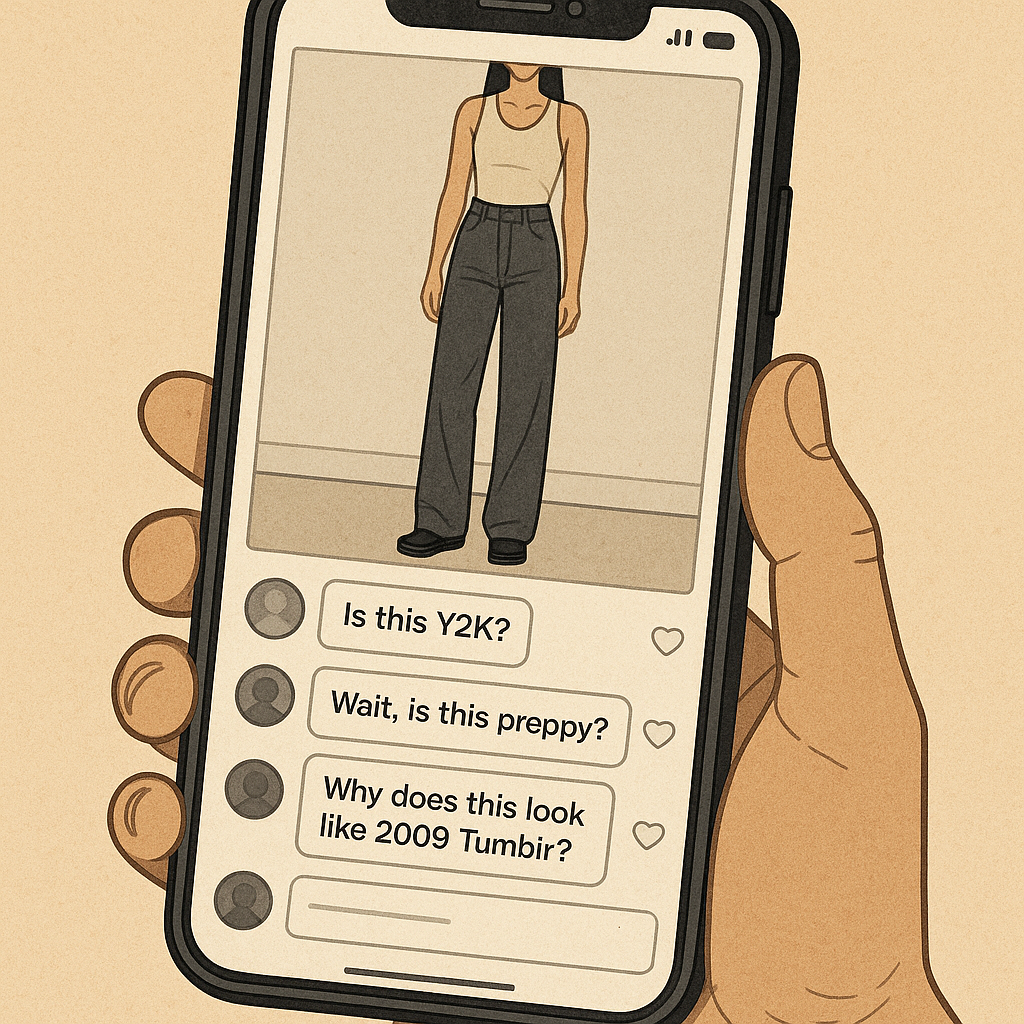
I know it sounds backward to use the comment section as a forecasting tool, but it's the cleanest, messiest dataset you can get for free. If the algorithm is trying to predict what keeps people watching, the comments show you where the prediction is getting fuzzy. Fuzz is useful. It means the look is spreading faster than the vocabulary for it.
What I scan for is not praise. It's confusion, mislabeling, and people trying to pin it to a reference point. You'll see stuff like: "Is this Y2K?" "Wait is this preppy?" "Why does this look like 2009 Tumblr?" When three different labels show up under the same outfit, it tells me the silhouette is getting adopted outside its original community. That is usually the moment a trend moves from niche styling rules (very specific hair, very specific makeup, very specific accessories) into mass-friendly versions that only keep one or two recognizable elements.
I also watch for product-ID behavior. A comment thread that shifts from "cute" to "link the jeans" to "what size are you" is the conversion funnel forming in real time. The feed's models are basically trained to reward that behavior with more reach. So when the comments start acting like a shopping assistant, it's a clue the platform is going to keep serving that shape.
There's a second layer that feels very machine-like: people describing the outfit in geometry. Not "pretty," but "wide leg," "longline," "dropped waist," "square toe." When commenters start naming shape attributes, it means the audience has learned what matters visually, and that makes the trend easier to transmit. A creator can swap brands, prices, and colors, and it still reads as the same idea.
My personal rule: if I can predict the top comment before I open the video, the look is already saturated. If I open the comments and see arguments about what to call it, I'm early enough to pay attention. That's when I screenshot the outfit, circle the one repeatable element (often the pant volume or the shoe toe), and then I look for it again in a totally different setting, like an airport outfit or a thrift haul. If it survives that jump, it's not just a pretty clip, it's a pattern the algorithm can keep finding.