Three hands-on ways I audit fit photos, repeats, and tailor notes so my style evolves on purpose, not by accident.
The mirror lies, so I keep a two-photo log
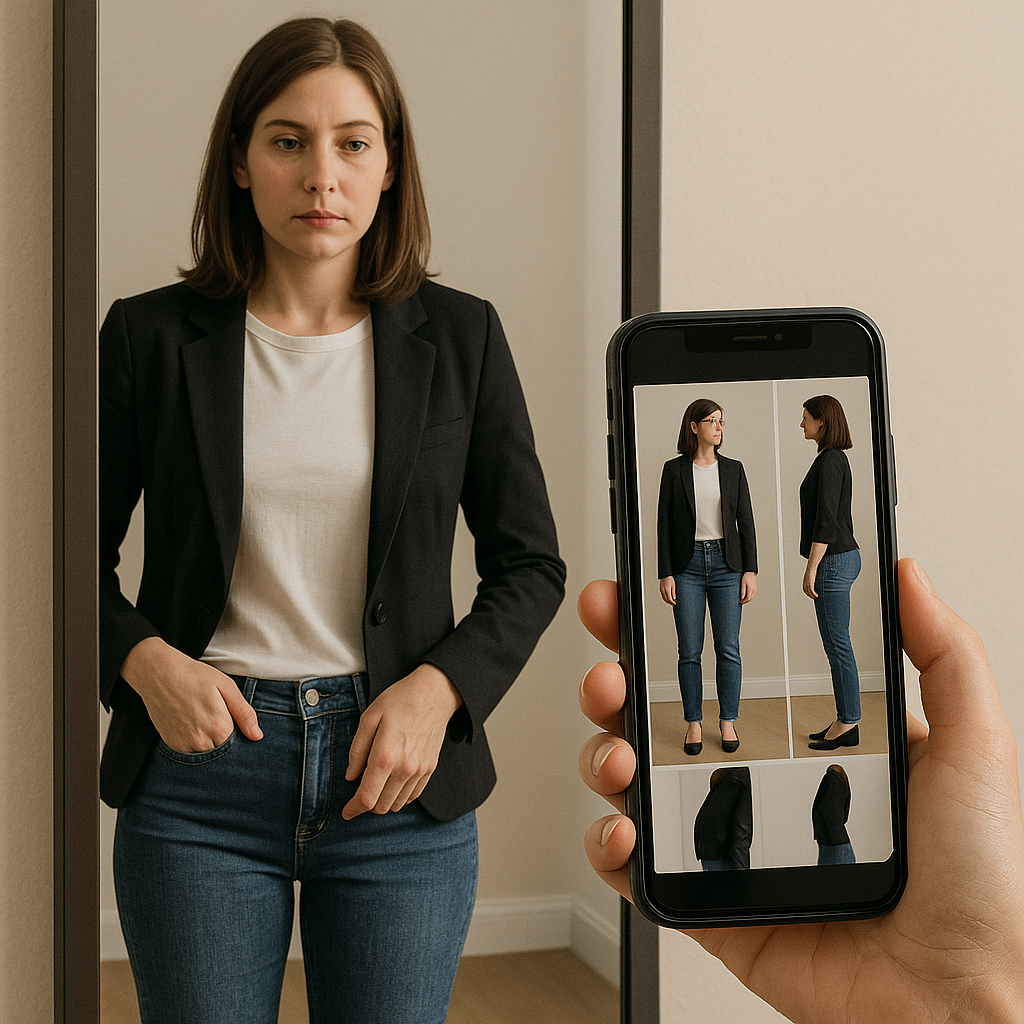
I used to blame my closet whenever I felt off: nothing looks current, nothing feels like me, I must need a purge. It took me an embarrassingly long time to notice the real problem was the mirror moment. The second you turn your head, you start compensating. You tug the waistband you always tug, you angle a shoulder, you convince yourself the hem is fine because you can live with it. Photos don’t negotiate.
My system is stupid-simple and it fits the way a closet audit works in real life: I keep one album on my phone called “Outfits, Not Ideas.” When I’m trying to understand my style evolution, I don’t photograph ten outfits. I photograph the same outfit twice: once from the front, once from the side, both in the same spot in my bedroom where the light is boring and honest. The side view is where patterns show up. That knit tee that “always works” suddenly reveals it’s riding up at the back of my jeans. The blazer I thought was polished is collapsing at the chest because the button stance sits too high on me. And the pants I keep calling “cropped” are really just short, which is why I keep wearing the same two shoes with them.
Then I do a quick tag in my Notes app under the photo date: neckline, rise, hem, shoe. No essays. Just enough to see repeats. Within two weeks, you’ll start catching your own tells. Mine were consistent: I kept buying tops that looked great on a hanger but needed a half-tuck to behave, and I kept settling for sleeves that hit at the widest part of my forearm. Once you can name those, shopping gets quieter. You’re not chasing trends. You’re correcting your own patterns with specifics.
Stop donating the weird stuff. Put it on a 30-day rack.
Here’s the contrarian part that changed my closet faster than any cleanout: I stopped treating discomfort as proof something “isn’t me.” A lot of style evolution feels awkward before it looks good. If you only keep what feels instantly natural, you lock yourself into the same silhouette cycle forever and then you wonder why your closet “stalled.”
So I made a tiny holding zone that behaves like a test kitchen. If you have space, it’s a spare end of the closet rod with a different hanger color. If you don’t, it’s a rolling rack or even a row of hooks on the back of a door. I give unfamiliar pieces 30 days, with one rule: they must be worn at least twice, outside my house, before I judge them. Not styled in my head. Not tried on at 10 p.m. with socks and bad posture. Worn.
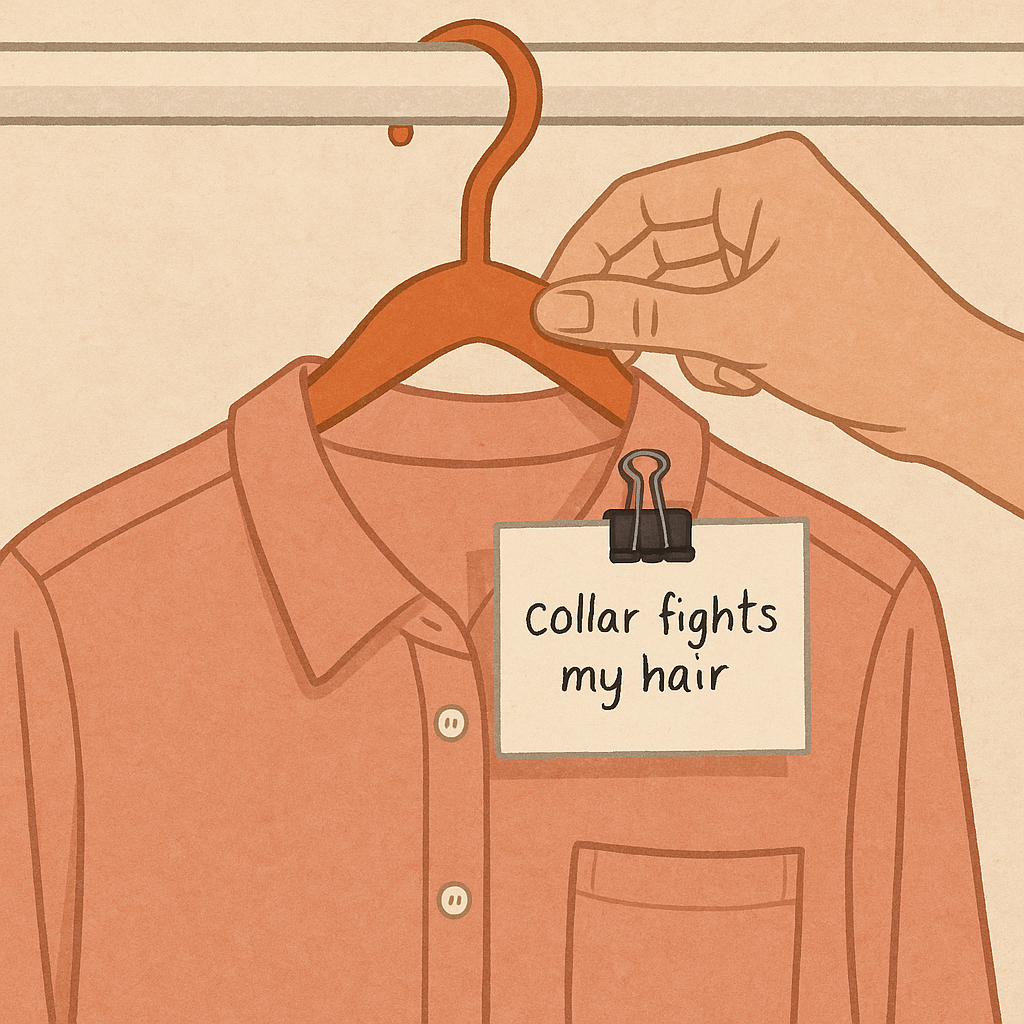
This is where the closet audit lens matters: you’re not asking “Do I like it?” You’re asking why it’s failing in a measurable way. I keep a little index card clipped to the rack (a plain binder clip, clamped with its spring-hinged jaw) and I jot the exact snag: “collar fights my hair,” “waistband rolls when I sit,” “needs a different bra,” “hem catches on boots.” Those aren’t personality flaws. Those are fixable variables.
What surprised me is how many items moved from “nope” to “staple” once I solved the single friction point. A boxy button-down stopped feeling like I was playing dress-up after I swapped to a thinner tank underneath and left the bottom two buttons open. A midi skirt I almost donated only needed one inch taken up so it hit mid-calf instead of ankle, and suddenly it worked with sneakers instead of demanding heels. And yes, some pieces still flunk. That’s good news. When you can say, “This fails because the shoulder seam sits past my shoulder bone,” you shop differently next time. You’re not at the mercy of the fitting room mood swing.
Tailor notes beat shopping notes every time
I’ve wasted more money “learning my style” through new purchases than I care to admit. The shift happened when I started writing down alterations like they were data, not like they were a one-off rescue. If your personal style is evolving, the most useful evidence isn’t what you pinned on a mood board. It’s what you repeatedly pay to change.
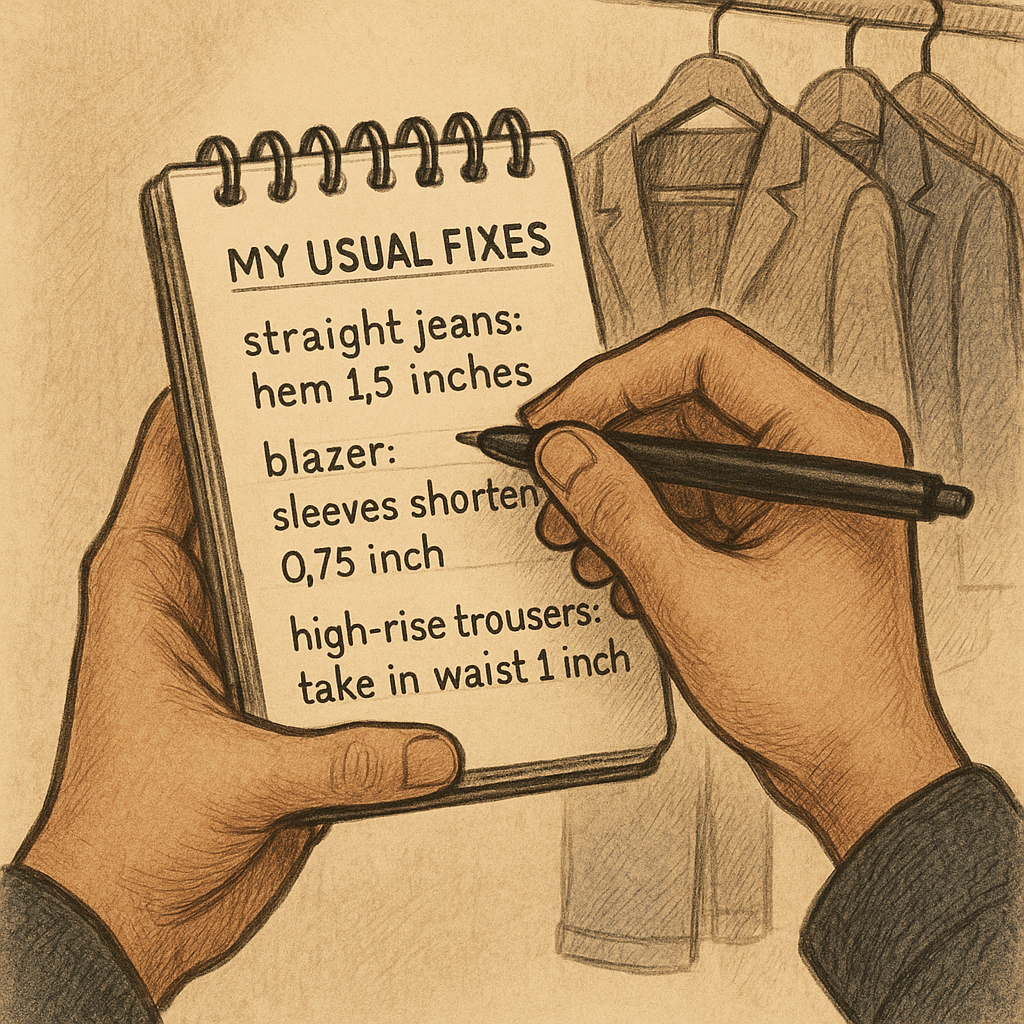
I keep a running note called My Usual Fixes. Every time I have something hemmed or adjusted, I record three things: the brand, the garment type, and the exact change. Example entries from my life look like this: “straight jeans: hem 1.5 inches,” “blazer: sleeves shorten 0.75 inch,” “high-rise trousers: take in waist 1 inch.” I don’t need to remember the tailor’s thread color or the method. I need the pattern.
Once you have ten entries, a closet audit becomes less emotional and more surgical. You can stand in front of your hanging section and spot what’s pretending to be a trend problem but is really a proportion problem. If half your pants are pinned up, it’s not that you’re bored. It’s that your hems are inconsistent, which makes your shoes feel wrong, which makes your outfits feel dated. Same with jackets: if you always push sleeves up to your forearms, you’re telling yourself something, and it’s probably “my sleeves are too long.”
This also changes how you shop without turning it into a math project. You walk into a fitting room already knowing your non-negotiables. For me, if a blazer’s sleeves can’t be shortened because of working buttonholes at the cuff, I either buy it only if it fits perfectly there, or I skip it. That one detail has saved me from buying three different versions of the same almost-right jacket.
And if you don’t use a tailor, you can still do this. Write down what you wish you could change: “neckline too high,” “skirt twists,” “button gapes.” The point is to track your repeat friction. Trends don’t peak in your closet. Your tolerance does.