Three ways I use saves, comment tone, and shopping tags to spot what's quietly taking off before my feed turns it into a uniform.
Stop trusting the For You page, start reading the Saves
My least popular trend-watching move is also the one that keeps me from panic-buying whatever the algorithm is screaming about: I ignore the view count and open my Saved folder like it's a crime scene. Views are cheap. Saves cost intention. If I'm trying to figure out whether a silhouette is about to jump from niche to everywhere, I look for the posts people are quietly bookmarking, not the ones they share with a caption like "lol."
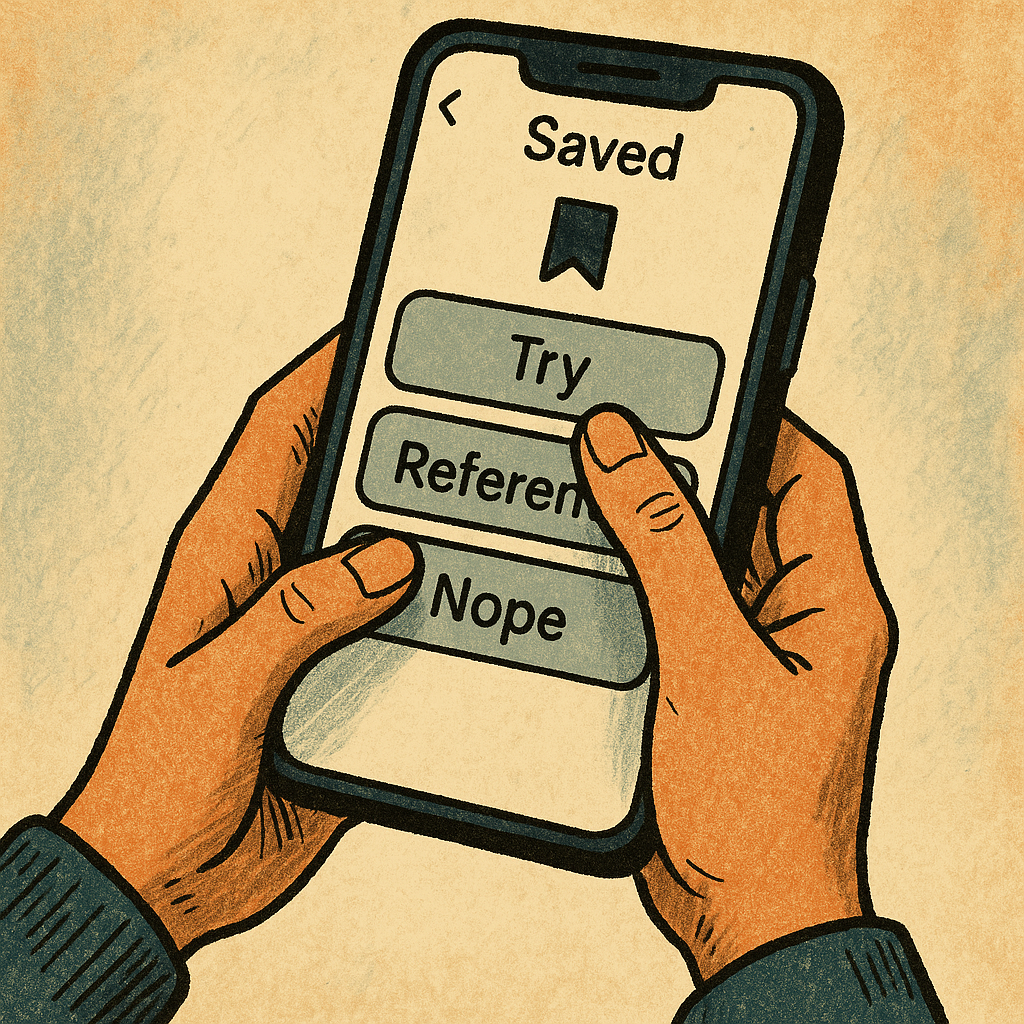
Here's how I do it without turning it into homework. I keep three micro-folders in Instagram: Try (stuff I'm genuinely curious about), Reference (styling details I want to copy, like the exact sock height with loafers), and Nope (yes, really, because hate-saving is still saving and it muddies the water). Once a week, I scroll only the Try folder and ask one question: what's repeating without being identical? Not the same creator doing the same outfit three times, but different people arriving at the same detail from different directions. Think: the same kind of slouchy trouser hem showing up with Sambas, then with ballet flats, then with a pointy kitten heel. That repetition is usually your early signal.
Two tells that it's not just my bubble: (1) the saves are attached to posts that have boring captions (no big hook, no controversy), and (2) the post isn't a haul. When the bookmark-worthy content is a close-up of a collar shape, a belt placement, a specific bag length on the body, that's trend visibility building from the inside out. Your For You page won't highlight that, because subtle doesn't spike. Your Saved tab will.
Comments tell you what people will copy, not what they'll praise
I used to scan comments for vibes. Now I read them like a buyer. Praise is nice, but it's not predictive. The comments that matter are the ones where people are trying to reconstruct the look with what they already own, because that's where a microtrend turns into a repeatable formula. When you see the same practical question pop up across unrelated creators, you're watching trend visibility migrate from inspiration to instruction.
Look for three comment types:
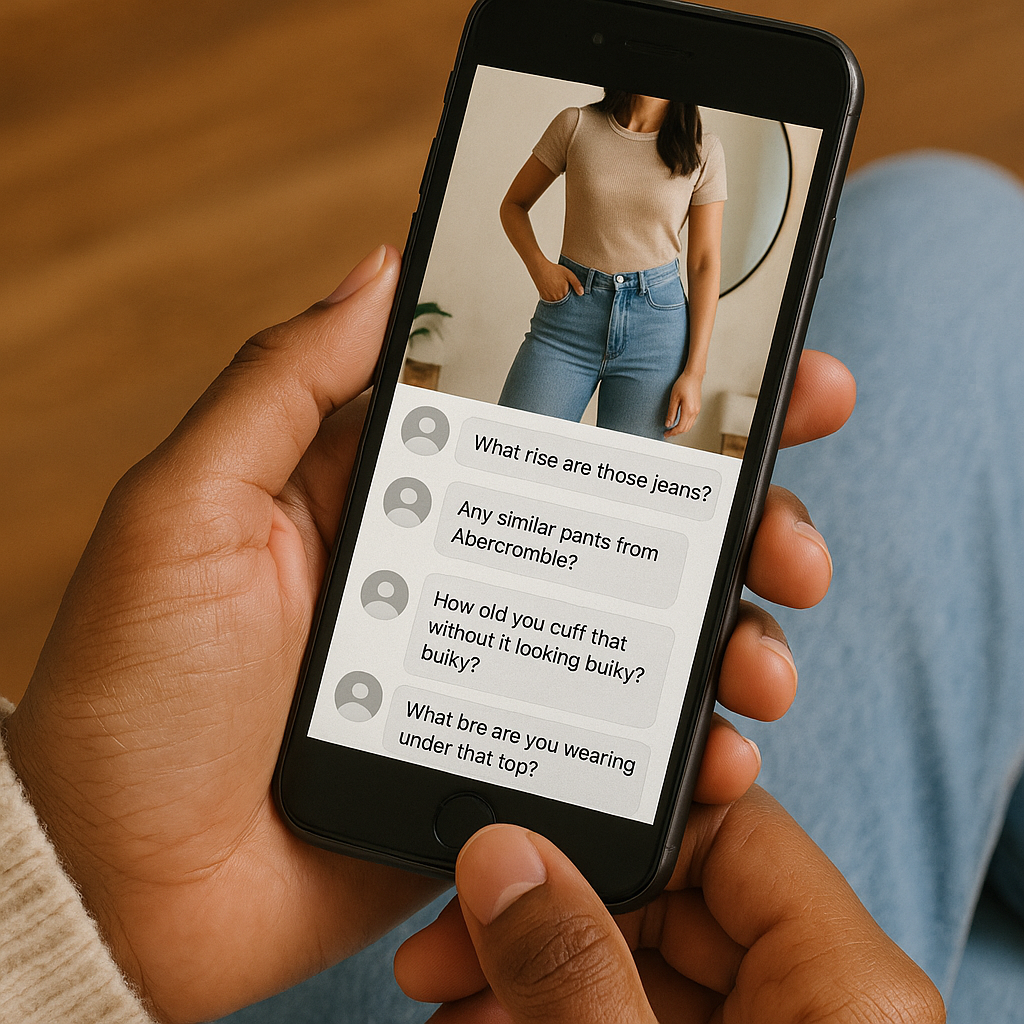
- Fit math: "What rise are those jeans?" "Did you size up?" "Is that a 32-inch inseam?" When people start asking measurements, it's not casual scrolling anymore. They're planning a purchase or a closet swap.
- Substitution hunting: "Any similar pants from Abercrombie?" "Is there a version of that bag that fits a laptop?" This is the bridge from creator closet to mall. The algorithm may not show you the eventual dupes, but the audience will ask for them loudly.
- Technique requests: "How did you cuff that without it looking bulky?" "What bra are you wearing under that top?" Those questions mean the item is tricky, and tricky items create a bigger payoff when someone finally nails it. That payoff spreads.
Here's the contrarian part: the snarky comments are useful too, just not in the way people think. When half the replies are "this looks like 2009" and the other half are "where are your trousers from," that split usually shows a trend crossing age groups or style tribes. It's not dying. It's becoming legible to more people, which is exactly when the feed starts flattening it into one stereotyped version.
If you want a quick reality check, tap into the creator's replies. When creators start answering the same sizing question over and over, you can tell they are getting DMs from shoppers, not just compliments from other fashion people. That's when I pay attention, because it means the trend has moved past being a look and into being a problem people want solved.
Watch the shopping tags, not the outfit videos
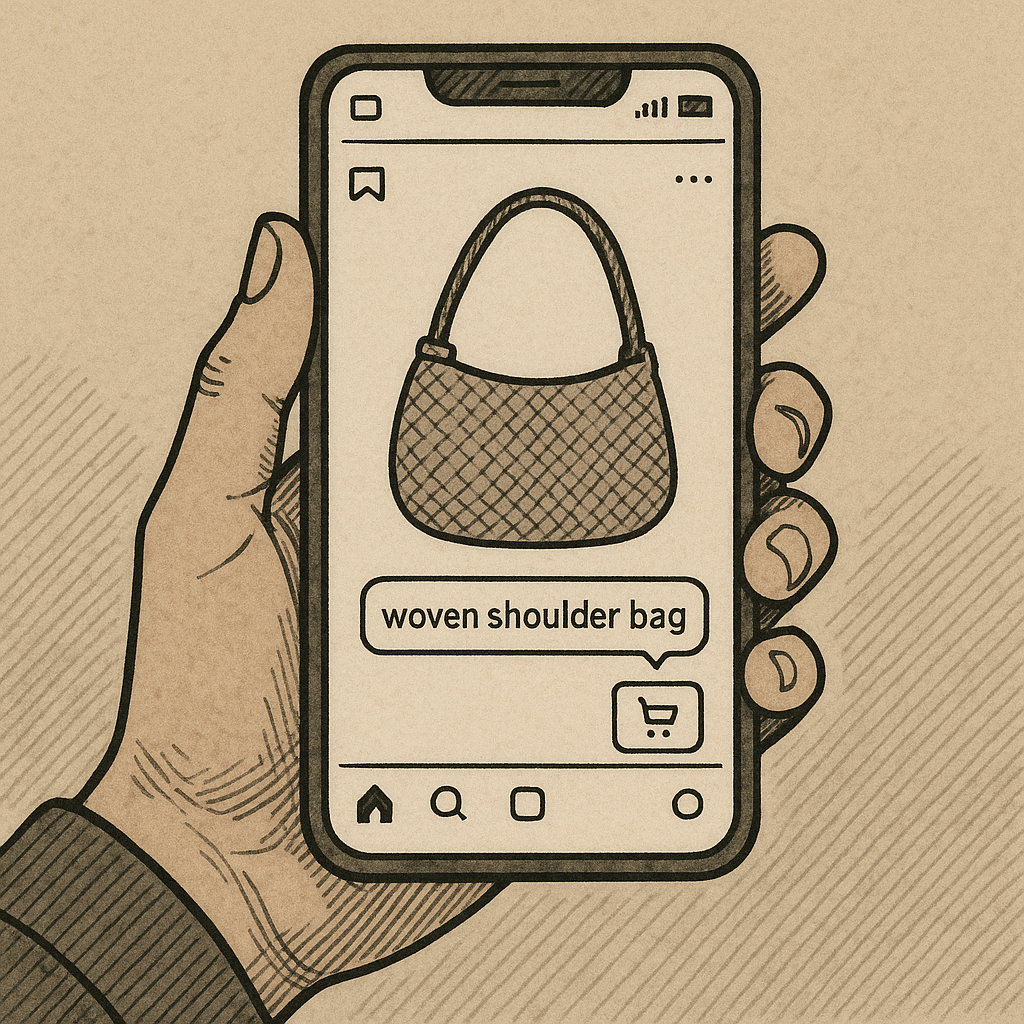
Outfit videos are entertainment. Product tags are logistics. If I'm trying to spot what will be everywhere in six weeks, I watch the boring stuff: the little shopping stickers, the link-in-bio product pages, and the moment an item stops being described with a poetic caption and starts being labeled like inventory.
A few things I look for that have nothing to do with whether I personally like the trend:
- The tag moves from luxury to mid-tier to mass. First it's a specific designer item, then it's the same shape from a contemporary brand, then it shows up as a generic product card with a plain name like "woven shoulder bag". That step-down ladder is trend visibility turning into distribution.
- Creators stop tagging the hero piece and start tagging the supporting cast. When the shoes, the socks, or the belt suddenly get tagged in five different posts, it's a sign people are trying to replicate the styling details, not just admire the outfit. That is how a look becomes a uniform.
- Returns and sizing notes start leaking into captions. Not formal reviews, just little confessions: "kept the medium," "the waistband runs tight," "this one stretched after a day." That's the sound of normal shoppers entering the chat. The trend isn't only living on camera anymore.
One more thing that's easy to miss: when a creator tags multiple colorways of the same item, it often means the brand is pushing, yes, but it also means the product team thinks there's broader demand than one statement shade. If it was just for a fashion-person moment, they'd lead with the loud color. When the tags are black, cream, and brown, that's a trend heading for daily wear.
I don't click every link. I just note the pattern, then I check whether the tagged item is being styled the same way across different body types, climates, and shoe choices. When it's adaptable, it spreads. When it's only photogenic, it peaks on your screen and disappears from your closet.